
Learning Objectives
- Summarize the net yield of aerobic glycolysis.
- Identify the ATP-consuming vs. ATP-producing steps.
- Master the allosteric regulators of the rate-limiting enzyme, PFK-1.
1. Net Glycolysis Equation
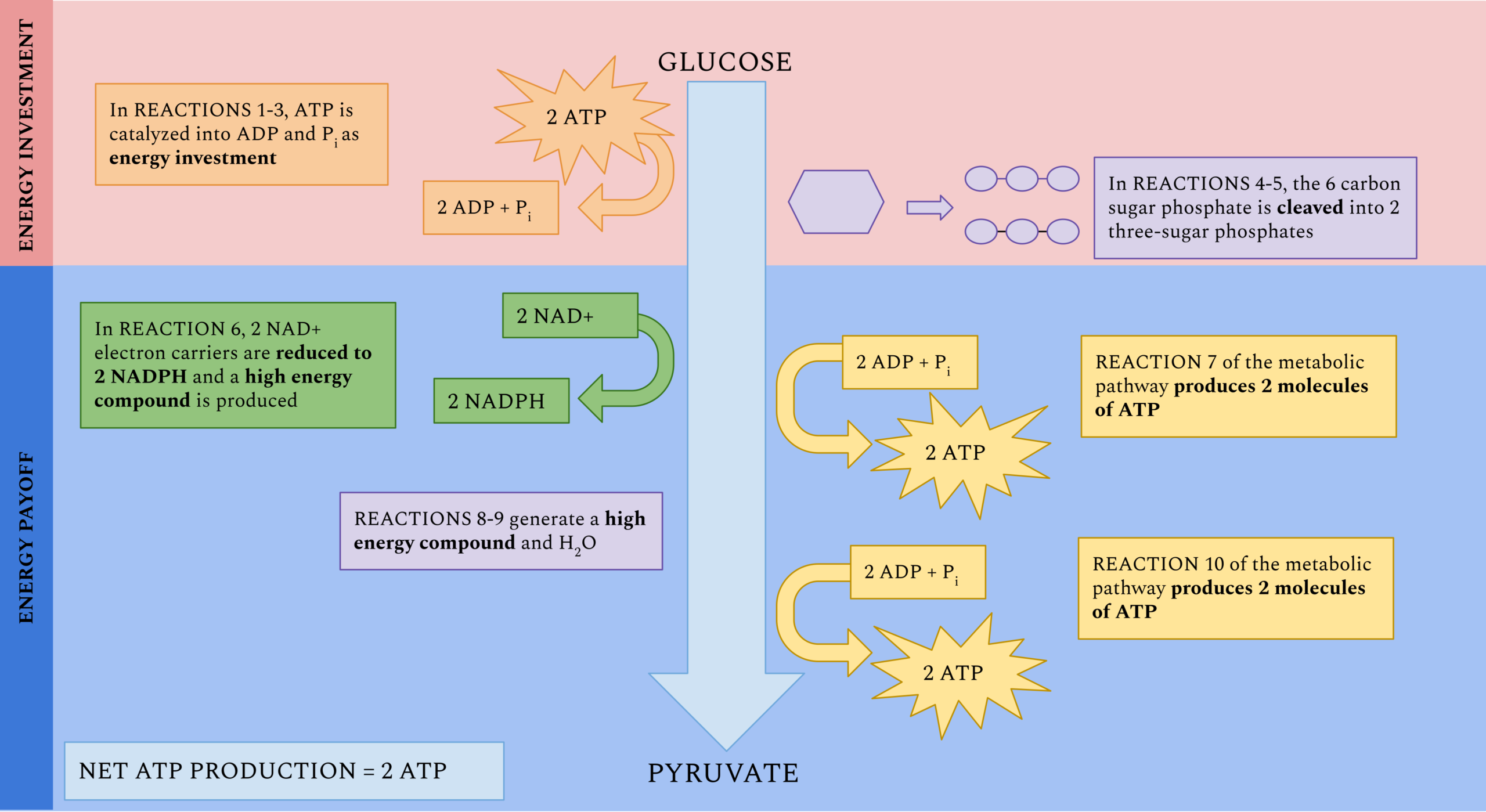
Occurring in the cytoplasm, glycolysis converts one molecule of glucose into two molecules of pyruvate, generating energy and reducing equivalents.
Glucose + 2 Pi + 2 ADP + 2 NAD+ → 2 Pyruvate + 2 ATP + 2 NADH + 2 H+ + 2 H2O
2. Key Regulatory Enzymes
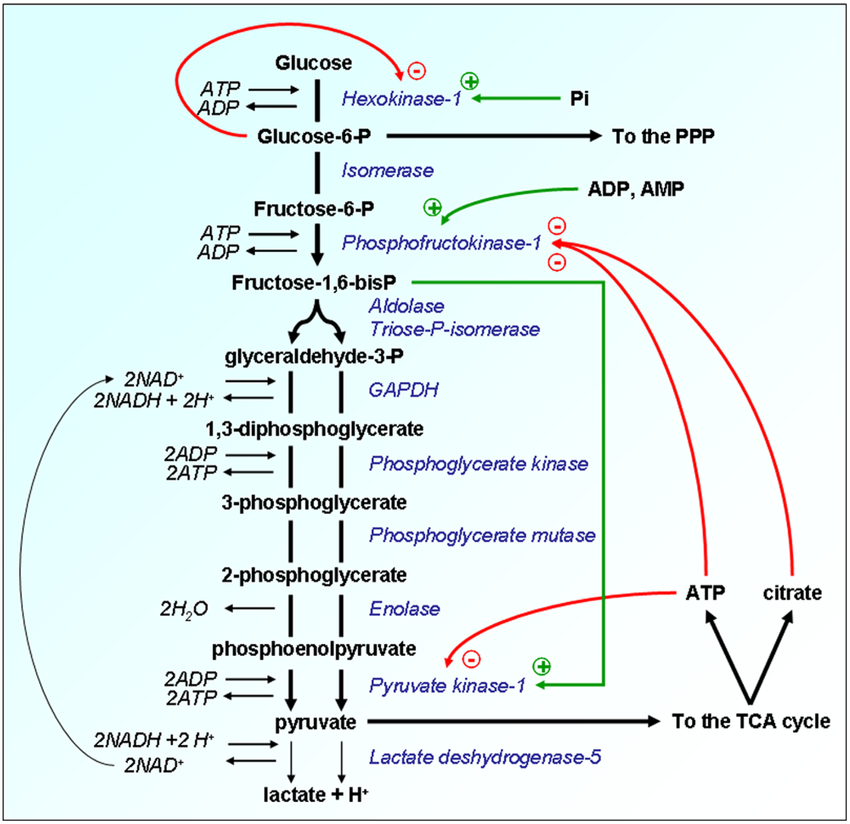
Regulation occurs at irreversible steps to ensure that energy production meets the cell’s metabolic demands.
| Step Type | Enzyme | Regulators |
|---|---|---|
| ATP Consuming (Investment) |
Hexokinase / Glucokinase | (-) Glucose-6-P (Hexokinase) (-) Fructose-6-P (Glucokinase) |
| PFK-1 (Rate-Limiting) | (+) AMP, Fructose-2,6-BP (-) ATP, Citrate |
|
| ATP Producing (Payoff) |
Phosphoglycerate kinase | Substrate-level phosphorylation |
| Pyruvate kinase | (+) Fructose-1,6-BP (Feed-forward) (-) ATP, Alanine, Glucagon, Epinephrine |
Biochemical Correlation: Fructose-2,6-Bisphosphate
F-2,6-BP is the most potent activator of PFK-1. Its levels are regulated by the bifunctional enzyme PFK-2/FBPase-2. In the well-fed state, Insulin increases F-2,6-BP to stimulate glycolysis. In the fasting state, Glucagon decreases it to favor gluconeogenesis.
Activity
Clinical Correlate: Pyruvate Kinase Deficiency
A deficiency in Pyruvate Kinase is the second most common cause of enzyme-deficient hemolytic anemia (after G6PD). Without enough ATP from glycolysis, RBCs cannot maintain their Na+/K+ ATPase pumps, leading to rigid cells, swelling, and hemolysis in the spleen.
Activity
You must be logged in to post a comment.