
Learning Objectives
Master the gross Lung Anatomy and high-yield clinical relationships. Understand the “RALS” rule for the hilum, the predictable path of aspirated foreign bodies, and the safe anatomical landmarks for thoracentesis for the USMLE Step 1.
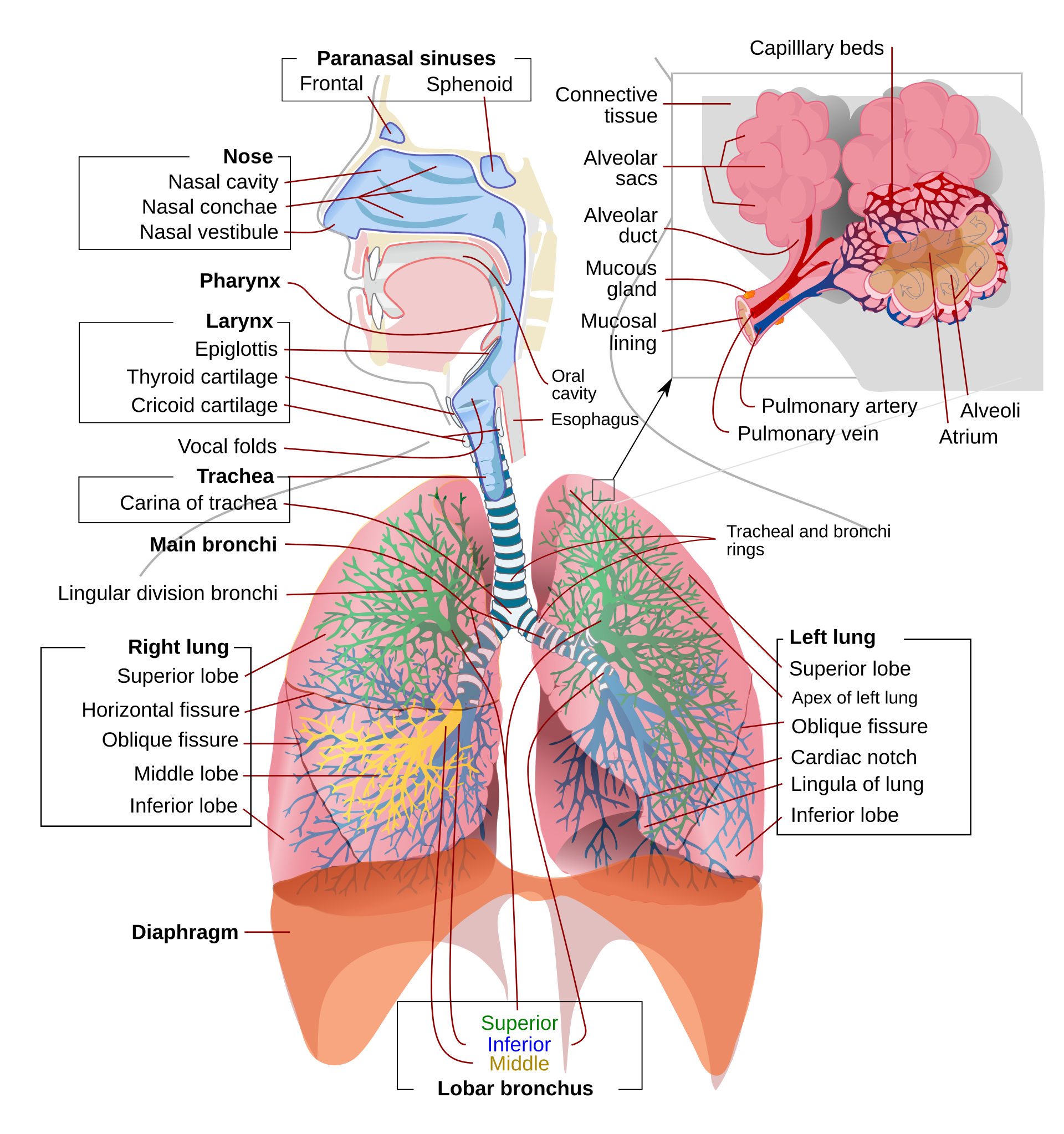
1. Lobes and Fissures
The right and left lungs are asymmetrical to accommodate the heart and liver.
| Feature | Right Lung | Left Lung |
|---|---|---|
| Lobe Count | 3 Lobes (Upper, Middle, Lower). | 2 Lobes (Upper, Lower). |
| Fissures | Horizontal and Oblique. | Oblique only. |
| Anatomic Landmarks | Horizontal fissure at the 4th intercostal space. | Lingula (homolog to right middle lobe). |
2. The Hilum: The “RALS” Rule
The relationship of the pulmonary artery to the main bronchus at the lung hilum is a classic anatomy question.
| Mnemonic | Side | Artery Position Relative to Bronchus |
|---|---|---|
| RA | Right Lung | Anterior |
| LS | Left Lung | Superior |
Activity
3. Aspiration: The “Peanut” Path
Because the right main stem bronchus is wider, shorter, and more vertical, aspirated objects most commonly enter the right lung.
| Patient Position | Primary Target (Segment) | Lobe |
|---|---|---|
| Upright | Basal segments | Right Lower Lobe |
| Supine | Superior segment | Right Lower Lobe (or posterior RUL) |
| Right Side/Prone | Posterior segment | Right Upper Lobe |
Activity
4. Thoracentesis Landmarks
Needle placement is critical to avoid the neurovascular bundle (Vein, Artery, Nerve) located in the costal groove.
| Technique | Guideline | Why? |
|---|---|---|
| Needle Entry | Above the rib | Avoids the VAN bundle at the bottom of each rib. |
| Lower Limit | Avoid the area below the 9th rib | Prevents injury to abdominal organs (liver/spleen). |
Activity:
High-Yield Clinical Pearls:
- The Lingula: This is the “left middle lobe” homolog. It sits next to the heart; therefore, lingular pneumonia can “silhouette” (obscure) the left heart border.
- Vertical Bronchus: Remember: “Right is more vertical.” This explains why foreign bodies and aspiration pneumonia are more common on the right.
- The VAN: Superior to inferior, the bundle is Vein, Artery, Nerve. The nerve is the most inferior and most unprotected structure in the groove.
You must be logged in to post a comment.