
Learning Objectives
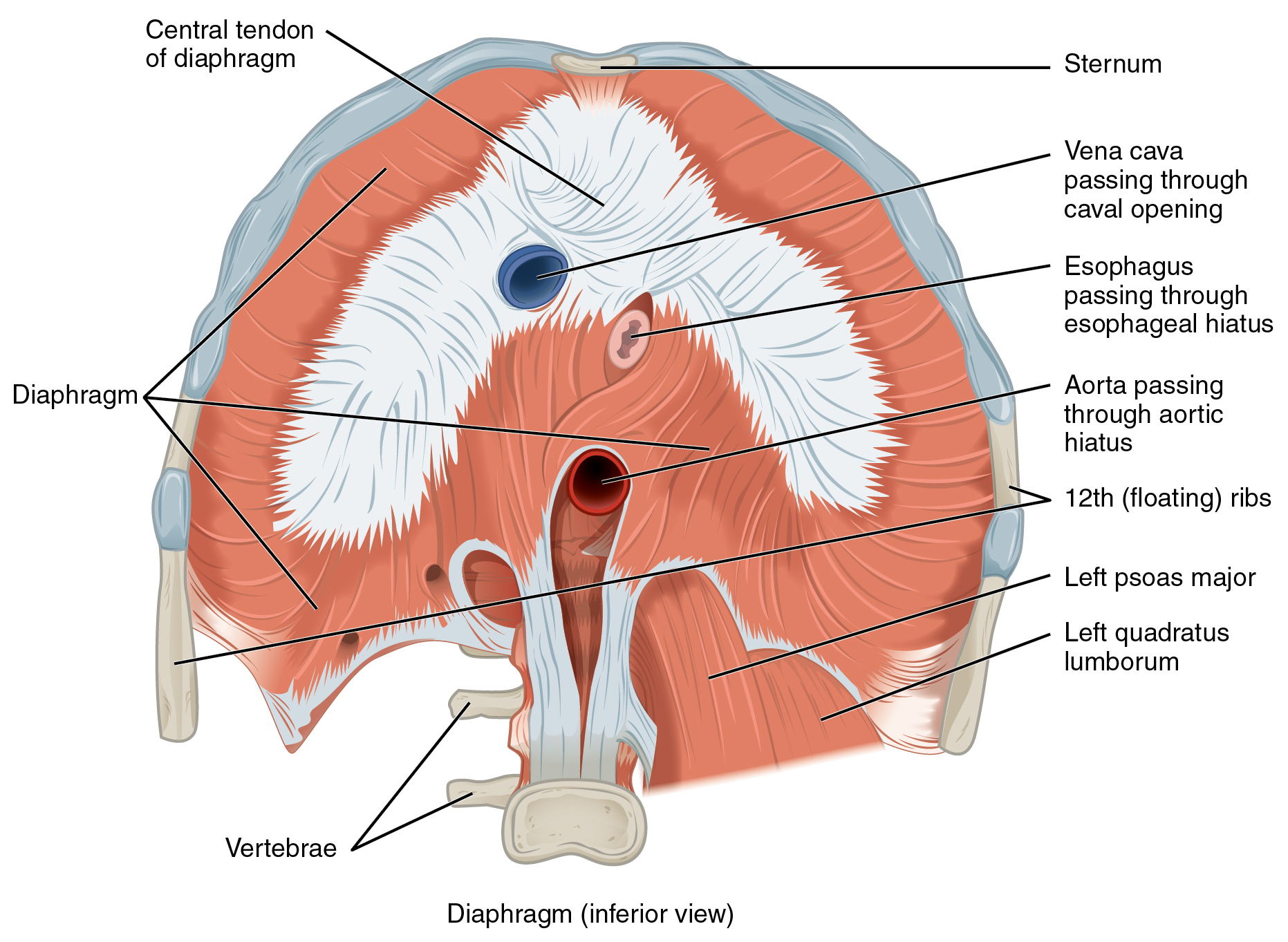
Master the anatomical levels and structures that perforate the Diaphragm. Memorize the high-yield “Red, White, and Blue” mnemonic for T12 and understand the clinical significance of phrenic nerve innervation for the USMLE Step 1.
1. Diaphragmatic Apertures (The “I Ate 10 Eggs At 12” Rule)
The diaphragm has three major openings (hiatuses) that allow structures to pass between the thorax and the abdomen.
| Vertebral Level | Major Structure | Additional Structures |
|---|---|---|
| T8 | IVC (Vena Cava) | Right Phrenic Nerve. |
| T10 | Esophagus | Vagus Nerve (CN X; anterior/posterior trunks). |
| T12 | Aorta | Thoracic duct and Azygos vein. |
2. Innervation and Clinical Correlates
The diaphragm is the primary muscle of inspiration, and its nerve supply is a frequent target for board questions regarding referred pain and paralysis.
| Concept | Clinical Finding / Mechanism |
|---|---|
| Innervation | C3, 4, 5 (Phrenic nerve) “keeps the diaphragm alive.” |
| Referred Pain | Irritation (e.g., gallbladder, air) refers to the shoulder (C5) or trapezius ridge (C3, 4). |
| Nerve Injury | Ipsilateral elevation of the hemidiaphragm on CXR (paradoxical movement). |
3. The “Bifourcation” Rule
Several major structures branch or divide at specific vertebral levels involving the number 4.
| Level | Structure That Bifurcates |
|---|---|
| C4 | Common Carotid Artery |
| T4 | Trachea (at the Carina) |
| L4 | Abdominal Aorta |
Activity:
High-Yield Clinical Pearls:
- The Red, White, and Blue: At T12, you have the Aorta (Red), Thoracic Duct (White), and Azygos Vein (Blue).
- Paradoxical Movement: If the right phrenic nerve is cut, the right side of the diaphragm will move up (pushed by abdominal pressure) during inspiration, while the left side moves down.
- I-10-E: Use the number of letters to remember the levels: Vena Cava (8 letters) = T8; Esophagus (10 letters) = T10; Aortic Hiatus (12 letters) = T12.
You must be logged in to post a comment.