
Learning Objectives
- Identify the three distinct phases of Paget disease (lytic, mixed, and sclerotic).
- Explain the biochemical profile and why labs (Ca2+, PO4, PTH) remain normal despite bone turnover.
- Recognize high-yield complications, including high-output heart failure and osteosarcoma.
- Describe the classic mosaic pattern seen on histology.
1. Pathophysiology: Disorganized Remodeling
Paget disease of bone (Osteitis Deformans) is a localized disorder where the normal “handshake” between osteoclasts and osteoblasts is broken. It results in a “chaotic” formation of poor-quality bone.
- The Mechanism: It begins with an explosion of osteoclastic activity, followed by a frantic, disorganized attempt by osteoblasts to repair the bone.
- Stages of Disease:
- Lytic Phase: Dominated by massive osteoclast activity (bone destruction).
- Mixed Phase: Both osteoclasts and osteoblasts are active.
- Sclerotic/Blastic Phase: Osteoblasts dominate, laying down dense but weak bone.
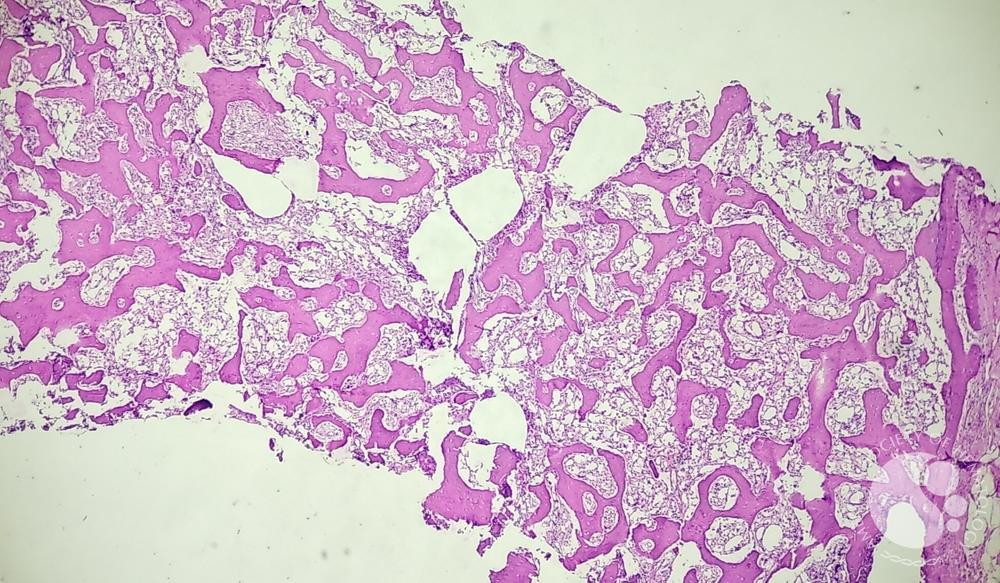
- Histology: A classic “Mosaic Pattern” of lamellar bone with prominent cement lines, representing the haphazard bone formation.
2. Clinical Presentation & Complications
Because Paget’s bone is structurally unsound and hypervascular, it causes several systemic issues.
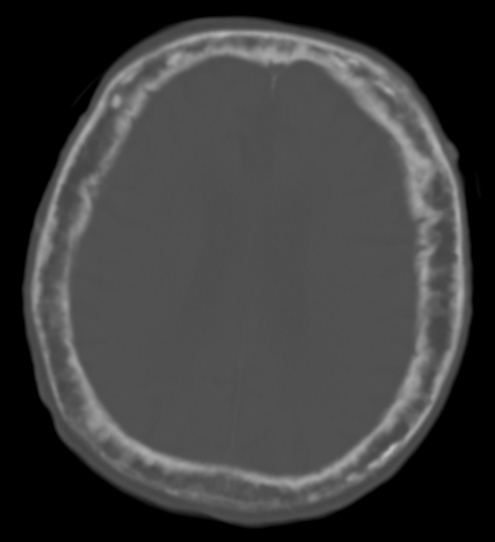
- Skull Involvement: Thickening of the skull can lead to an increased hat size and hearing loss (due to compression of the vestibulocochlear nerve in the narrowed auditory meatus).
- Fractures: Bones are brittle and prone to “Chalk-stick” fractures (transverse fractures of long bones).
- High-Output Heart Failure: The hyperactive bone develops multiple arteriovenous (AV) shunts. This creates a low-resistance pathway that forces the heart to pump much harder to maintain systemic pressure.
- Malignancy: There is a significantly increased risk of Osteosarcoma in the affected bone later in life.
3. Biochemical Profile (High Yield)
Like Osteoporosis, Paget disease has a very specific “normal” lab profile that is frequently tested.
| Marker | Value | Explanation |
|---|---|---|
| Serum Calcium | Normal | The process is localized and balanced between formation/resorption. |
| Serum Phosphorus | Normal | No systemic mineral imbalance. |
| Serum PTH | Normal | Parathyroid glands are not triggered. |
| Serum ALP | Markedly Increased | Reflects the massive, albeit disorganized, osteoblastic activity. |
Clinical Notes & Step 1 Pearls:
- Treatment: Bisphosphonates are the gold standard to inhibit the initial osteoclastic surge and stabilize the bone.
- Distribution: Can be monostotic (one bone) or polyostotic (multiple bones). Common sites include the pelvis, skull, and femur.
- Imaging: Look for “Cotton Wool” spots on a skull X-ray.
Activity: Paget Disease Phase Matching
Quick Mnemonics:
Paget’s: Progressively Augmented Girth of the Entire Temple (Skull/Hat size).
Labs: Only ALP is Up (Everything else is fine).
You must be logged in to post a comment.