
Learning Objectives
- Differentiate between Endochondral and Intramembranous ossification by bone type and process.
- Explain the progression from cartilage models to woven bone and finally lamellar bone.
- Identify clinical correlates, including Achondroplasia and Paget disease.
- Recognize the specific bones formed by each ossification pathway.
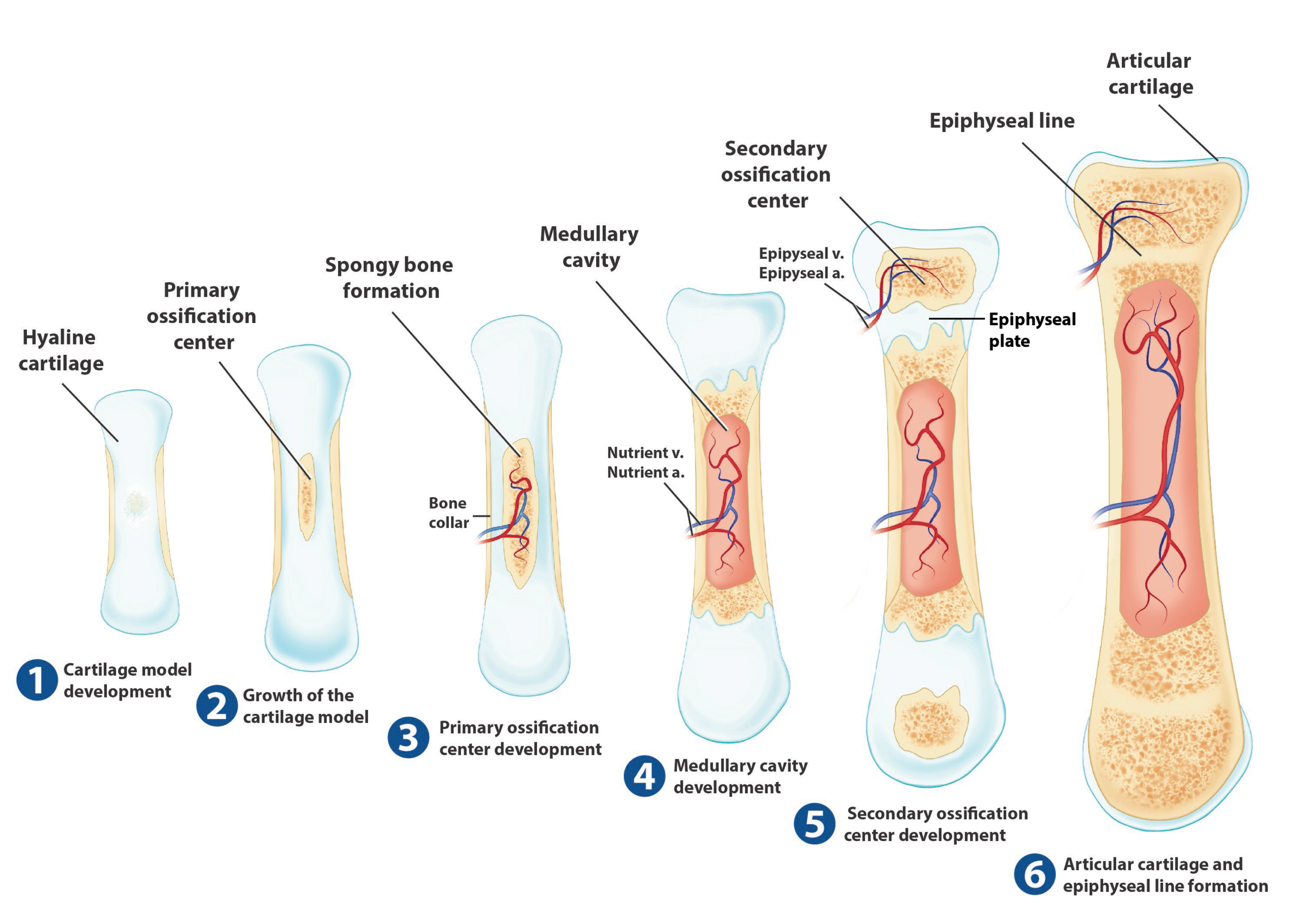
1. Endochondral Ossification
This is the process by which most of the skeleton is formed. It requires a precursor “scaffold” made of cartilage.
- Bones Formed: Axial skeleton (vertebrae, ribs), appendicular skeleton (limbs), and the base of the skull.
- The Process:
- Chondrocytes create a cartilaginous model of the bone.
- Osteoclasts and Osteoblasts later replace the cartilage with Woven Bone.
- The woven bone is eventually remodeled into strong, organized Lamellar Bone.
- Clinical: This process is defective in Achondroplasia (the most common cause of dwarfism), specifically affecting the proliferation of chondrocytes in the epiphyseal plates.
2. Intramembranous (Membranous) Ossification
This process is “direct”—it does not require a cartilage model. Bone forms directly from mesenchymal (connective tissue) membranes.
- Bones Formed: Calvarium (skull cap), facial bones, and the clavicle.
- The Process: Mesenchymal cells differentiate directly into osteoblasts, which secrete osteoid to form Woven Bone. This is later remodeled into Lamellar Bone.
- Clinical: Since the clavicle uses this method, it is often the first bone to begin ossification in the fetus.
3. Woven vs. Lamellar Bone
Understanding the “maturity” of bone tissue is a high-yield concept for pathology.
| Bone Type | Characteristics | Occurs In… |
|---|---|---|
| Woven Bone | Immature, disorganized collagen fibers. Weak. | Fetal development, fracture repair, and Paget disease. |
| Lamellar Bone | Mature, organized concentric layers. Very strong. | Normal adult skeleton. |
Clinical Notes & Step 1 Pearls:
- Paget Disease: A disorder of “bone remodeling gone wild.” The body creates too much woven bone that never properly matures into lamellar bone, leading to thick but brittle bones and a “mosaic” pattern on histology.
- Fractures: When you break a bone, the “callus” that forms first is woven bone. It takes weeks of remodeling for it to return to the strength of lamellar bone.
Activity:
Quick Mnemonics:
Endo: Means Inside (Bone forms inside a cartilage model).
Membranous: Think “Flat” (Flat bones of the face and skull).
Clavicle: Is the “odd one out”—it’s a long bone but uses membranous ossification.
You must be logged in to post a comment.