
Learning Objectives
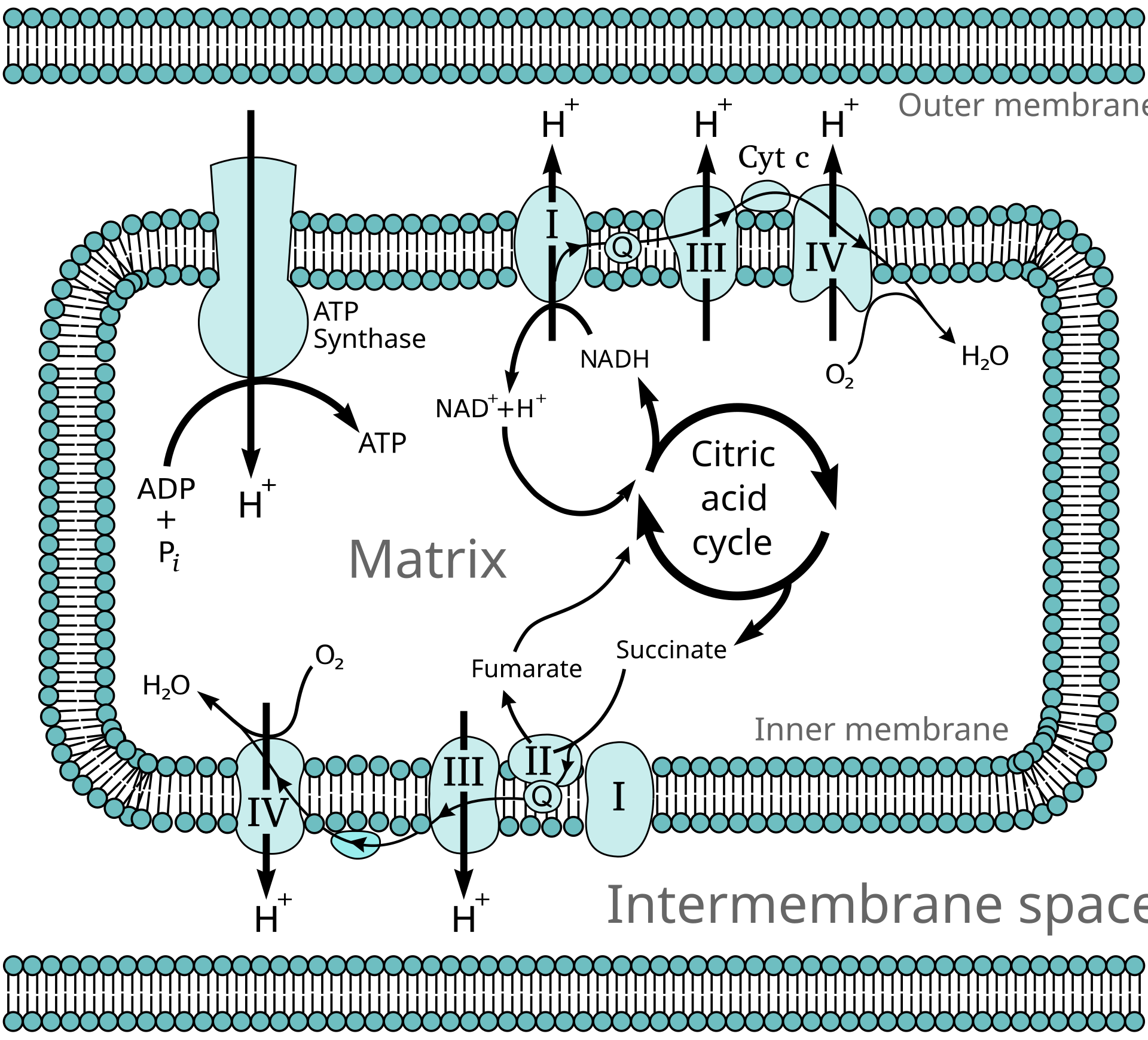
- Explain how NADH and FADH2 transfer electrons to different complexes in the ETC.
- Distinguish between the ATP yields of the malate-aspartate and glycerol-3-phosphate shuttles.
- Contrast the mechanisms of ATP synthase inhibition versus oxidative phosphorylation uncoupling.
- Recognize the clinical presentation of aspirin overdose as a cause of hyperthermia.
1. Electron Flow and the Proton Gradient
The Electron Transport Chain (ETC) uses high-energy electrons to pump protons from the mitochondrial matrix into the intermembrane space.
- Entry Points: NADH transfers electrons to Complex I. FADH2 transfers electrons to Complex II (Succinate dehydrogenase), entering at a lower energy level.
- Final Acceptor: Oxygen acts as the final electron acceptor, providing the driving force for the entire chain.
- Coupling: The resulting proton gradient powers Complex V (ATP Synthase) to produce ATP.
2. Shuttles and Net ATP Yield
NADH produced in glycolysis (cytosol) cannot cross the inner mitochondrial membrane directly. It must use shuttle systems, which determine the final ATP count.
| Shuttle System | Primary Tissues | Net ATP per Glucose |
|---|---|---|
| Malate-Aspartate | Heart and Liver | 32 ATP |
| Glycerol-3-Phosphate | Muscle | 30 ATP |
| Anaerobic Glycolysis | All tissues (no $O_{2}$) | 2 ATP |
High-Yield Yields:
- 1 NADH → 2.5 ATP
- 1 FADH2 → 1.5 ATP
Activity
3. Uncoupling of Oxidative Phosphorylation
Uncoupling occurs when the inner mitochondrial membrane becomes permeable to protons. This “leaky” membrane allows protons to bypass ATP synthase.
- Result: ATP synthesis stops, but electron transport and oxygen consumption continue rapidly. The energy is dissipated as heat.
- Physiological: Brown fat contains uncoupling proteins (thermogenin) to generate heat in neonates.
- Pathological: Aspirin overdose (salicylates) causes uncoupling, leading to high fever (hyperthermia).
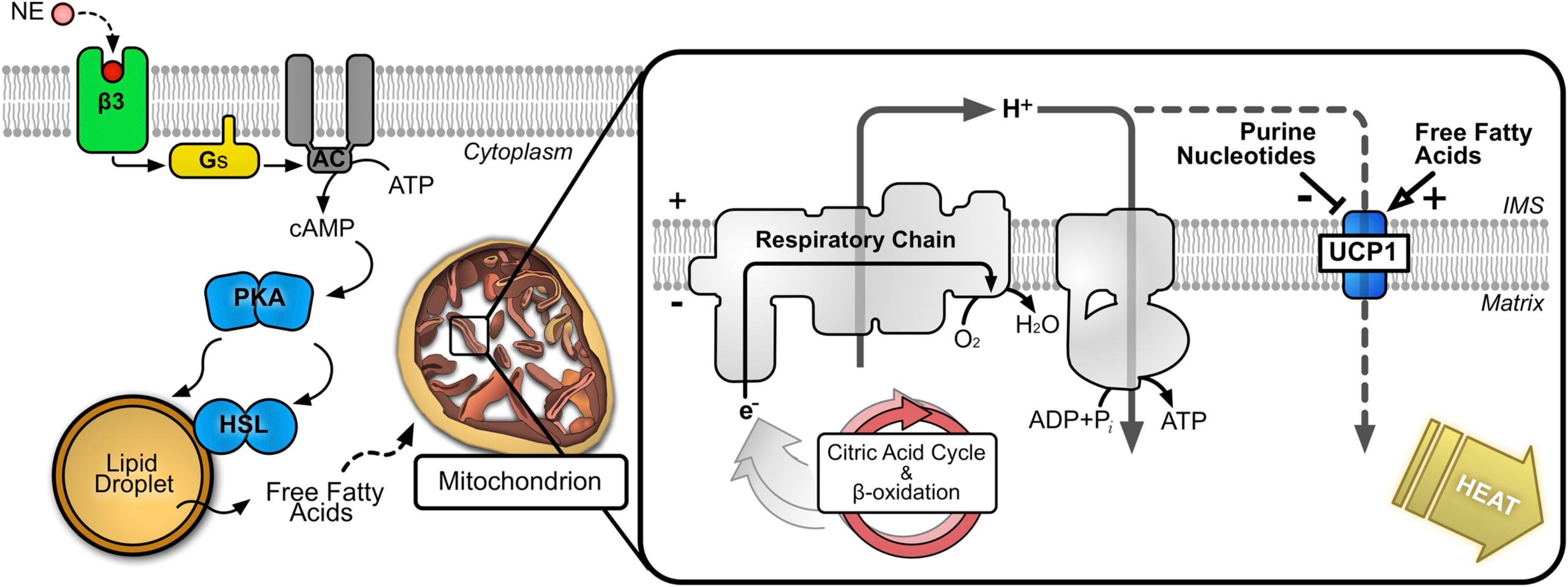
Memory Hook: Uncouplers cause the “Metabolic Burn.” You burn through oxygen and fuel, but instead of making “money” (ATP), you just get “hot” (Heat).
Activity
You must be logged in to post a comment.