
Learning Objectives
Identify the irreversible enzymes that regulate the flow of the TCA cycle. Calculate the net energy yield (NADH, FADH2, GTP) per turn of the cycle. Recognize the five cofactors shared by the PDH and α-KG dehydrogenase complexes. Explain the role of Citrate as the initial substrate for the regeneration of oxaloacetate.
1. The Gateway: Pyruvate to Acetyl-CoA
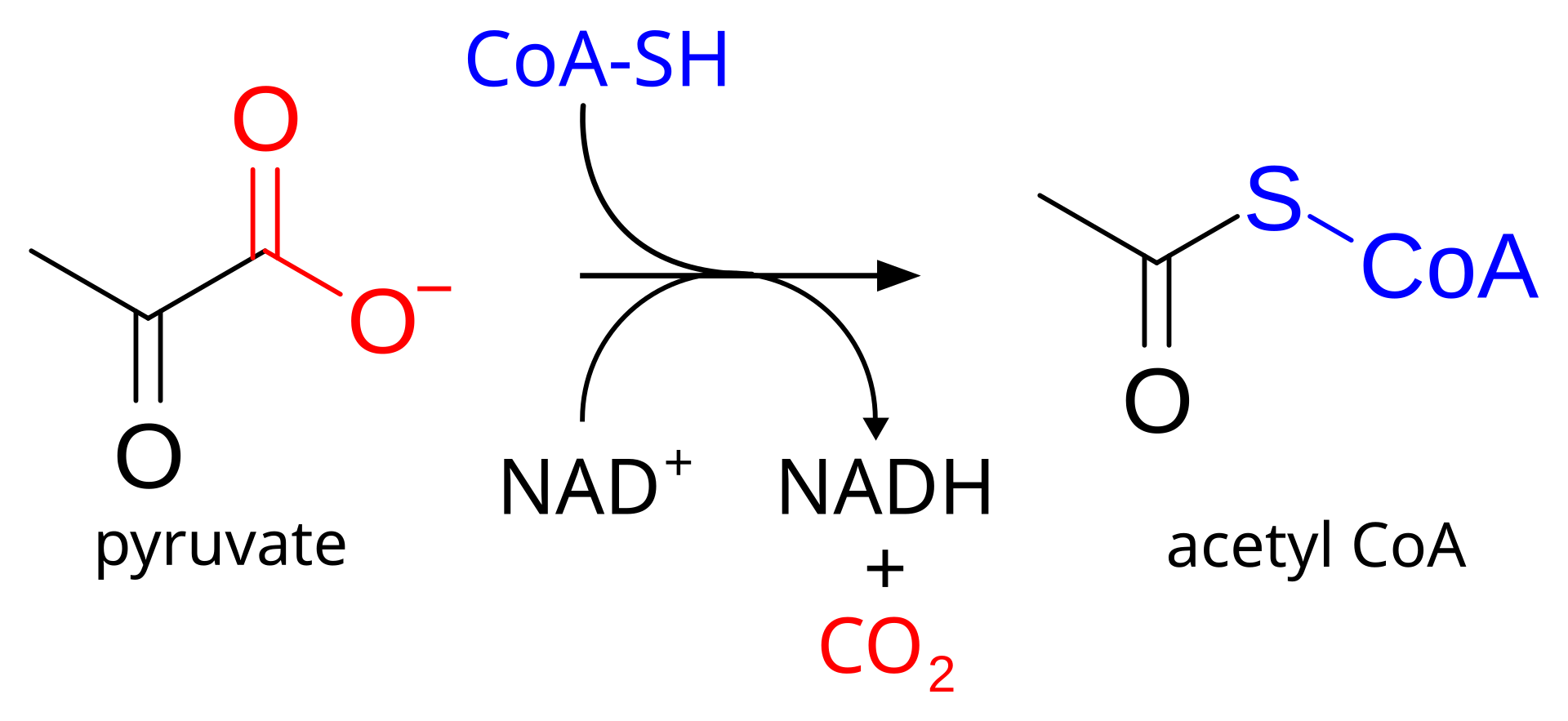
The transition from glycolysis to the TCA cycle occurs via the Pyruvate Dehydrogenase (PDH) complex in the mitochondria.
- Reaction: Pyruvate (3C) → Acetyl-CoA (2C).
- Yield: Produces 1 NADH and 1 CO2.
2. The TCA Cycle (Krebs Cycle) Overview
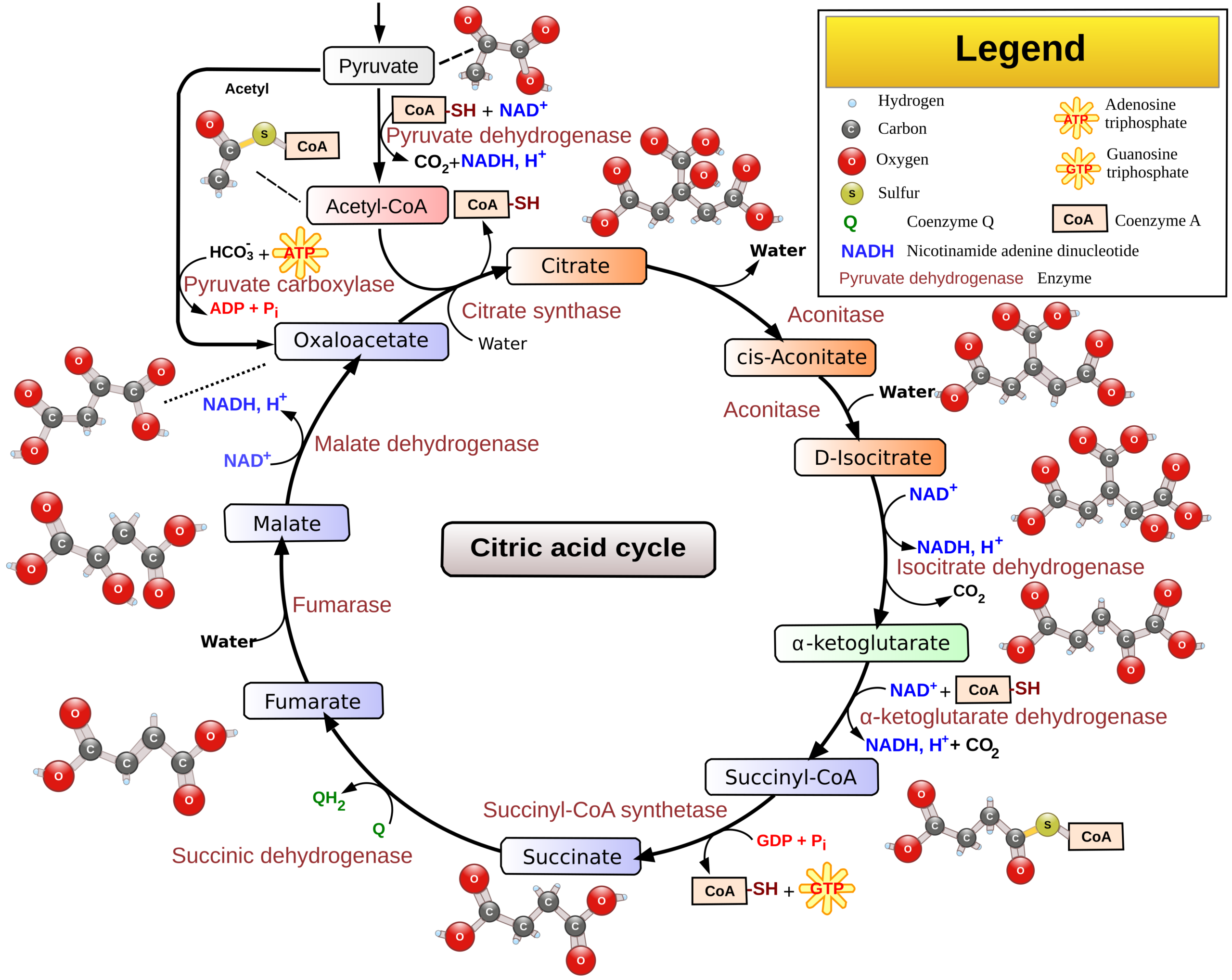
The cycle begins when Acetyl-CoA condenses with Oxaloacetate to form Citrate. It functions to harvest high-energy electrons for the Electron Transport Chain.
- Location: Mitochondrial matrix.
- Yield per Acetyl-CoA: 3 NADH, 1 FADH2, 1 GTP (ATP), and 2 CO2.
- Total Energy: Approximately 10 ATP per Acetyl-CoA (20 ATP per glucose molecule).
High-Yield Mnemonics:
- “Citrate Is Krebs’ Starting Substrate For Making Oxaloacetate”
- (Citrate, Isocitrate, α–Ketoglutarate, Succinyl-CoA, Succinate, Fumarate, Malate, Oxaloacetate).
Activity
3. Regulation and Irreversible Steps
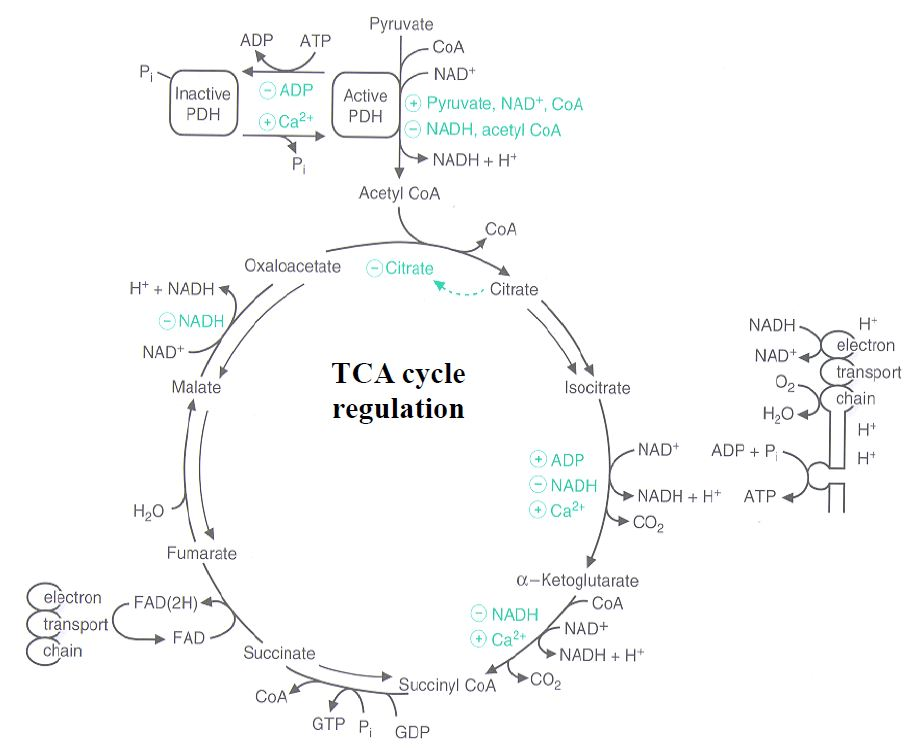
Three enzymes serve as the primary checkpoints. They are inhibited by high-energy signals (ATP, NADH) and activated by low-energy signals (ADP).
| Enzyme | Inhibitors | Activators |
|---|---|---|
| Citrate Synthase | ATP, NADH, Succinyl-CoA | ADP |
| Isocitrate Dehydrogenase | ATP, NADH | ADP, Ca2+ |
| α-Ketoglutarate Dehydrogenase | ATP, NADH, Succinyl-CoA | Ca2+ |
Activity
Memory Hook: Shared Cofactors
The α-ketoglutarate dehydrogenase complex requires the same 5 cofactors as PDH:
1. Thiamine (B1), 2. FAD (B2), 3. NAD (B3), 4. CoA (B5), 5. Lipoic acid.
You must be logged in to post a comment.