
Learning Objectives
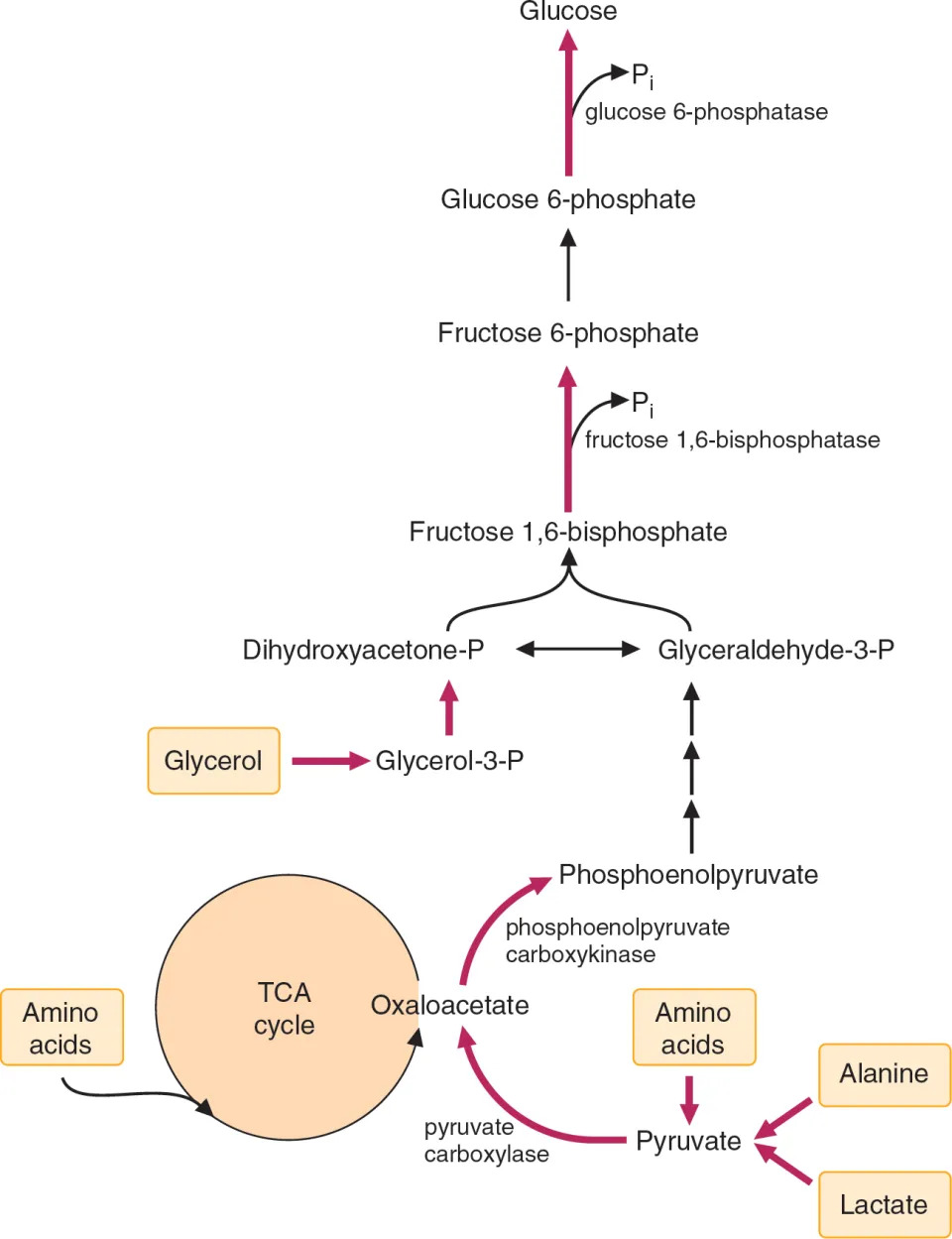
- Identify the four unique enzymes that bypass the irreversible steps of glycolysis.
- Explain the subcellular localization (mitochondria, cytosol, and ER) of gluconeogenic reactions.
- Understand why odd-chain fatty acids can contribute to glucose synthesis while even-chain fatty acids cannot.
- Recognize why muscle tissue is unable to participate in systemic gluconeogenesis.
1. The Four Key Enzymes
Gluconeogenesis serves to maintain euglycemia during fasting. It occurs primarily in the liver, but also in the kidneys and intestinal epithelium.
- Pyruvate Carboxylase: In mitochondria. Converts Pyruvate → oxaloacetate. Requires Biotin and ATP. Activated by acetyl-CoA.
- PEP Carboxykinase: In cytosol. Converts Oxaloacetate → phosphoenolpyruvate (PEP). Requires GTP.
- Fructose-1,6-bisphosphatase 1: In cytosol. Converte Fructose-1,6-BP → fructose-6-P. Rate-limiting step. Activated by Citrate; inhibited by AMP and Fructose-2,6-BP.
- Glucose-6-phosphatase: In the ER. Converts Glucose-6-P → glucose.
High-Yield Mnemonic:
“Pathway Produces Fresh Glucose”
- Pyruvate carboxylase
- PEP carboxykinase
- Fructose-1,6-bisphosphatase 1
- Glucose-6-phosphatase
2. Tissue Specificity and Substrates
Not all tissues contribute to blood glucose levels.
- Muscle Limitation: Muscle cannot participate in gluconeogenesis because it lacks Glucose-6-phosphatase. It uses its glycogen stores only for its own energy needs.
- Fatty Acid Contribution:
- Even-chain: Yield only acetyl-CoA, which cannot be used for net glucose synthesis.
- Odd-chain: Yield Propionyl-CoA, which enters the TCA cycle as Succinyl-CoA and can eventually become glucose.
Activity
Memory Hook: It is “Odd” for fatty acids to make glucose. Only Odd-chain fatty acids can do it.
3. Metabolic Summary Table
| Regulation Factor | Effect on Gluconeogenesis | Physiological Context |
|---|---|---|
| Glucagon | Activation | Fasting state: promotes glucose production. |
| Acetyl-CoA | Activation | Required specifically for Pyruvate Carboxylase. |
| Fructose-2,6-BP | Inhibition | High levels signal the fed state (promote glycolysis). |
Clinical Note: A deficiency in any of these four enzymes leads to fasting hypoglycemia.
You must be logged in to post a comment.