
Learning Objectives
- Describe the three core post-transcriptional modifications required to convert eukaryotic heterogeneous nuclear RNA (hnRNA / pre-mRNA) into mature messenger RNA (mRNA): 5′ capping, 3′ polyadenylation, and intron splicing.
- Detail the biochemical mechanisms and protective functions of the 7-methylguanosine cap (linked via a unique 5′–5′ triphosphate bridge) and the poly-A tail (~200 adenine residues added by poly-A polymerase without a template).
- Explain the mechanics of spliceosome-mediated intron removal using small nuclear ribonucleoproteins (snRNPs U1, U2, U4, U5, U6) recognizing conserved GU–AG splice junctions, and contrast constitutive splicing with alternative splicing.
- Correlate post-transcriptional processing defects and autoantibodies with clinical pathology, including splice-site mutations in $\beta$-thalassemia and anti-Smith (anti-Sm) antibodies in Systemic Lupus Erythematosus (SLE).
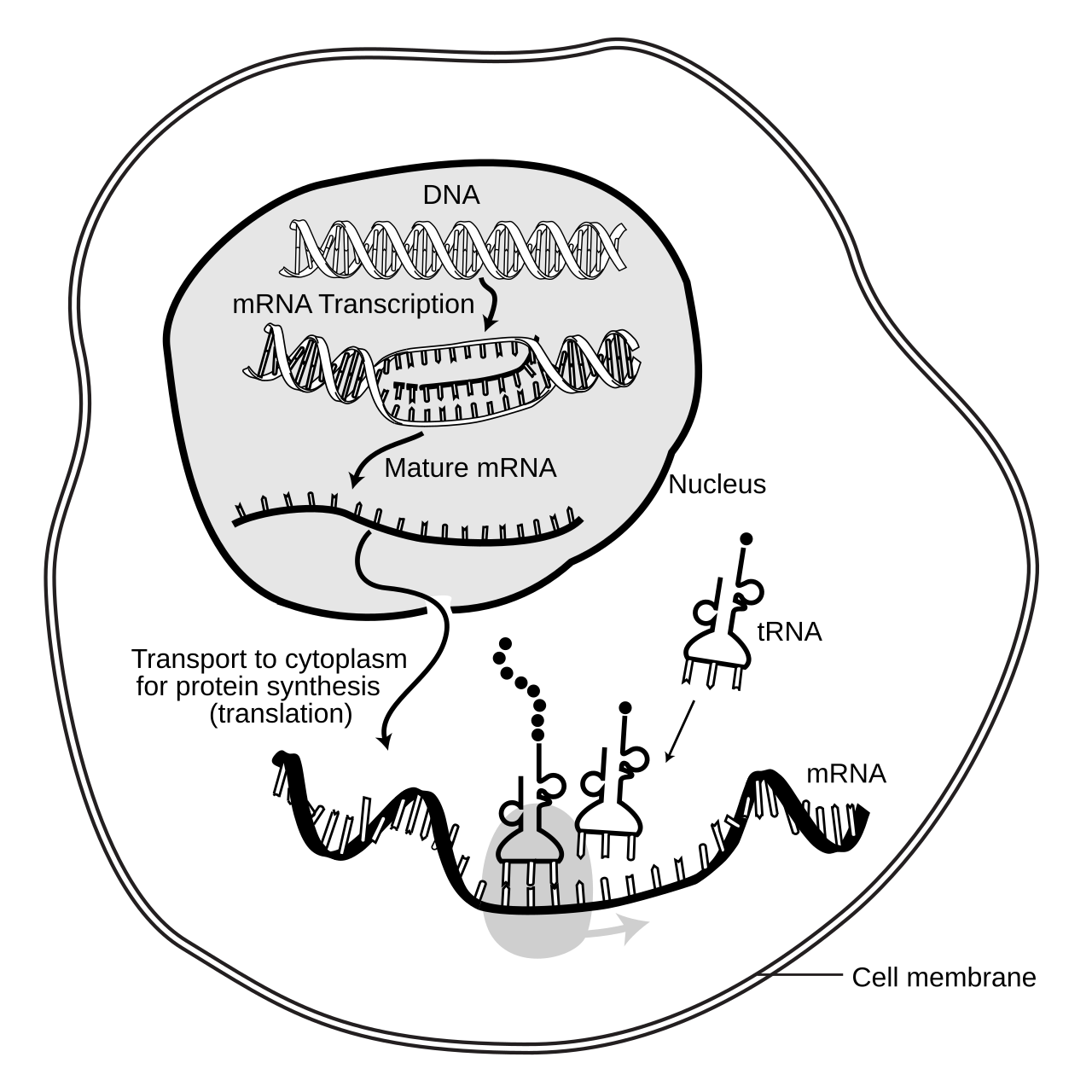
In eukaryotic cells, the primary transcript produced by RNA Polymerase II—known as heterogeneous nuclear RNA (hnRNA) or pre-mRNA—cannot be translated directly. It must undergo extensive nuclear processing (capping, polyadenylation, and splicing) to become mature mRNA before export into the cytoplasm.
The Three Major Post-Transcriptional mRNA Processing Steps
| Processing Step | Subcellular Location | Biochemical Mechanism & Enzymes | Biological Function |
|---|---|---|---|
| 1. 5′ Capping | Nucleus (cotranscriptional, very early) | Addition of a 7-methylguanosine residue to the 5′ end of the pre-mRNA transcript via an unusual 5′–5′ triphosphate linkage. | Protects mRNA from 5′ exonucleases, assists nuclear export, and promotes translation initiation. |
| 2. 3′ Polyadenylation | Nucleus (upon transcription termination) | Endonucleolytic cleavage downstream of a conserved consensus sequence (AAUAAA), followed by addition of ~200 adenine residues by poly-A polymerase (template-independent). | Enhances mRNA stability, facilitates nuclear export, and regulates translational efficiency. |
| 3. Intron Splicing | Nucleus (spliceosome complex) | Precise excision of non-coding introns and ligation of coding exons mediated by small nuclear ribonucleoproteins (snRNPs). | Removes non-coding intervening sequences; enables protein diversity via alternative splicing. |
Activity
Spliceosome Mechanics & Alternative Splicing
The Spliceosome and Intron Removal Process
- Consensus Splice Sites: Almost all eukaryotic introns begin with the dinucleotide GU at the 5′ splice site and end with the dinucleotide AG at the 3′ splice site, flanked by an internal branch-point adenine.
- snRNPs & Spliceosome Assembly: Small nuclear RNAs (snRNAs U1, U2, U4, U5, and U6) complex with nuclear proteins to form snRNPs (small nuclear ribonucleoproteins).
- U1 snRNP binds the 5′ splice site (GU).
- U2 snRNP binds the branch-point adenine.
- Transesterification Reactions: The spliceosome catalytically removes the intron in the shape of a lariat structure and covalently joins the adjacent exons together.
- Alternative Splicing: By differentially including or omitting specific exons during splicing, a single pre-mRNA can generate multiple distinct protein isoforms—explaining how the human genome (~20,000 genes) produces over 100,000 unique proteins.
High-Yield Differential Clues & Clinical Correlations
Board-Exam Pattern Recognition Rules
- Splice-Site Mutations in $\beta$-Thalassemia: Point mutations occurring within the conserved GU or AG dinucleotide splice sites disrupt normal intron removal. This leads to aberrant pre-mRNA splicing, defective $\beta$-globin synthesis, and severe microcytic anemia (classic USMLE molecular pathology example).
- Systemic Lupus Erythematosus (SLE) & Anti-Sm Antibodies: Autoantibodies directed against Smith proteins (anti-Sm antibodies)—which are core protein components bound to snRNAs (U1, U2, etc.) in the spliceosome—are highly specific serological markers for SLE.
- Template Independence of Poly-A Polymerase: Remember that poly-A polymerase adds adenine residues to the 3′ tail without requiring a DNA template, utilizing ATP as the precursor substrate.
Key Points & Memory Hooks:
- Core Rule: Eukaryotic pre-mRNA processing requires 5′ capping (7-methylguanosine via 5′–5′ triphosphate bond), 3′ polyadenylation (poly-A tail added by poly-A polymerase), and intron splicing via spliceosomes (snRNPs recognizing GU–AG junctions); mutations at splice sites cause genetic disease like
-thalassemia, while anti-Sm antibodies target spliceosomes in SLE.
- Memory Hook: “GU at the start (5′), AG at the end (3′) of every intron!”; “snRNPs = Small Nuclear Ribonucleoproteins (Targeted by anti-Sm in Lupus)”; “Cap protects the 5′ end; Tail protects the 3′ end”!
You must be logged in to post a comment.