
Learning Objectives
By the end of this session, the learner will be able to describe any blood vessel using a six-part systematic framework: Type, Site, Size, Course, Origin/Branches, and Tributaries/Union. This rubric is vital for clinical diagnosis, surgical planning, and understanding organ perfusion.
The 6-Part Framework for Clinical Vasculature
To master the “plumbing” of the human body, avoid memorizing vessels in isolation. Instead, use this consistent rubric to map the flow and relationship of every artery and vein.
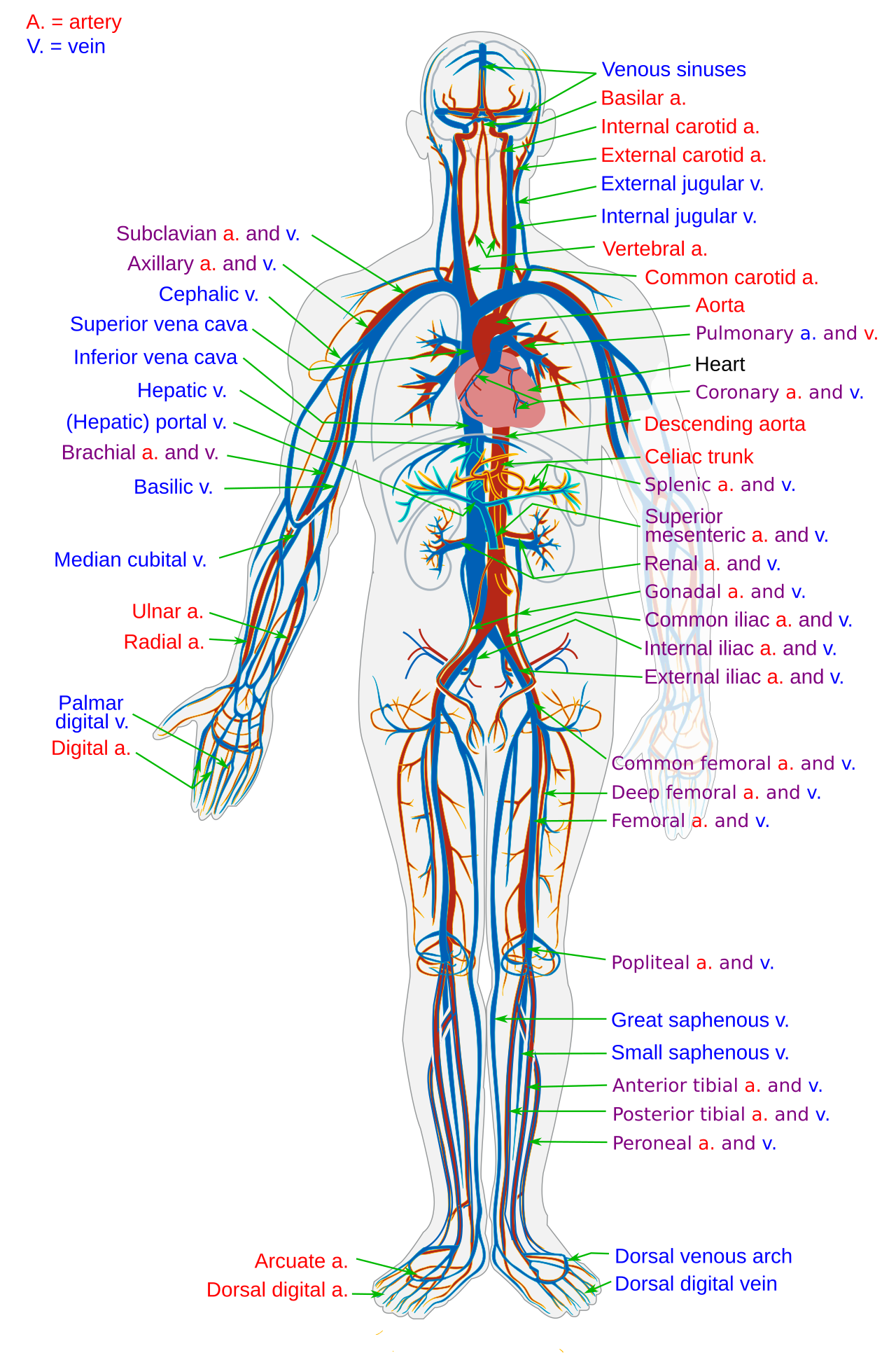
1. Type (Classification)
Identifies the direction of flow and the system involved. For veins, the distinction between superficial and deep is critical for clinical management (e.g., DVT vs. Varicose veins).
| Vessel Name | Type | Clinical Implication |
|---|---|---|
| Brachial Artery | Artery | Used for blood pressure measurement. |
| Cephalic Vein | Superficial Vein | Common site for IV cannulation. |
| Femoral Vein | Deep Vein | High risk for Deep Vein Thrombosis (DVT). |
2. Site (Location)
Describes the topographical region, providing context for the organs and tissues the vessel serves.
| Vessel | Primary Site | Relative Position |
|---|---|---|
| External Carotid | Head and Neck | Anterior to the internal carotid at its origin. |
| Great Saphenous | Medial Lower Limb | The longest vein in the body. |
3. Size (Calibre)
Distinguishes between high-flow “trunk” vessels and smaller distribution branches.
| Vessel Calibre | Description | Example |
|---|---|---|
| Large (Trunk) | High pressure or high volume. | Popliteal Artery / Basilic Vein |
| Small (Branch) | Supplies specific localized structures. | Genicular Arteries (Knee joint) |
4. Course (Anatomic Path)
The path the vessel follows. Knowing the landmarks helps in locating pulses and avoiding vascular injury during surgery.
| Vessel | Course Highlights | Landmark |
|---|---|---|
| Common Carotid | Ascends deep to SCM muscle. | Bifurcation at C4 (Thyroid cartilage). |
| Brachial Artery | Runs along the medial humerus. | Deep to the Biceps Brachii. |
5. Origin & Branches (Arterial Flow)
Arteries are described from proximal to distal, following the direction of oxygenated blood.
| Artery | Origin (Started from) | Branches (Ended as) |
|---|---|---|
| Brachial | Continuation of Axillary a. | Radial and Ulnar Arteries. |
| Popliteal | Continuation of Femoral a. | Genicular and Tibial arteries. |
6. Tributaries & Union (Venous Return)
Veins are described from distal to proximal, following the return of blood toward the heart.
| Vein | Tributaries (Joined by) | Union (Drains into) |
|---|---|---|
| Cephalic | Dorsal venous arch, Median cubital v. | Axillary Vein |
| Great Saphenous | Superficial veins of the leg. | Femoral Vein (via Saphenous opening). |
Activity:
Clinical Pearls for Medical Students:
- Pulsation Points: Use the Course section to identify where arteries lie superficially over bone (e.g., the Radial artery at the wrist), which is where pulses are most palpable.
- Collateral Circulation: Note the Branches. If a main trunk is blocked, smaller branches (like the genicular arteries around the knee) can often provide bypass flow.
- Venous Valves: Unlike arteries, many veins (especially in the lower limb) have valves to prevent backflow. Failure here leads to Venous Insufficiency.
You must be logged in to post a comment.