
Learning Objectives
- Identify the most common type of tracheoesophageal anomaly (esophageal atresia with distal TEF).
- Recognize the prenatal and postnatal clinical presentations, including polyhydramnios, drooling, choking, and cyanosis.
- Correlate radiographic findings (gasless abdomen vs. prominent gastric bubble) with specific anatomical variants.
1. Overview & Common Variant
- Esophageal Atresia (EA) with Distal Tracheoesophageal Fistula (TEF): Accounts for 85% of cases and is the most common presentation.
- Prenatal Clue: Often presents as polyhydramnios due to the fetus’s inability to swallow amniotic fluid.
2. Clinical Presentation & Diagnostics
- Postnatal Symptoms: Neonates typically drool, choke, and vomit with their first feeding.
- Air Entrapment: TEFs allow excess air to enter the stomach, which is visible on chest X-ray (CXR) as a prominent gastric bubble.
- Cyanosis: Occurs secondary to laryngospasm triggered as a reflex to avoid reflux-related aspiration.
- Clinical Test: Inability to pass a nasogastric (NG) tube into the stomach.
- Systemic Association: Frequently associated with VATER/VACTERL defects.
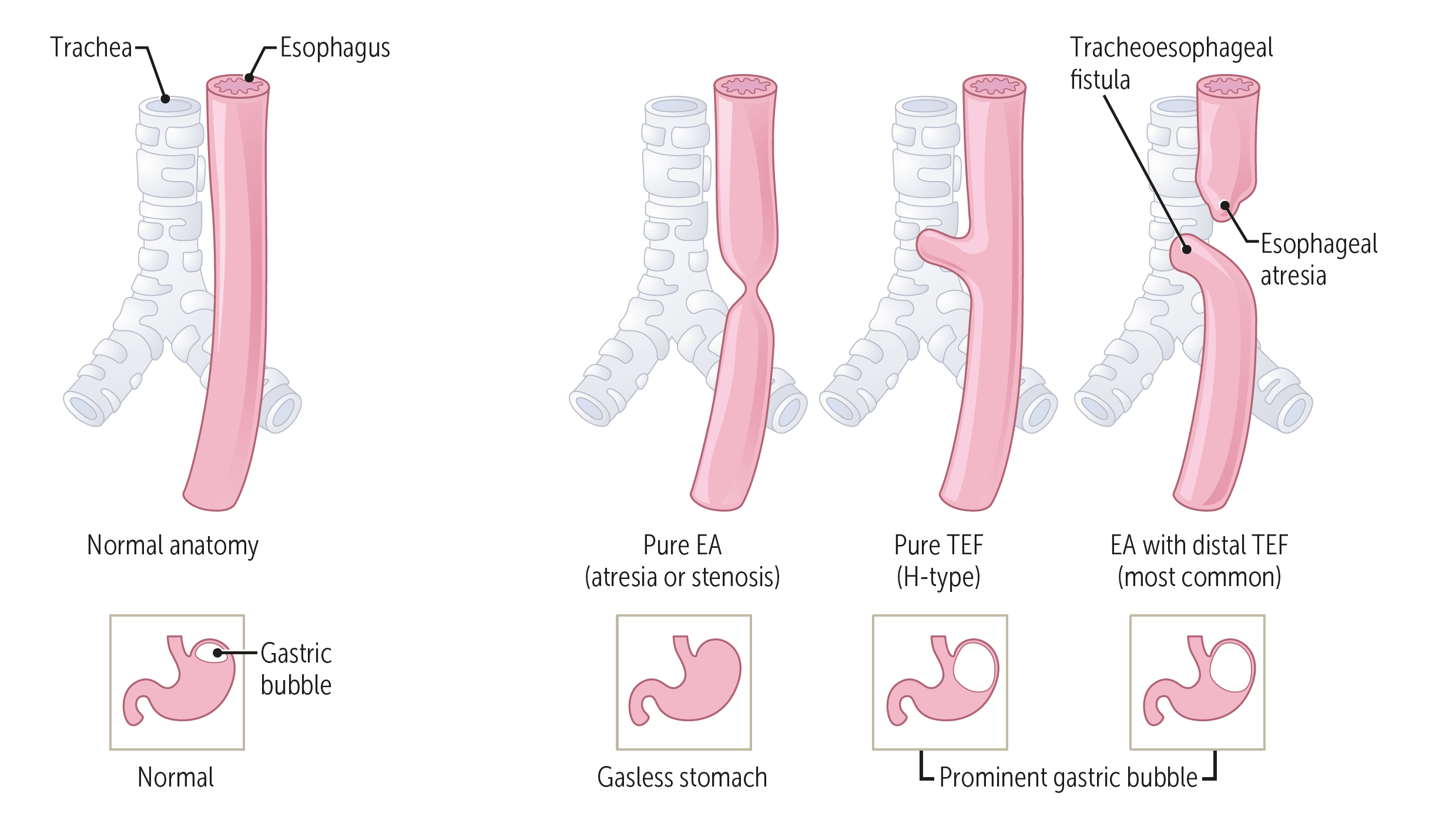
3. Anatomical Variants & Radiographic Findings
| Anatomical Variant | Description | CXR / Abdominal Finding |
|---|---|---|
| EA with distal TEF | Upper esophagus ends blindly; lower segment connects to trachea. | Prominent gastric bubble (air enters via fistula). |
| Pure Esophageal Atresia | Complete atresia or stenosis of the esophagus without any fistula. | Gasless abdomen (no air can reach the stomach). |
| Pure TEF (H-type) | Isolated communication between intact trachea and esophagus resembling an “H”. | Normal gas pattern; may present with recurrent aspiration. |
Clinical Notes & Pearls:
- VACTERL Screen: Infants diagnosed with TEF/EA should undergo a comprehensive evaluation for the VACTERL association (Vertebral, Anal atresia, Cardiac, TEF, Renal, Limb abnormalities).
- Feeding Hazard: Never feed a newborn before confirming a patent esophagus; early detection via NG tube passage prevents severe aspiration pneumonia.
Key Points & Memory Hooks:
Most Common: EA with distal TEF (85%) $Latex\rightarrow$ prominent gastric bubble.
Pure Atresia: Complete esophageal block gasless abdomen.
Diagnostic Red Flag: Inability to pass an NG tube coupled with excessive drooling and choking on first feed.
Most Common: EA with distal TEF (85%) $Latex\rightarrow$ prominent gastric bubble.
Pure Atresia: Complete esophageal block
gasless abdomen.Diagnostic Red Flag: Inability to pass an NG tube coupled with excessive drooling and choking on first feed.
You must be logged in to post a comment.