
Learning Objectives
Master the histology and physiological functions of Club Cells. Understand their role in toxin degradation, surfactant-like production, and as progenitor cells for the bronchiolar epithelium for the USMLE Step 1.
1. Histology and Location
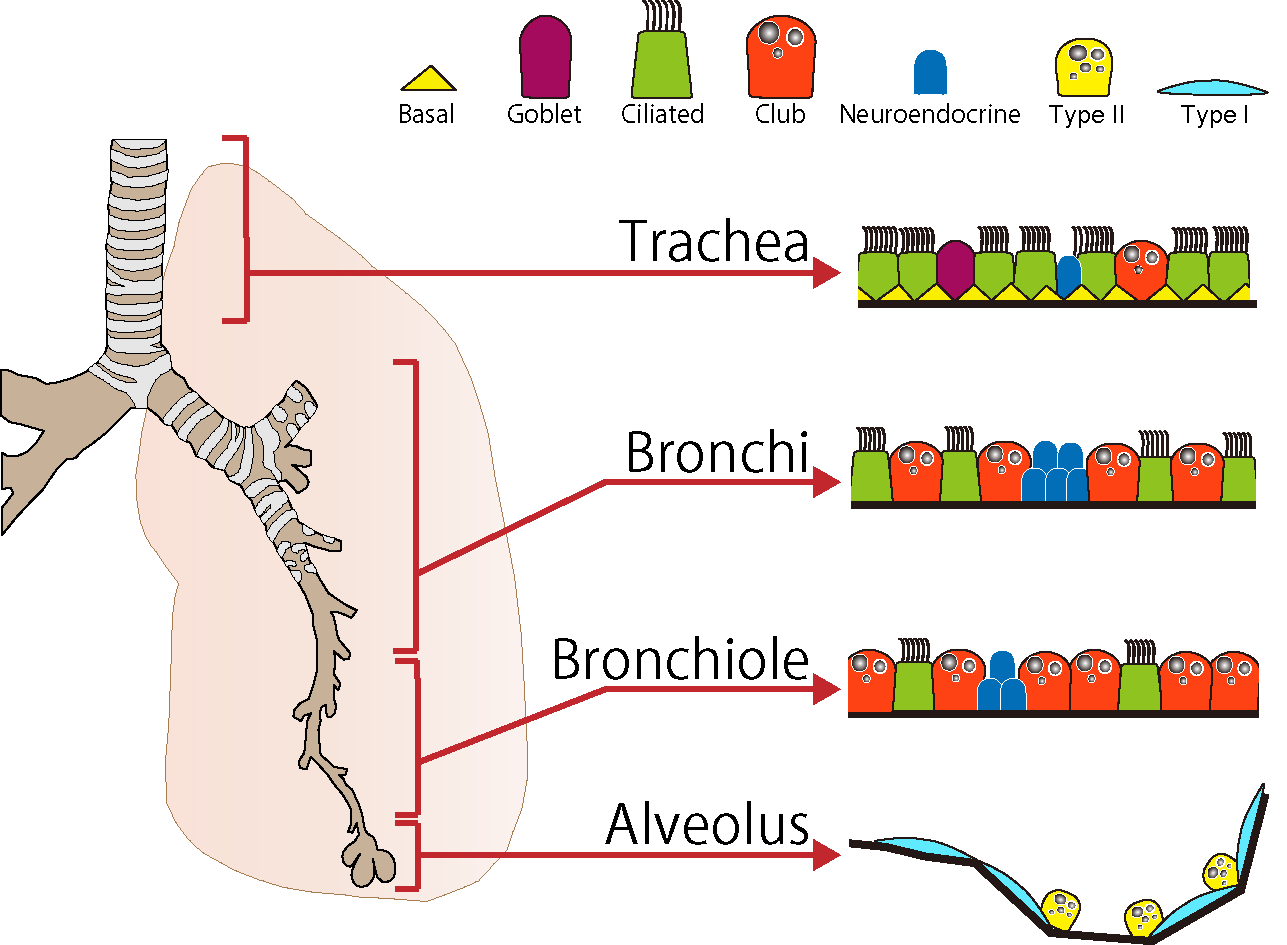
Club cells (formerly Clara cells) are specialized epithelial cells found in the bronchioles. They replace goblet cells as the airway transitions from the bronchi to the smaller bronchioles.
| Feature | Description |
|---|---|
| Morphology | Nonciliated; low columnar or cuboidal shape with a dome-shaped apex. |
| Location | Located specifically in the bronchioles (terminal and respiratory). |
| Inclusions | Contain dense secretory granules in the cytoplasm. |
2. Physiological Functions
Club cells serve as the primary protective and regenerative cells of the small airways, performing tasks similar to both liver cells and stem cells.
| Function | Mechanism / Details |
|---|---|
| Detoxification | Contain Cytochrome P-450 enzymes to degrade inhaled toxins. |
| Secretory | Secrete a surfactant-like component that prevents airway collapse. |
| Regeneration | Act as progenitor cells for both club cells and ciliated cells. |
3. Comparison: Bronchi vs. Bronchioles
As the respiratory tree branches, the cellular composition changes to facilitate different functions.
| Structure | Primary Secretory Cell | Histological Notes |
|---|---|---|
| Bronchi | Goblet Cells | Produce mucus; possess cartilage and submucosal glands. |
| Bronchioles | Club Cells | No goblet cells or cartilage; smooth muscle predominates. |
Activity:
High-Yield Clinical Pearls:
- The P-450 Connection: Unlike most lung cells, Club cells have significant Cytochrome P-450 activity, making them vital for metabolizing environmental pollutants.
- Progenitor Status: If the ciliated epithelium of the bronchioles is damaged, Club cells are the ones that divide and replace them.
- Alveoli vs. Bronchioles: Do not confuse Club cells with Type II Pneumocytes. Type II pneumocytes make true surfactant in the alveoli; Club cells make a similar material in the bronchioles.
You must be logged in to post a comment.