
Learning Objectives
Distinguish between the three primary Alveolar Cell Types. Master the clinical application of the Law of Laplace, the biochemical composition of surfactant, and the regenerative role of Type II Pneumocytes for the USMLE Step 1.
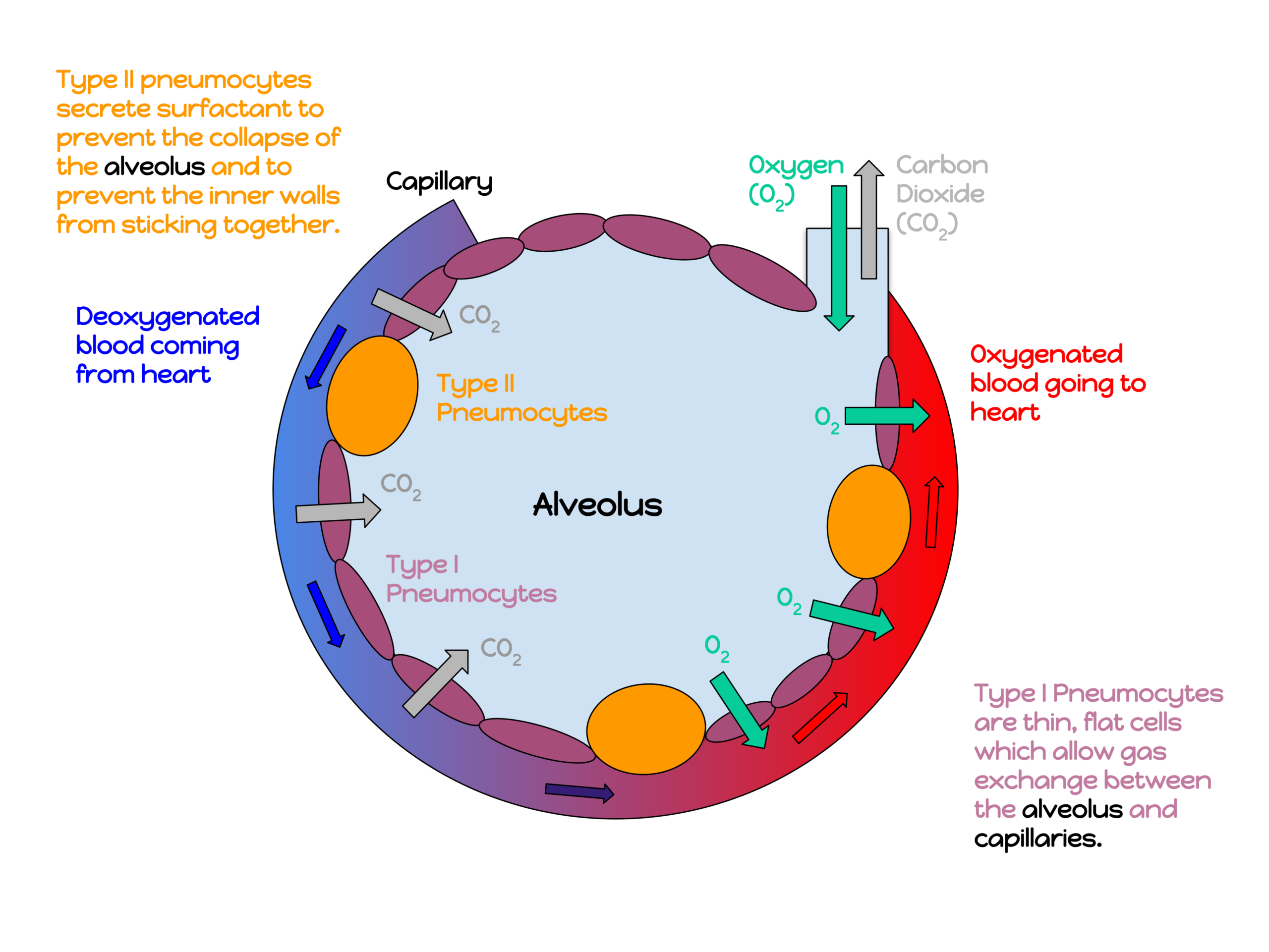
1. Type I vs. Type II Pneumocytes
The alveolar wall is a highly specialized structure designed for rapid gas exchange and mechanical stability.
| Cell Type | Morphology & Distribution | Primary Functions |
|---|---|---|
| Type I | Squamous; covers 97% of the alveolar surface area. | Optimal gas exchange (very thin). Linked by the Pores of Kohn. |
| Type II | Cuboidal; clustered. Contain lamellar bodies. | 1. Surfactant secretion. 2. Stem cell precursors for Type I and II cells. |
2. Surfactant and the Law of Laplace
Alveoli have a natural tendency to collapse during expiration as their radius decreases. Surfactant prevents this by reducing surface tension.
Law of Laplace:

| Feature | Details |
|---|---|
| Composition | Mainly dipalmitoylphosphatidylcholine (DPPC) (a lecithin). |
| Physiology | Increases compliance; decreases the work of breathing and lung recoil. |
| Timeline | Begins ~20 weeks; matures at ~35 weeks. |
3. Alveolar Macrophages (Dust Cells)
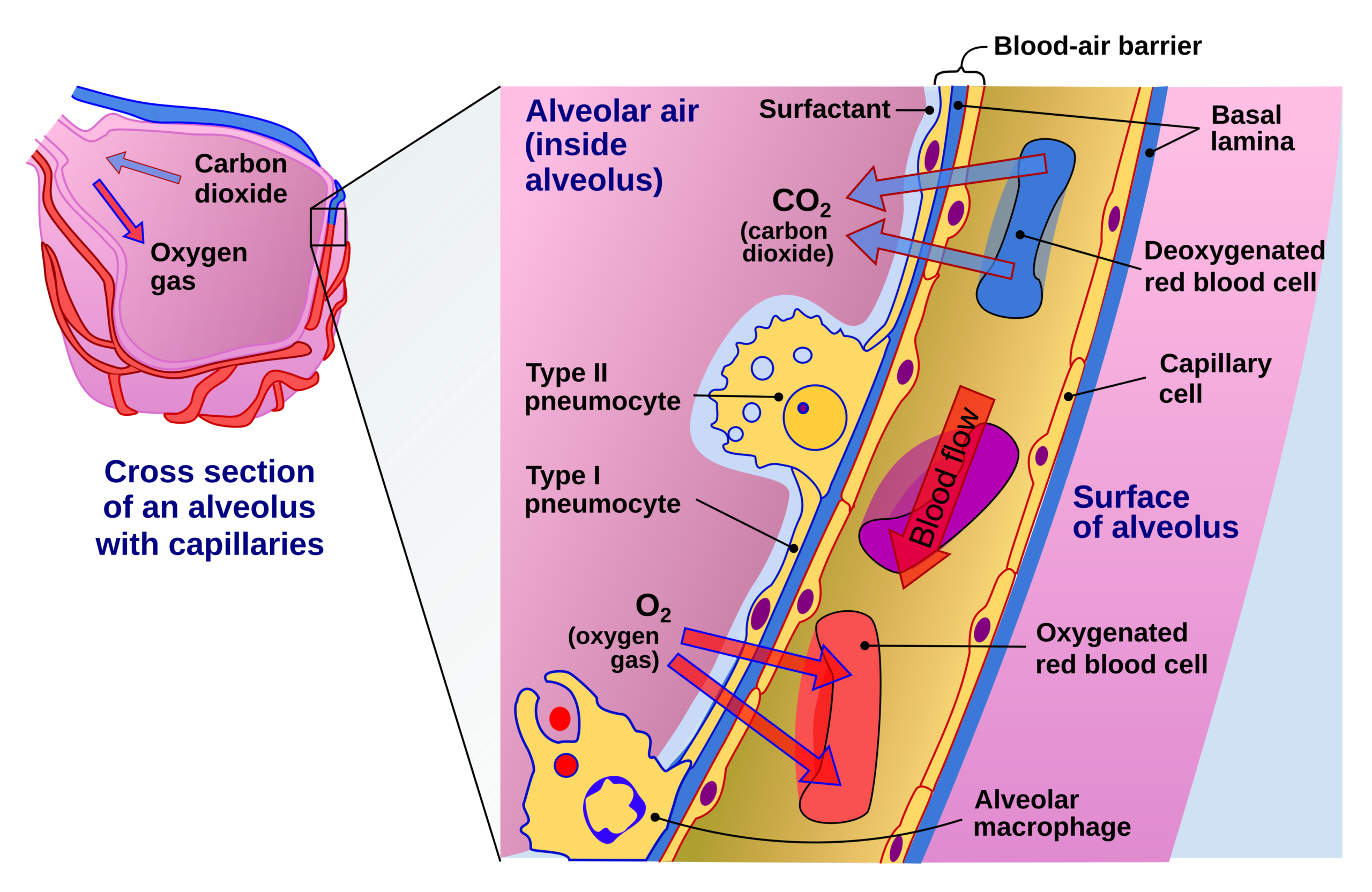
These cells act as the “sanitation crew” of the deep lung, clearing debris and orchestrating immune responses.
| Cell / Structure | Clinical Significance | Key Pathology |
|---|---|---|
| Alveolar Macrophage | Release cytokines and alveolar proteases (implicated in emphysema). | Phagocytose foreign material; derived from monocytes. |
| Hemosiderin-Laden Macrophage | Indicate chronic passive congestion or hemorrhage. | Found in pulmonary edema (heart failure cells). |
| Pores of Kohn | Allow collateral ventilation between alveoli. | Facilitate the spread of infection (bacteria/fluid) in pneumonia. |
Activity:
Activity
High-Yield Clinical Pearls:
- The Stem Cell Role: If a question asks which cell proliferates after lung injury (e.g., from O2 toxicity or pneumonia), the answer is Type II Pneumocytes.
- Steroid Link: Glucocorticoids (like betamethasone) are given to mothers in preterm labor to stimulate fetal surfactant synthesis.
- Heart Failure Cells: Finding hemosiderin-laden macrophages in the sputum or lung tissue is a major clue for chronic passive congestion due to left-sided heart failure.
You must be logged in to post a comment.