
Learning Objectives
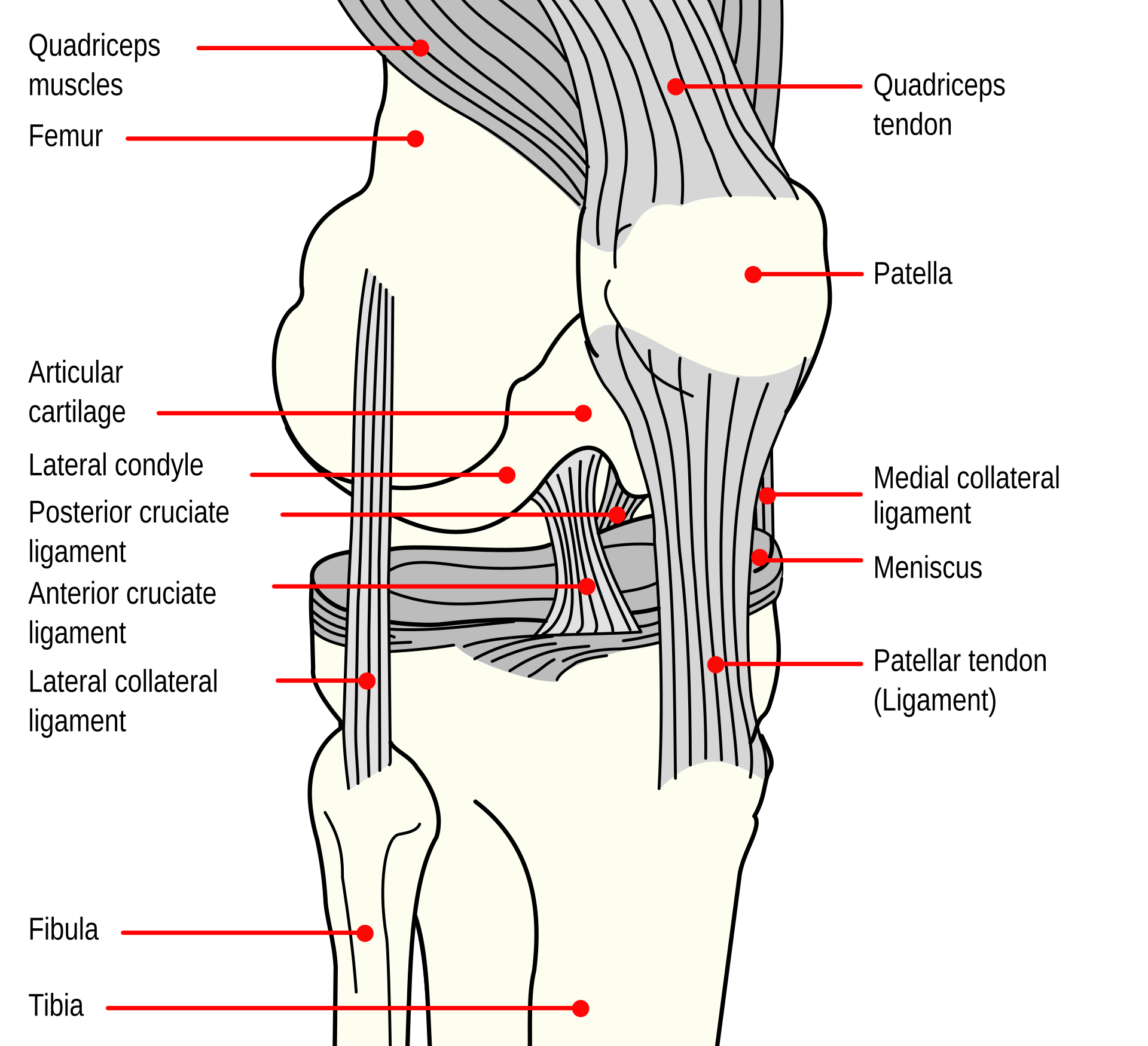
- Master the LAMP mnemonic for cruciate ligament attachments.
- Differentiate between Anterior and Posterior Drawer signs and the Lachman test.
- Apply Valgus and Varus stress to identify collateral ligament injuries.
- Interpret the McMurray test using the LIME rule for meniscal tears.
1. Cruciate Ligament Anatomy: The LAMP Rule
The ACL and PCL are named based on their attachment to the tibia. Their femoral origins follow a specific pattern:
- Lateral Femoral Condyle → Anterior Tibia: ACL.
- Medial Femoral Condyle → Posterior Tibia: PCL.
2. Clinical Tests for Ligamentous Laxity
| Test | Procedure & Finding | Injury Suspected |
|---|---|---|
| Anterior Drawer / Lachman | Tibia glides anteriorly (Lachman at 30° is more sensitive). | ACL Tear |
| Posterior Drawer | Tibia glides posteriorly (knee at 90°). | PCL Injury |
| Valgus Stress Test | Lateral force → Medial space widening. | MCL Injury |
| Varus Stress Test | Medial force → Lateral space widening. | LCL Injury |
3. Meniscal Assessment: The McMurray Test
This test involves flexion, extension, and rotation. Remember LIME:
- Lateral meniscus = Internal rotation.
- Pain or “popping” with internal rotation and varus force → Lateral meniscal tear.
- Medial meniscus = External rotation.
- Pain or “popping” with external rotation and valgus force → Medial meniscal tear.
Clinical Notes & Corrections:
- Unhappy Triad: A severe lateral impact can cause simultaneous injury to the ACL, MCL, and Medial Meniscus (though some studies suggest the lateral meniscus is actually more commonly involved in acute cases).
- Sensitivity: The Lachman test is considered more sensitive than the Anterior Drawer for ACL tears because it avoids the hamstrings’ “guarding” (tightening), which can occur at 90°.
Activity: Knee Exam Diagnostic Challenge
Memory Hooks:
LAMP: Lateral-ACL, Medial-PCL.
LIME: Lateral Internal, Medial External.
ValGus: Force makes the knees Gape together (knock-knees).
You must be logged in to post a comment.