
Learning Objectives
- Map the three distinct stages of arm abduction to their primary muscles.
- Identify the cranial and spinal nerves responsible for shoulder elevation.
- Explain the biomechanical transition from the glenohumeral joint to scapular rotation.
1. The Mechanics of Shoulder Abduction
Abducting the arm from the side to an overhead position requires a coordinated sequence of muscle activations. This process is divided into three key ranges:
| Range of Motion | Primary Muscle | Innervating Nerve |
|---|---|---|
| 0°–15° | Supraspinatus | Suprascapular nerve |
| 15°–90° | Deltoid | Axillary nerve |
| > 90° | Trapezius | Spinal accessory nerve (CN XI) |
| > 90° | Serratus Anterior | Long thoracic nerve |
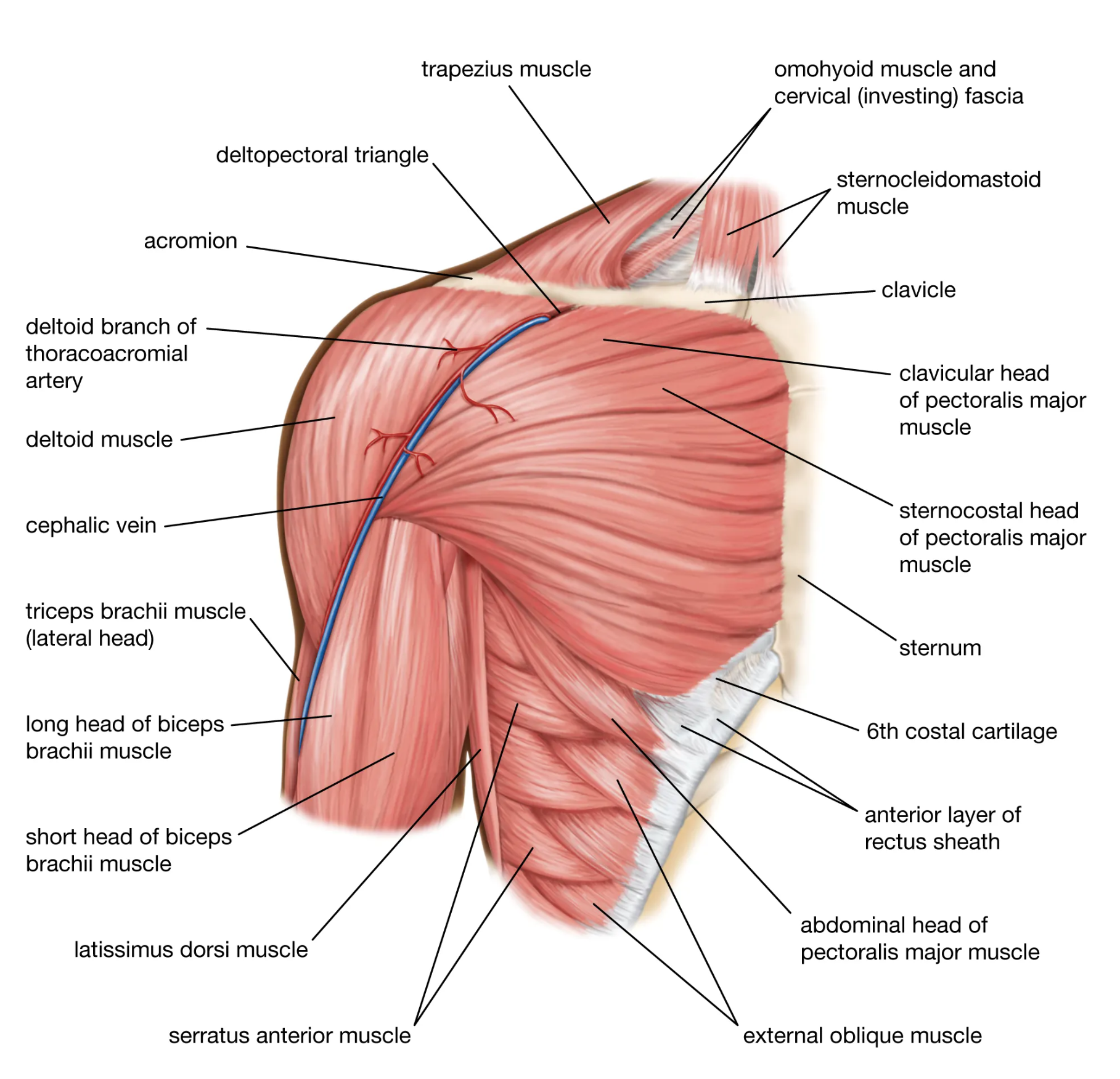
2. Scapular Rotation (Above 90°)
Once the arm passes the horizontal plane (90°), the humerus can no longer move independently at the glenohumeral joint. To go higher, the scapula must rotate upward.
- Serratus Anterior: This muscle “pulls” the scapula forward and rotates it. It is famously innervated by the Long Thoracic Nerve.
- Trapezius: The upper and lower fibers of the trapezius assist in the upward rotation and stabilization of the scapula during overhead reaching.
Activity:
Clinical Notes & Corrections:
- Winging of the Scapula: Damage to the Long Thoracic Nerve (often during axillary node dissection or trauma) causes the medial border of the scapula to protrude. Patients will have extreme difficulty abducting the arm above 90°.
- Drooped Shoulder: Injury to the Accessory Nerve (CN XI) leads to trapezius palsy, resulting in a drooped shoulder and weakness in overhead abduction.
- Rotator Cuff Tears: If the supraspinatus is torn, the patient may “shrug” their shoulder or lean their body to initiate the first 15° of movement.
Activity: Abduction Range Challenge
Memory Hooks:
SALT: Serratus Anterior = Long Thoracic.
Supraspinatus: Starts the movement (0-15).
90 Degrees: Above 90, you need the Back (Trapezius) and the Side (Serratus).
You must be logged in to post a comment.