
Learning Objectives
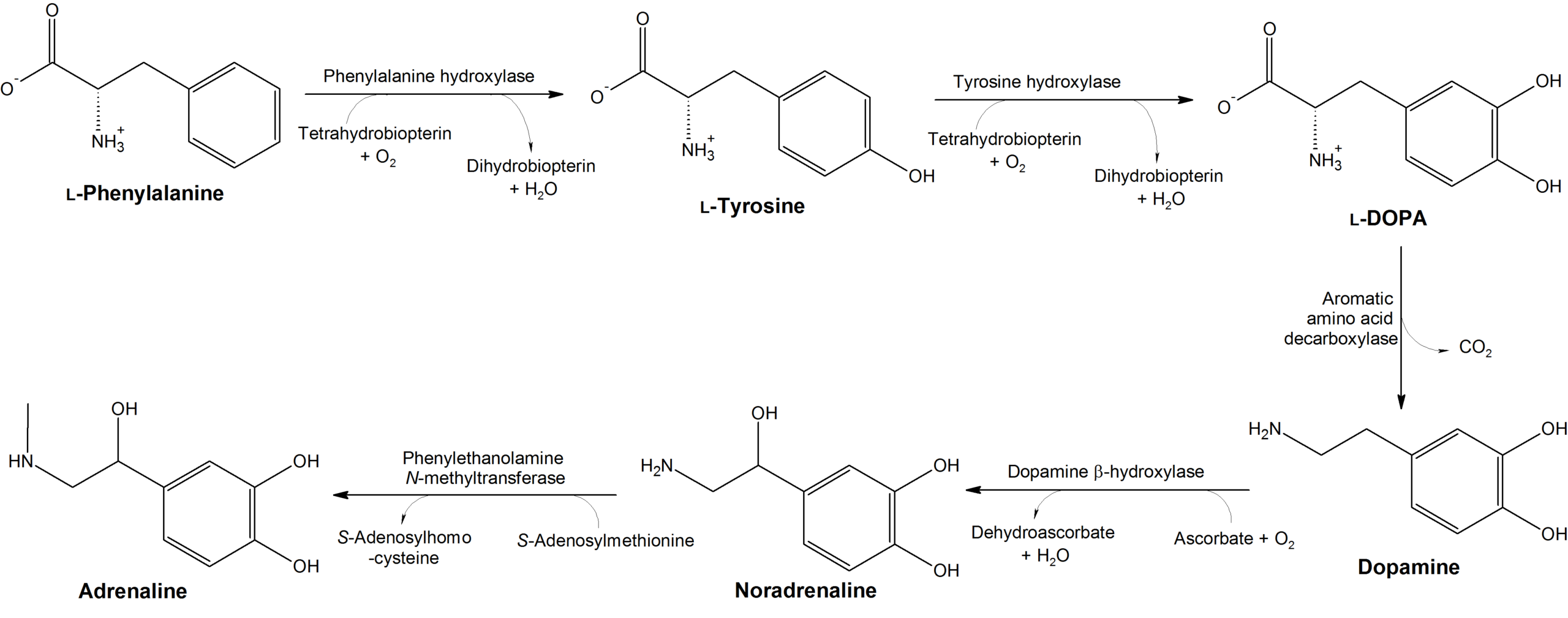
- Trace the biochemical conversion of Phenylalanine and Tyrosine into catecholamines and melanin.
- Identify the essential cofactors (BH4, B6, Vitamin C, SAM) required for neurotransmitter synthesis.
- Explain the clinical significance of derivatives from Tryptophan, Histidine, and Arginine.
- Understand the role of Vitamin B6 in the synthesis of heme and GABA.
1. Phenylalanine and Tyrosine Derivatives
Phenylalanine is the precursor for a vast array of signaling molecules and pigments. The pathway requires a sequence of specific hydroxylations and decarboxylations.
- Catecholamine Pathway:
PhenylalanineTyrosine
Dopa
Dopamine
Norepinephrine (NE)
Epinephrine (Epi).
- Other Tyrosine Products:
- Thyroxine (T4): The primary thyroid hormone.
- Melanin: Produced via tyrosinase; deficiency leads to albinism.
2. Tryptophan and Histidine Derivatives
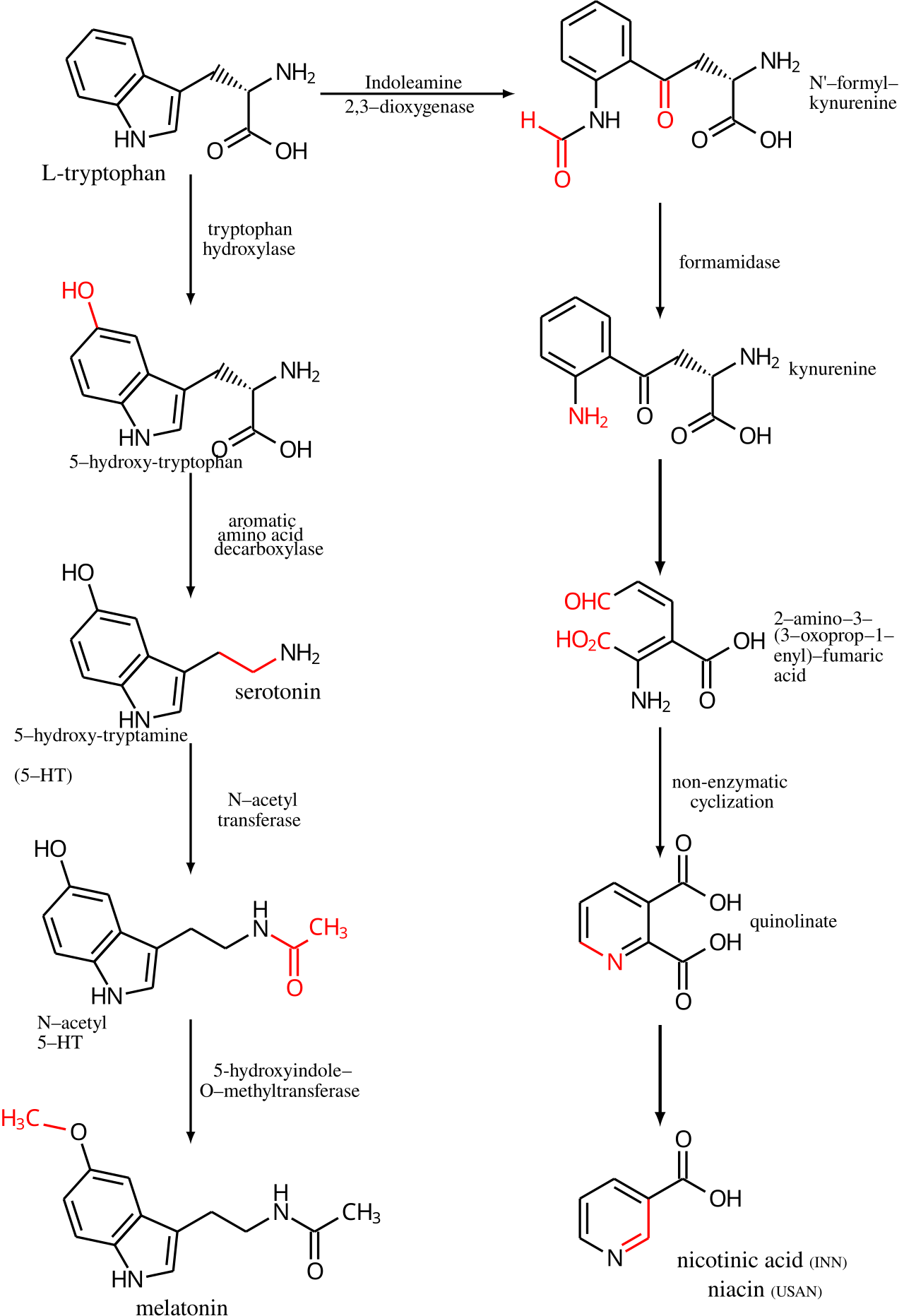
Tryptophan is unique because it contributes to both vitamin synthesis and circadian rhythm regulation.
- Tryptophan:
Niacin
NAD+/NADP+.
Serotonin
- Histidine:
Activity
3. Arginine, Glycine, and Glutamate
These amino acids provide the building blocks for muscular energy, gas signaling, and inhibitory neurotransmission.
- Arginine:
- Converts to Urea (via the Urea Cycle) and Creatine.
- Glycine:
- Glutamate:
Activity
Memory Hook: “Tryptophan is a TRIP”: It makes you sleepy (Melatonin) and prevents Pellegra (Niacin). Most decarboxylation reactions (making GABA, Histamine, and heme) require Vitamin B6.
4. Summary of Key Cofactors
| Cofactor | Key Reactions/Derivatives |
|---|---|
| BH4 (Tetrahydrobiopterin) | Phenylalanine, Tyrosine, Tryptophan hydroxylases; Nitric Oxide synthase. |
| Vitamin B6 (Pyridoxine) | Heme, GABA, Histamine, Serotonin, Dopa Dopamine. |
| SAM (S-adenosylmethionine) | Norepinephrine Epinephrine. |
Clinical Notes & Corrections:
- B6 Deficiency: Since B6 is required for Heme synthesis (via ALAS) and GABA synthesis, a deficiency can manifest as sideroblastic anemia and seizures.
- BH4 Deficiency: A lack of BH4 results in “Malignant PKU” because it blocks not only Phenylalanine metabolism but also the production of Dopamine and Serotonin.
You must be logged in to post a comment.