
Learning Objectives
- Identify the unique inheritance pattern of Ornithine Transcarbamylase (OTC) deficiency.
- Explain the biochemical diversion of carbamoyl phosphate into the pyrimidine synthesis pathway.
- Distinguish OTC deficiency from Orotic Aciduria and CPS I deficiency using clinical findings.
- Recognize the neonatal presentation of urea cycle disorders.
1. Pathophysiology and Genetics
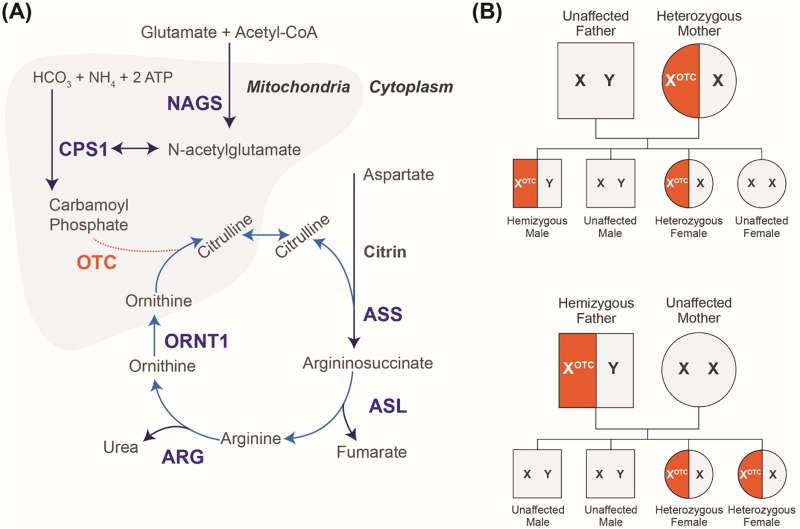
OTC deficiency is the most common urea cycle disorder. It is unique among these disorders because it follows an X-linked recessive inheritance pattern, whereas all other urea cycle enzyme deficiencies are autosomal recessive.
When OTC is deficient, the body cannot combine ornithine and carbamoyl phosphate to form citrulline. This leads to:
- Ammonia Accumulation: Nitrogen cannot be excreted as urea, leading to systemic hyperammonemia.
- Carbamoyl Phosphate Shunt: Excess carbamoyl phosphate leaks out of the mitochondria into the cytoplasm. Here, it enters the pyrimidine synthesis pathway, where it is converted into Orotic Acid.
2. Clinical Findings
Symptoms often appear in the first few days of life (neonatal onset) as the infant begins protein intake, but partial deficiencies can present later in life.
- Laboratory Results:
Orotic acid in blood and urine.
BUN (Blood Urea Nitrogen) because the urea cycle is stalled.
- Significant Hyperammonemia.
- Physical Symptoms: Typical signs of ammonia toxicity, including lethargy, poor feeding, vomiting, and tachypnea.
Activity
Memory Hook: Orotic acid + Toxic ammonia = OTC deficiency.
3. Differential Diagnosis Table
It is critical to distinguish OTC deficiency from other conditions that present with high orotic acid or high ammonia.
| Condition | Ammonia ( ) ) |
Orotic Acid | Megaloblastic Anemia |
|---|---|---|---|
| OTC Deficiency |  High High |
High |
Absent |
| Orotic Aciduria | Normal | High |
Present |
| CPS I Deficiency | High |
Low/Normal | Absent |
Clinical Notes & Corrections:
- Genetics: Because it is X-linked recessive, OTC deficiency is seen much more frequently and severely in males. Carrier females may be asymptomatic or show mild symptoms due to skewed X-inactivation (lyonization).
- Pediatrics: In a newborn with sudden lethargy and a respiratory alkalosis (due to ammonia stimulating the respiratory center), urea cycle disorders should be at the top of your differential.
You must be logged in to post a comment.