
Learning Objectives
- Differentiate between the Cahill Cycle (Alanine) and the Cori Cycle (Lactate).
- Explain how ammonia is safely transported from the muscle to the liver.
- Identify the role of ALT in the transamination of pyruvate to alanine.
- Understand the metabolic trade-off between muscle energy needs and liver glucose production.
1. The Cahill Cycle (Alanine Cycle)
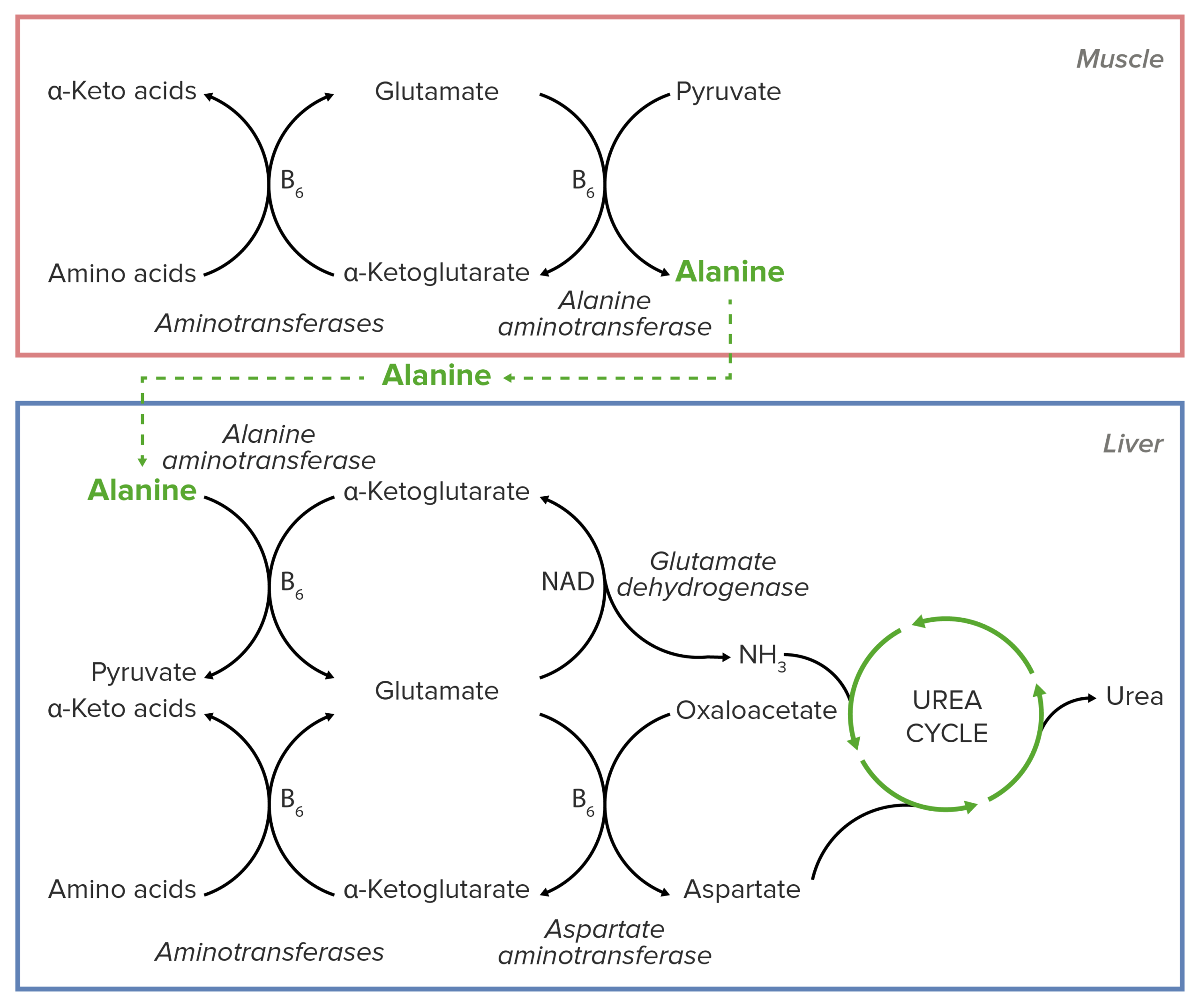
The Cahill cycle is the body’s primary mechanism for nitrogen transport. During muscle protein catabolism, amino acids are broken down, releasing toxic ammonia (
Alanine is released into the blood and travels to the liver, where it is converted back to pyruvate for gluconeogenesis. The nitrogen is funneled into the Urea Cycle for safe excretion.
2. The Cori Cycle (Lactate Cycle)
The Cori cycle focuses on energy recycling under anaerobic conditions. When muscles lack sufficient oxygen (intense exercise), they convert pyruvate to Lactate to regenerate 
This lactate is released into the bloodstream and taken up by the liver. The liver then spends ATP to convert lactate back into Glucose via gluconeogenesis, which is then sent back to the muscle for immediate use.
Activity
3. Metabolic Comparison Table
| Feature | Cahill Cycle | Cori Cycle |
|---|---|---|
| Main Intermediate | Alanine | Lactate |
| Primary Goal | Excrete Nitrogen (Urea) | Regenerate NAD+ |
| Liver Product | Glucose + Urea | Glucose |
Clinical Notes & Corrections:
- Serum ALT: High levels of serum ALT are a clinical marker of liver damage (hepatocellular injury), as this enzyme leaks from hepatocytes into the blood.
- Energy Cost: The liver consumes 6 ATP to convert 2 lactate molecules into 1 glucose molecule, making the Cori cycle a net energy loss for the body but a gain for muscle performance.
- Pathology: Defects in gluconeogenesis (e.g., Von Gierke disease) will cause a buildup of lactate, leading to lactic acidosis because the Cori cycle is stalled.
You must be logged in to post a comment.