
Learning Objectives
- Identify the five essential cofactors required for PDH activity.
- Explain the metabolic link between glycolysis and the TCA cycle.
- Recognize the clinical presentation of arsenic poisoning and its biochemical mechanism.
1. The PDH Complex: Gatekeeper of the TCA Cycle
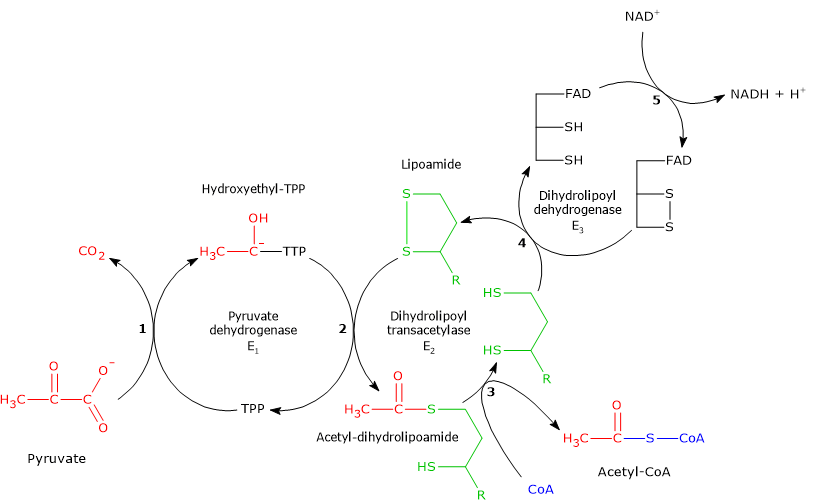
Located in the mitochondrial matrix, the Pyruvate Dehydrogenase (PDH) complex converts pyruvate into Acetyl-CoA. This reaction is irreversible and serves as the primary entry point for carbohydrate-derived carbons into the TCA cycle.
Pyruvate + NAD+ + CoA → Acetyl-CoA + CO2 + NADH
2. The Five Essential Cofactors
The complex consists of three subunits (E1, E2, E3) that require five different B-vitamin-derived cofactors to function efficiently.
| Cofactor | Vitamin Precursor |
|---|---|
| 1. Thiamine pyrophosphate (TPP) | B1 (Thiamine) |
| 2. Lipoic acid | N/A (Inhibited by Arsenic) |
| 3. CoA | B5 (Pantothenic acid) |
| 4. FAD | B2 (Riboflavin) |
| 5. NAD+ | B3 (Niacin) |
Biochemical Correlation: Enzyme Similarity
The PDH complex is nearly identical in mechanism and cofactor requirements to the α-ketoglutarate dehydrogenase complex (TCA cycle) and the Branched-chain α-keto acid dehydrogenase complex (Leucine/Isoleucine/Valine metabolism). All three require the “Tender Loving Care For No One” cofactors.
3. Regulation & Inhibition
- Activated by: ↑ NAD+/NADH ratio, ↑ ADP, and ↑ Ca2+ (signals of low energy or muscle contraction).
- Inactivated by: ↑ ATP, ↑ NADH, and ↑ Acetyl-CoA (products of the reaction).
Activity
Clinical Correlate: Arsenic Poisoning
Arsenic binds to lipoic acid, inhibiting the PDH complex. This forces the cell into anaerobic metabolism, leading to lactic acidosis. Clinical features include garlic breath, vomiting, diarrhea, QT prolongation, and “raindrop” skin pigmentation.
Activity
Activity
You must be logged in to post a comment.