
Learning Objectives
- Map the biochemical oxidation of ethanol and its cellular locations.
- Explain how the NADH/NAD+ ratio drives metabolic derangements.
- Compare the mechanisms of Fomepizole and Disulfiram.
1. The Metabolic Pathway
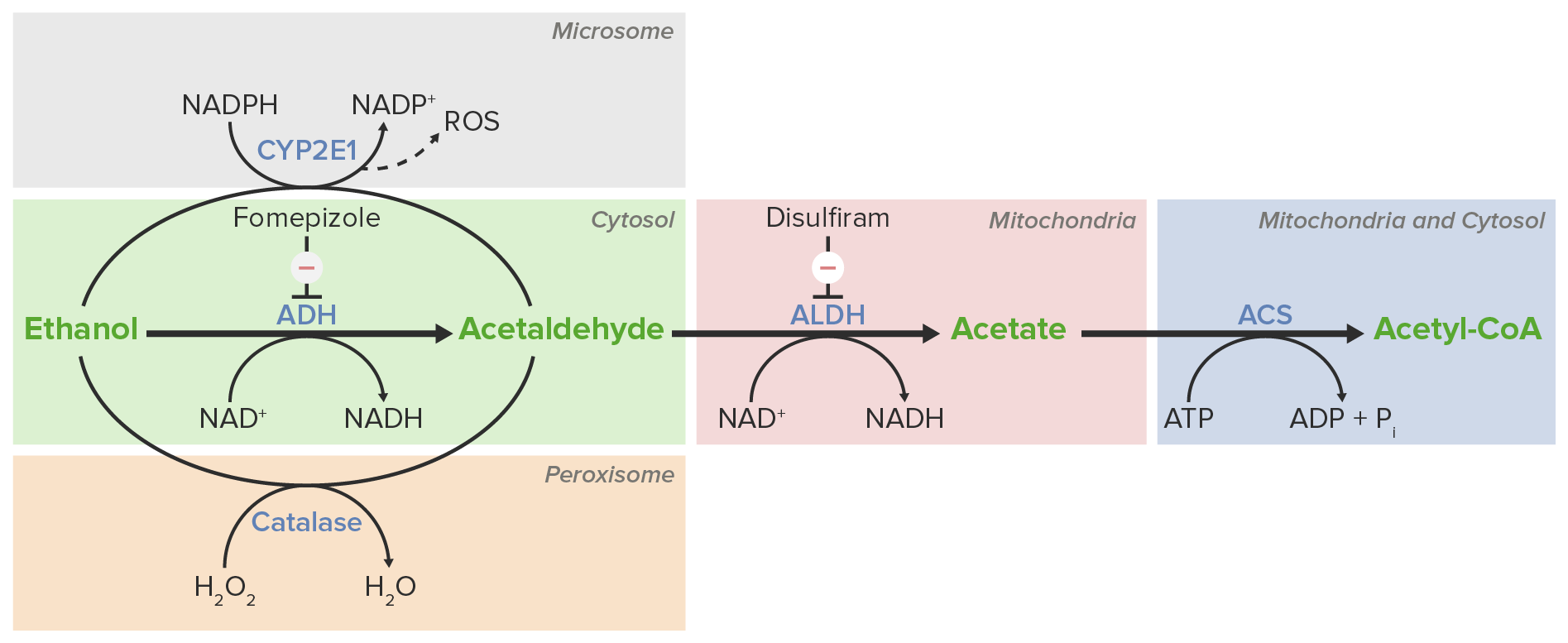
Ethanol metabolism is a two-step process. NAD+ is the limiting reagent, and the pathway follows zero-order kinetics.
- Step 1 (Cytosol): Ethanol → Acetaldehyde via Alcohol Dehydrogenase.
- Step 2 (Mitochondria): Acetaldehyde → Acetate via Acetaldehyde Dehydrogenase.
Clinical Correlate: Pharmacology
Fomepizole: Inhibits alcohol dehydrogenase. Antidote for methanol or ethylene glycol poisoning.
Disulfiram: Inhibits acetaldehyde dehydrogenase. Causes acetaldehyde buildup, leading to nausea and flushing to discourage drinking.
Activity
2. Metabolic Consequences of High NADH
Excessive NADH production “clogs” the liver’s metabolic machinery, shunting substrates away from normal pathways:
- Lactic Acidosis: Pyruvate is shunted to lactate to regenerate NAD+.
- Fasting Hypoglycemia: Oxaloacetate (OAA) is shunted to malate, inhibiting gluconeogenesis.
- Hepatosteatosis: DHAP is shunted to glycerol-3-P → Triglycerides (fatty liver).
- Ketoacidosis: Stalled TCA cycle diverts acetyl-CoA into ketogenesis.
You must be logged in to post a comment.