
Learning Objectives
- Differentiate between Incidence (new cases) and Prevalence (all cases).
- Calculate Attack Rates during outbreak scenarios.
- Predict how interventions (vaccines, treatments) impact epidemiologic metrics.
- Distinguish between Morbidity and Mortality rates.
I. Incidence: The “New Events” Rate
Incidence Rate (IR) measures the flow of new disease into a healthy population.
Formula:
IR = (Number of NEW cases in a period) / (Population AT RISK during that period)
Special Case: Attack Rate
Used typically used for food-borne illness or short-term outbreaks. It is the cumulative incidence from the start to the end of an outbreak.
Example: 18 people ill with Norwalk virus in a community of 1,000.
Attack Rate = 18 / 1,000 = 1.8%
II. Prevalence: The “Total Burden”
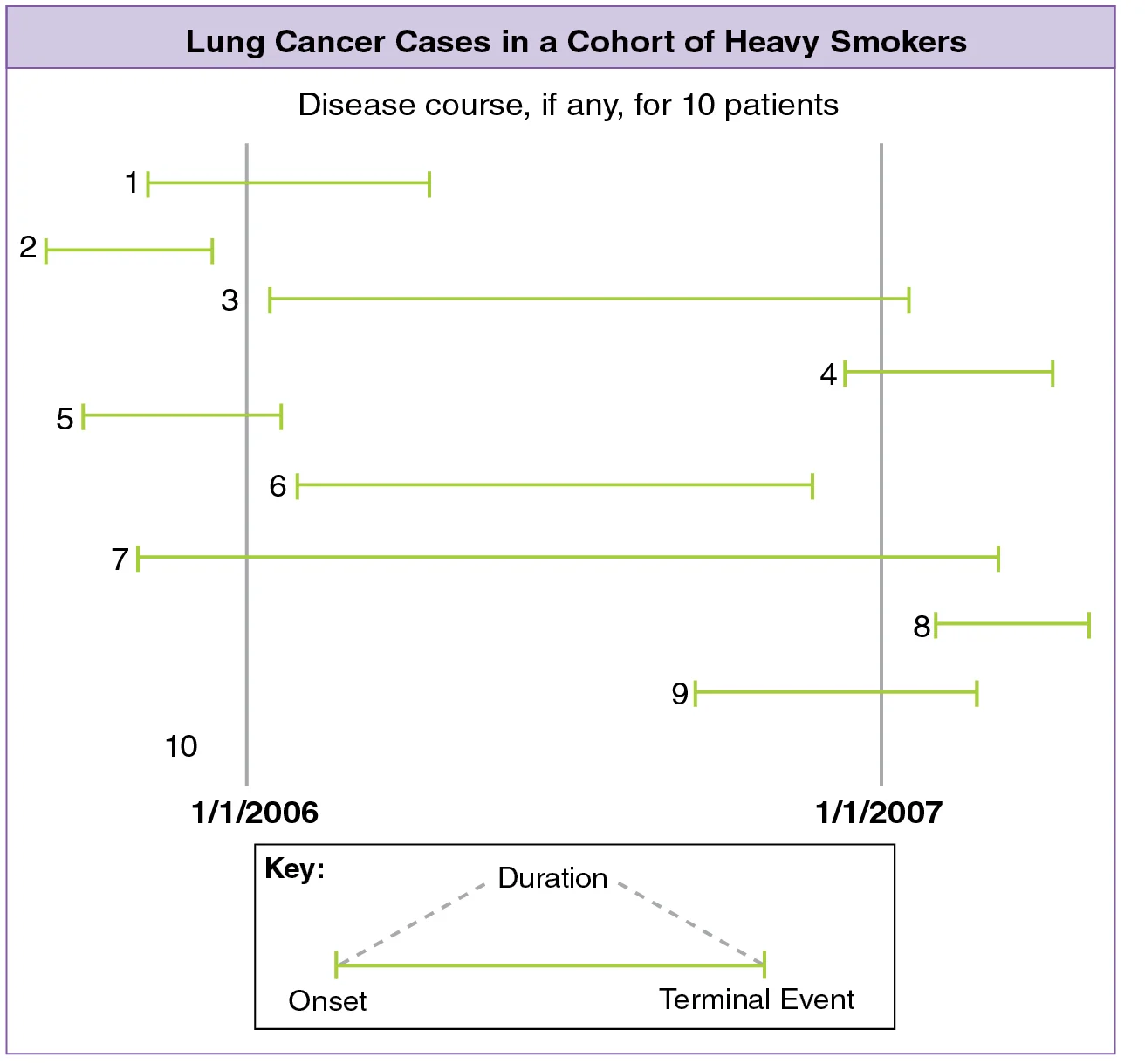
Prevalence is a snapshot of all individuals affected by a condition (New + Old cases).
| Type | Description |
|---|---|
| Point Prevalence | Disease present at a single point in time (e.g., “Today”). |
| Period Prevalence | Disease present over a defined span (e.g., “The year 2021”). |
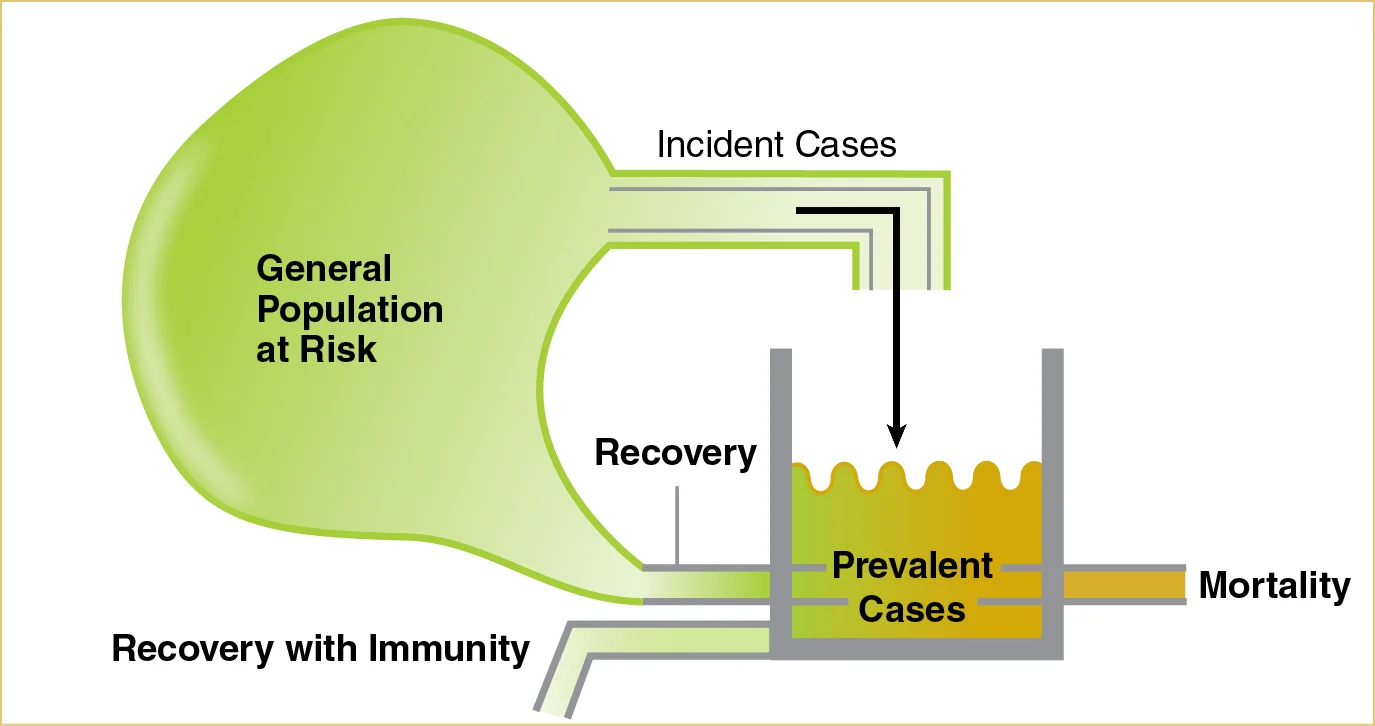
The “Prevalence Pot” Concept
1. Incidence (New cases) flows INTO the pot.
2. Death or Recovery flows OUT of the pot.
III. Dynamic Changes in Population Metrics
How do specific events change the data? This is a high-yield exam topic.
| Scenario | Incidence | Prevalence |
|---|---|---|
| New effective Vaccine | Decrease | Decrease |
| New effective Treatment (Cure) | No Change | Decrease |
| Increased Mortality (Death) | No Change | Decrease |
| Improved Survival (but no cure) | No Change | Increase |
| Reduced Risk Factors | Decrease | Decrease |
IV. Morbidity vs. Mortality
Morbidity Rate
The rate of disease (sickness) in a population. Includes both incident and prevalent cases.
Mortality Rate
The rate of death in a population. Usually calculated as incident cases only (death is a one-time event).
You must be logged in to post a comment.