
Learning Objectives
- Understand the anatomical structure and major subregions of the hippocampus (dentate gyrus, CA1-CA3, and subiculum).
- Detail the hippocampal circuit connections, including inputs from the entorhinal cortex and outputs to the neocortex and thalamus.
- Explain the hippocampus’s core physiological roles in declarative memory consolidation, spatial navigation, and cognition.
- Recognize clinical consequences of hippocampal pathology in Alzheimer’s disease, amnesia, temporal lobe epilepsy, and stress-related mood disorders.
1. Anatomy, Subregions & Connections
The hippocampus is a bilateral, C-shaped structure nestled deep within the medial temporal lobe, serving as the master hub for memory and spatial orientation.
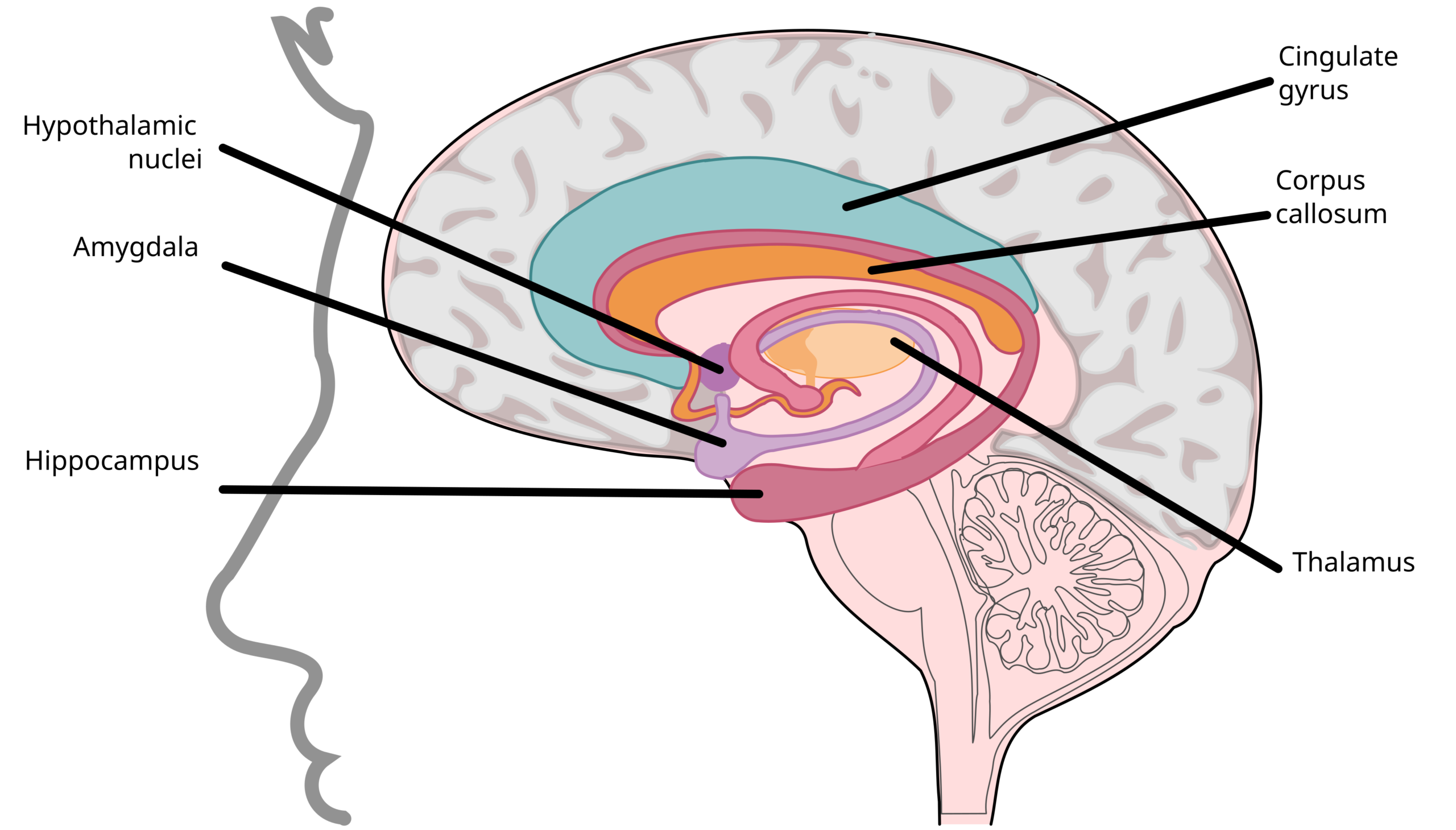
| Anatomical Aspect | Components & Pathways | Functional Description |
|---|---|---|
| Major Subregions | Dentate gyrus, Cornu Ammonis (CA1, CA2, CA3), and Subiculum | Sequential processing circuit executing pattern separation, encoding, and output relay. |
| Afferent Inputs | Neocortex via the entorhinal cortex, and amygdala | Feeds multimodal sensory and emotional information into the hippocampal loop. |
| Efferent Outputs | Neocortex and thalamus | Distributes consolidated memory traces back to cortical storage areas. |
2. Cognitive Functions
- Memory Formation: Essential for declarative (explicit) memory encoding, consolidation, and retrieval of facts, events, and spatial relationships.
- Spatial Navigation: Generates cognitive maps of the environment, allowing effective physical and mental orientation.
- Cognition & Pattern Separation: Supports attention, contextual processing, and the ability to distinguish similar memories or stimuli.
Clinical Notes & Pathology:
- Alzheimer’s Disease: One of the earliest anatomical sites for neurofibrillary tangle and amyloid plaque accumulation, precipitating profound short-term memory loss.
- Amnestic Syndromes: Bilateral hippocampal damage produces anterograde amnesia (inability to form new declarative memories) while sparing procedural memory.
- Temporal Lobe Epilepsy: Due to dense recurrent circuitry, the hippocampus is a primary seizure focus, often exhibiting hippocampal sclerosis.
- Stress & Mood Disorders: High glucocorticoid receptor density makes hippocampal neurons highly vulnerable to chronic stress, contributing to volumetric shrinkage in depression and PTSD.
Key Points & Memory Hooks:
Memory Gateway: The entorhinal cortex acts as the primary sensory tollbooth feeding information into the dentate gyrus and CA fields.
Anterograde Block: Think of the hippocampus as the brain’s save-button; without it, new experiences evaporate instantly.
Stress Vulnerability: Chronic cortisol exposure damages delicate hippocampal dendrites, linking high stress directly to memory deficits and depression.
You must be logged in to post a comment.