
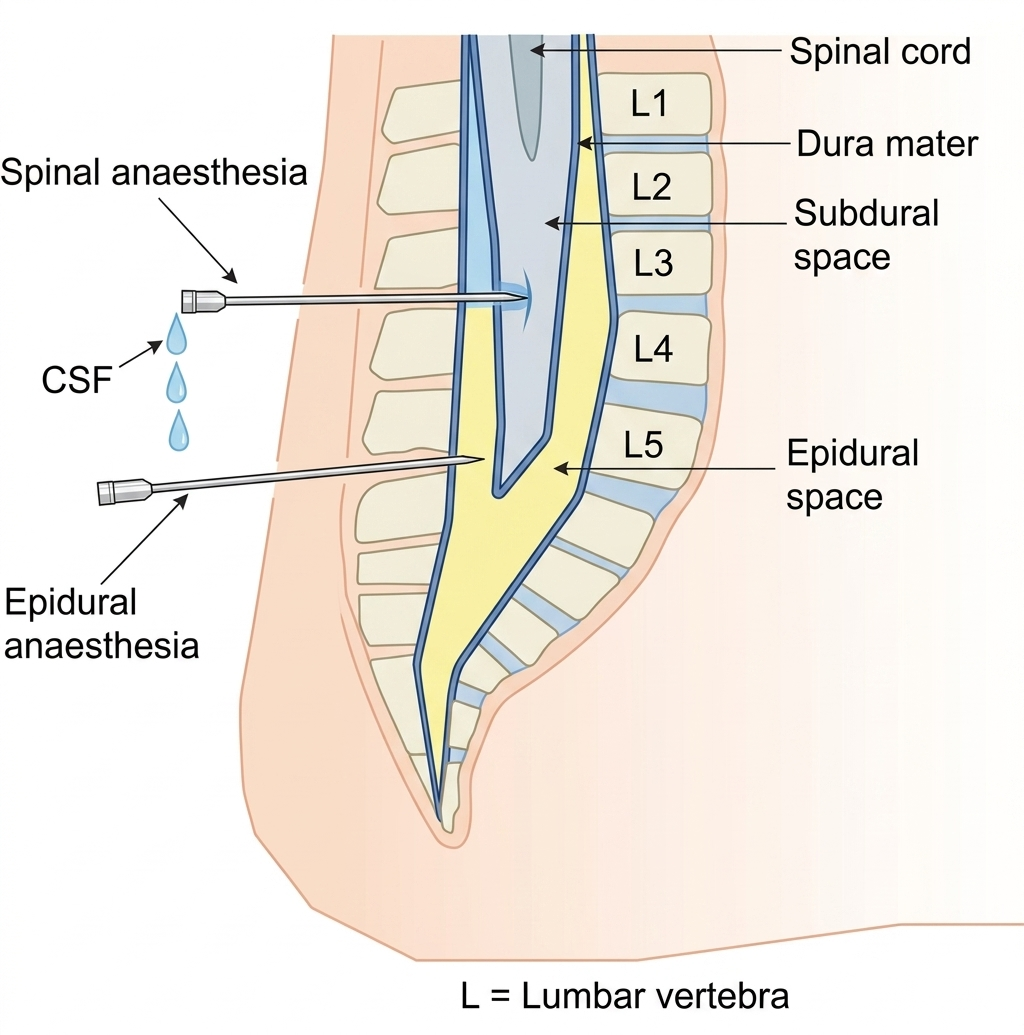
Epidural anaesthesia involves the injection of medication into the epidural space (outside the dura mater) to block nerve transmission. It is a cornerstone of both obstetric pain management and postoperative analgesia.
Clinical Features and Technique
| Feature | High-Yield Point |
|---|---|
| Mechanism | Acts primarily on nerve roots exiting the dura mater. |
| Catheter | Allows for continuous infusion or repeat dosing; ideal for prolonged surgeries or labor. |
| Placement | Identified by the “loss of resistance” technique using saline or air. |
High-Yield NEET PG Clinical Points
- Clinical Benefit: Reduces the need for systemic opioids and lowers the risk of postoperative respiratory complications and myocardial infarctions.
- Obstetric Use: More effective than IV/oral opioids; does not increase the risk of Caesarean section.
- Accidental Dural Puncture: Can lead to a “total spinal,” causing unconsciousness and respiratory arrest.
- Post-Dural-Puncture Headache (PDPH): Treated with an epidural blood patch if conservative measures fail.
Clinical High-Yield Contraindications
Epidural anaesthesia is contraindicated in patients with severe coagulopathy, local infection (cellulitis) at the site, or uncorrected hypovolemia. Use caution in patients with preexisting progressive neurological disease.
For high-yield clinical resources and free medical questions, visit mymedschool.org.
You must be logged in to post a comment.