
Cervical Intraepithelial Neoplasia (CIN)
CIN is the precursor lesion to invasive squamous cell carcinoma of the cervix, strongly associated with persistent high-risk Human Papillomavirus (HPV) infection.
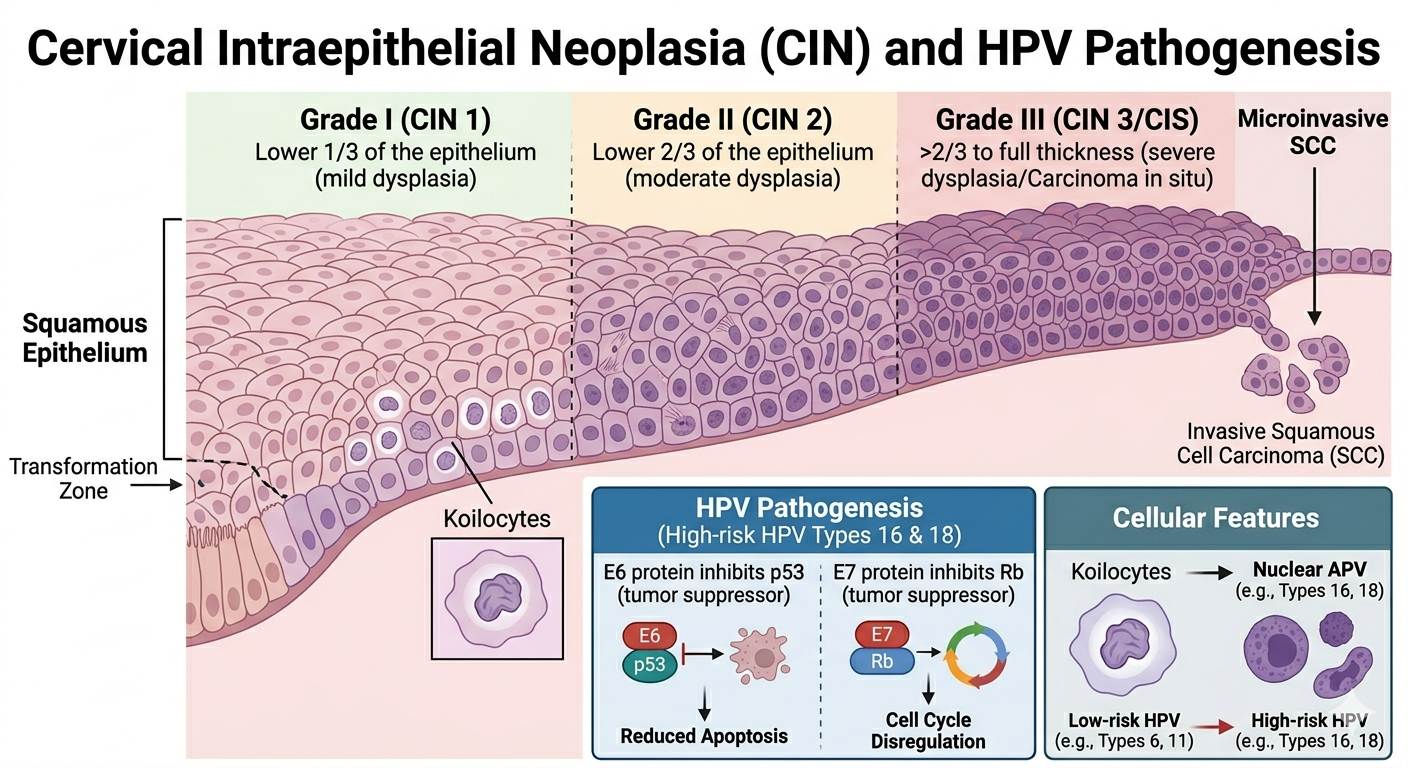
1. Grading System
| Grade | Histological Involvement |
|---|---|
| CIN 1 | Lower 1/3 of the epithelium (mild dysplasia). |
| CIN 2 | Lower 2/3 of the epithelium (moderate dysplasia). |
| CIN 3 | >2/3 of the epithelium to full thickness (severe dysplasia/CIS). |
2. Exam Must-Knows (NEET PG Focus)
- HPV Pathogenesis: High-risk HPV (types 16 and 18) expresses E6 (inhibits p53) and E7 (inhibits Rb) proteins.
- Koilocytes: Classic cytologic feature of HPV infection; seen as wrinkled (“raisinoid”) nuclei with a perinuclear halo.
- Transformation Zone: The site of highest risk, where squamous metaplasia occurs as the transformation zone shifts with age.
NEET PG Board Hint: For exams, know that p16 is a surrogate marker for high-risk HPV integration. If a question asks for the most important risk factor for cervical cancer, it is persistent high-risk HPV infection. Remember that CIN 3 is synonymous with Carcinoma In Situ (CIS).
You must be logged in to post a comment.