
Caudal anaesthesia is a specialized form of epidural block performed by injecting local anaesthetic through the sacral hiatus into the caudal epidural space. It is particularly valuable in pediatric anaesthesia.
| Feature | Clinical Profile |
|---|---|
| Anatomical Landmark | Sacral hiatus (located between the sacral cornua). |
| Primary Usage | Sub-umbilical surgeries are common for hernia repair, circumcision, and lower limb procedures in children. |
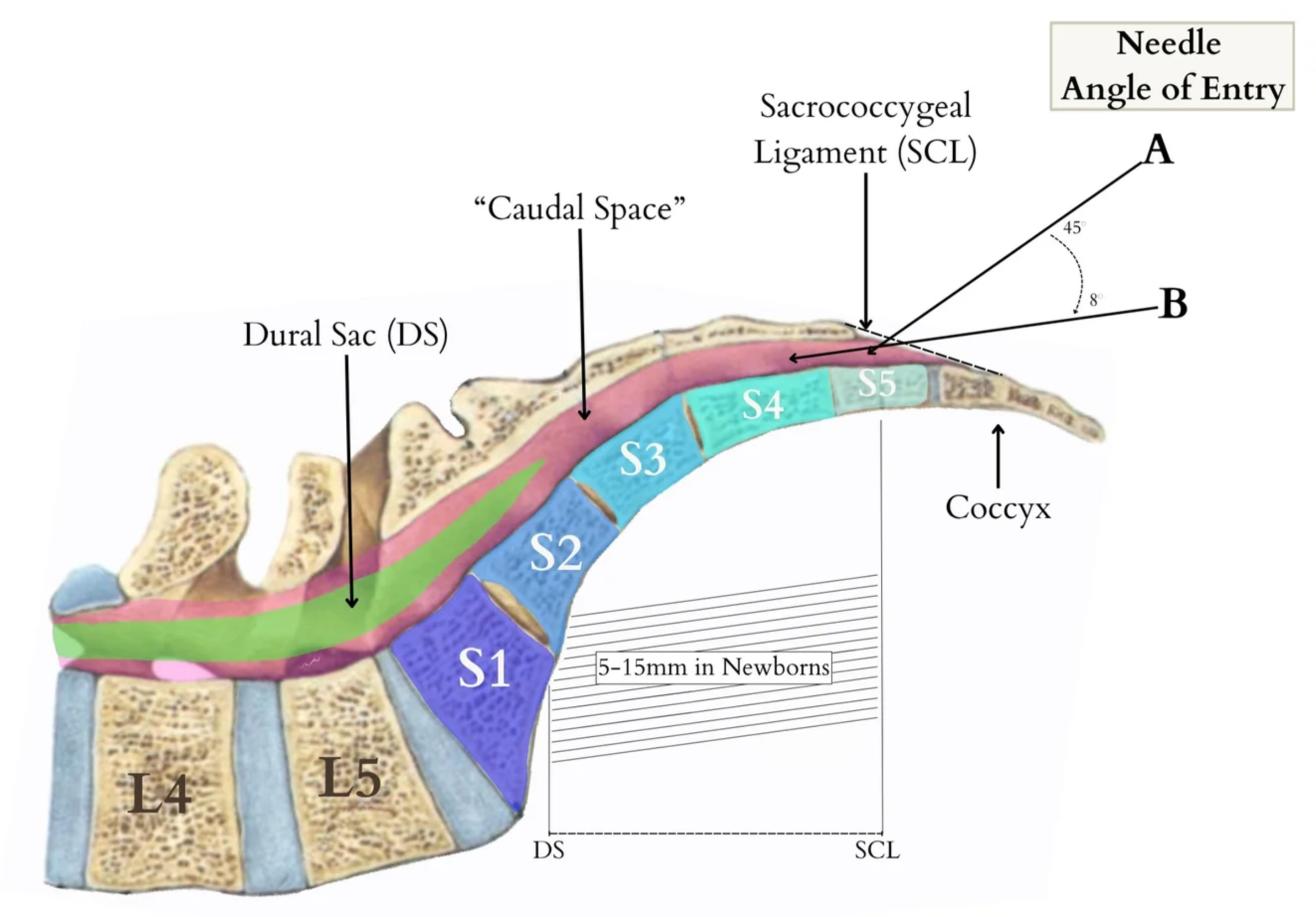
| Technique | The needle is inserted at a 45° angle, then flattened after piercing the sacrococcygeal ligament. |
High-Yield Clinical Notes:
- Safety: Because the dural sac ends at S2 in children (compared to L1/L2 in adults), the risk of accidental dural puncture is significantly higher if the needle is advanced too far.
- Adjuvants: Often combined with additives like clonidine or opioids to prolong the duration of analgesia and improve quality.
- Contraindications: Sacral anatomical abnormalities (e.g., spina bifida), local infection, or coagulopathy.
For more high-yield resources and free medical questions, visit mymedschool.org.
You must be logged in to post a comment.