
Blood Pressure Regulation
BP is regulated through two main timeframes: Short-term (neural via baroreceptors) and Long-term (renal via hormones).
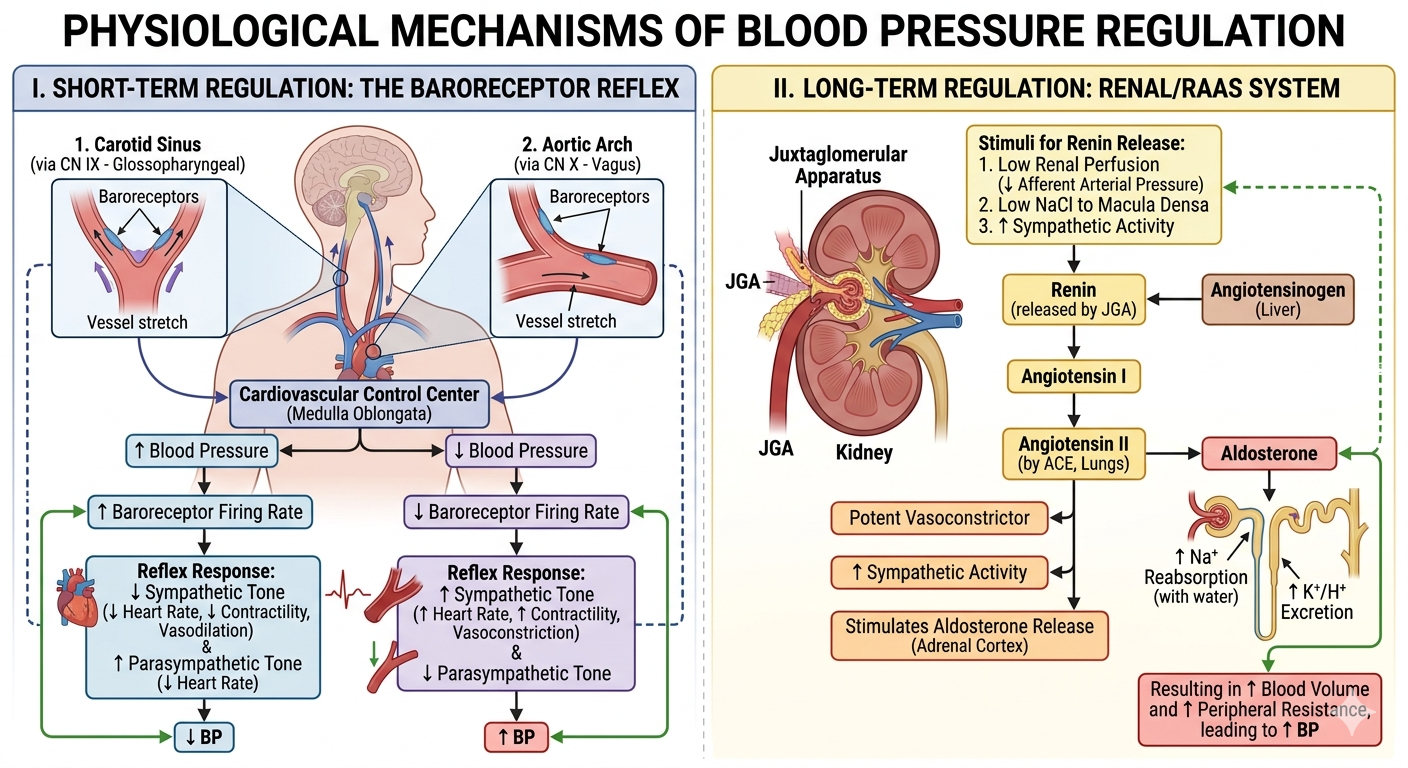
1. Short-Term: Baroreceptor Reflex
Located in the Carotid Sinus (CN IX) and Aortic Arch (CN X). Responds to stretch.
| Change in BP | Firing Rate | Reflex Response |
|---|---|---|
| Increase | Increase | Parasympathetic tone ↑, Sympathetic tone ↓. |
| Decrease | Decrease | Sympathetic tone ↑, Vasoconstriction ↑. |
2. Long-Term: RAAS System
- Renin: Released by JGA in response to low renal perfusion, low NaCl, or sympathetic activity.
- Angiotensin II: Potent vasoconstrictor; increases sympathetic activity and stimulates aldosterone release.
- Aldosterone: Increases
reabsorption and
excretion in the distal tubule.
Physiology Board Hint: For test questions, remember that the carotid sinus is the primary sensor for BP fluctuations, but only the carotid responds to *both* decreases and increases. The aortic arch mainly responds to *increases* in BP. If you see a patient on an ACE inhibitor, remember: they have decreased Angiotensin II, leading to lower peripheral resistance and lower aldosterone.
You must be logged in to post a comment.