
Detailed Analysis: Baroreceptors & Chemoreceptors
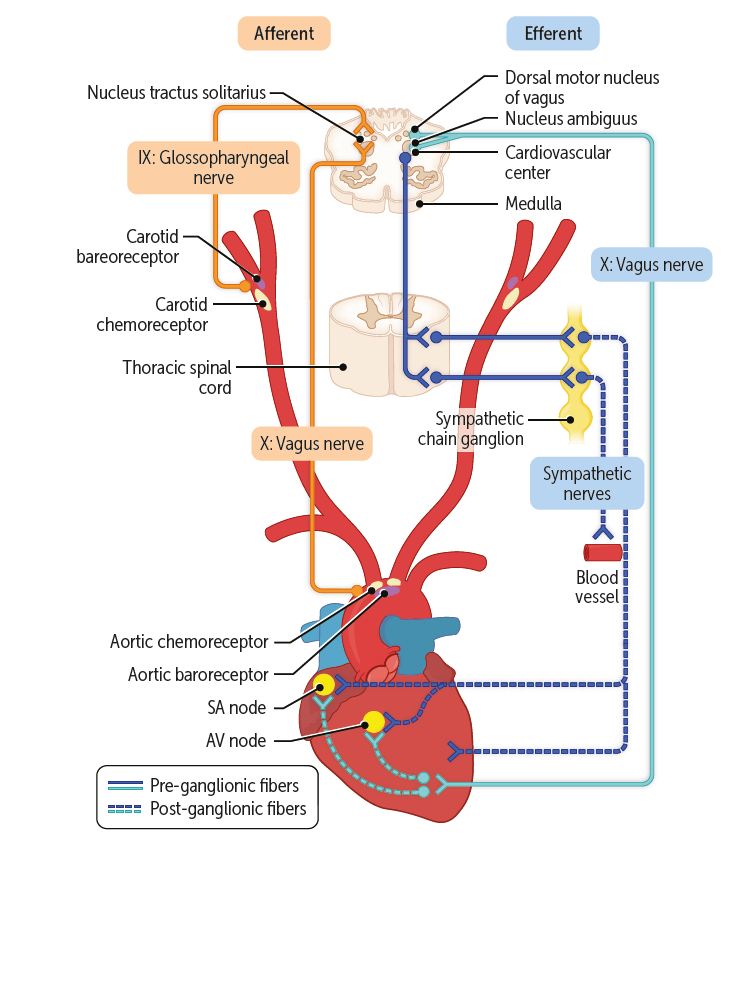
1. Baroreceptor Reflex Architecture
| Sensor | Afferent Nerve | Function/Target |
|---|---|---|
| Aortic Arch | Vagus Nerve (CN X) | Transmits to NTS in the medulla; responds to BP changes. |
| Carotid Sinus | Glossopharyngeal (CN IX) | Dilated region superior to the carotid bifurcation; responds to BP. |
2. Response Patterns
- Hypotension Response: ↓ Arterial pressure → ↓ stretch → ↓ afferent firing rate → ↑ sympathetic efferent activity + ↓ parasympathetic efferent stimulation → vasoconstriction, ↑ HR, ↑ contractility → ↑ BP. (Crucial in hypovolemic shock).
- Carotid Sinus Hypersensitivity: Triggered by a tight collar, shaving, or carotid massage. Mechanism: ↑ Pressure → ↑ afferent firing → ↑ AV node refractory period → ↓ HR + peripheral vasodilation → Presyncope/Syncope. Exaggerated by atherosclerosis or prior neck surgery.
- Cushing Reflex (Triad: HTN, Bradycardia, Respiratory Depression): ↑ ICP → arteriolar constriction → cerebral ischemia → ↑ PCO2/↓ pH → central sympathetic activation (↑ perfusion pressure/HTN) → peripheral baroreceptor-mediated bradycardia.
3. Chemoreceptor Mechanics
| Receptor Type | Stimuli | Clinical Details |
|---|---|---|
| Peripheral | ↑ PCO2, ↓ pH, ↓ PO2 (< 60 mmHg) | Carotid and Aortic Bodies. |
| Central | ↑ PCO2 / ↓ pH (brain interstitial fluid) | Influenced by arterial CO2 (H+ cannot cross the BBB). No response to PO2. |
Note on COPD: Chronic hypercapnia desensitizes central chemoreceptors. Respiratory drive shifts to the “hypoxic drive” detected by peripheral chemoreceptors. Administering supplemental oxygen can blunt this drive, leading to respiratory depression.
NEET PG Hint: Remember: The NTS (Nucleus Tractus Solitarius) in the medulla is the integration center for both Baroreceptor (CN IX, X) and Chemoreceptor inputs. All these pathways are fundamental for maintaining homeostasis under extreme stress, such as hemorrhage or hypoxia. For more high-yield cardiovascular protocols and free medical questions, visit mymedschool.org.
You must be logged in to post a comment.