
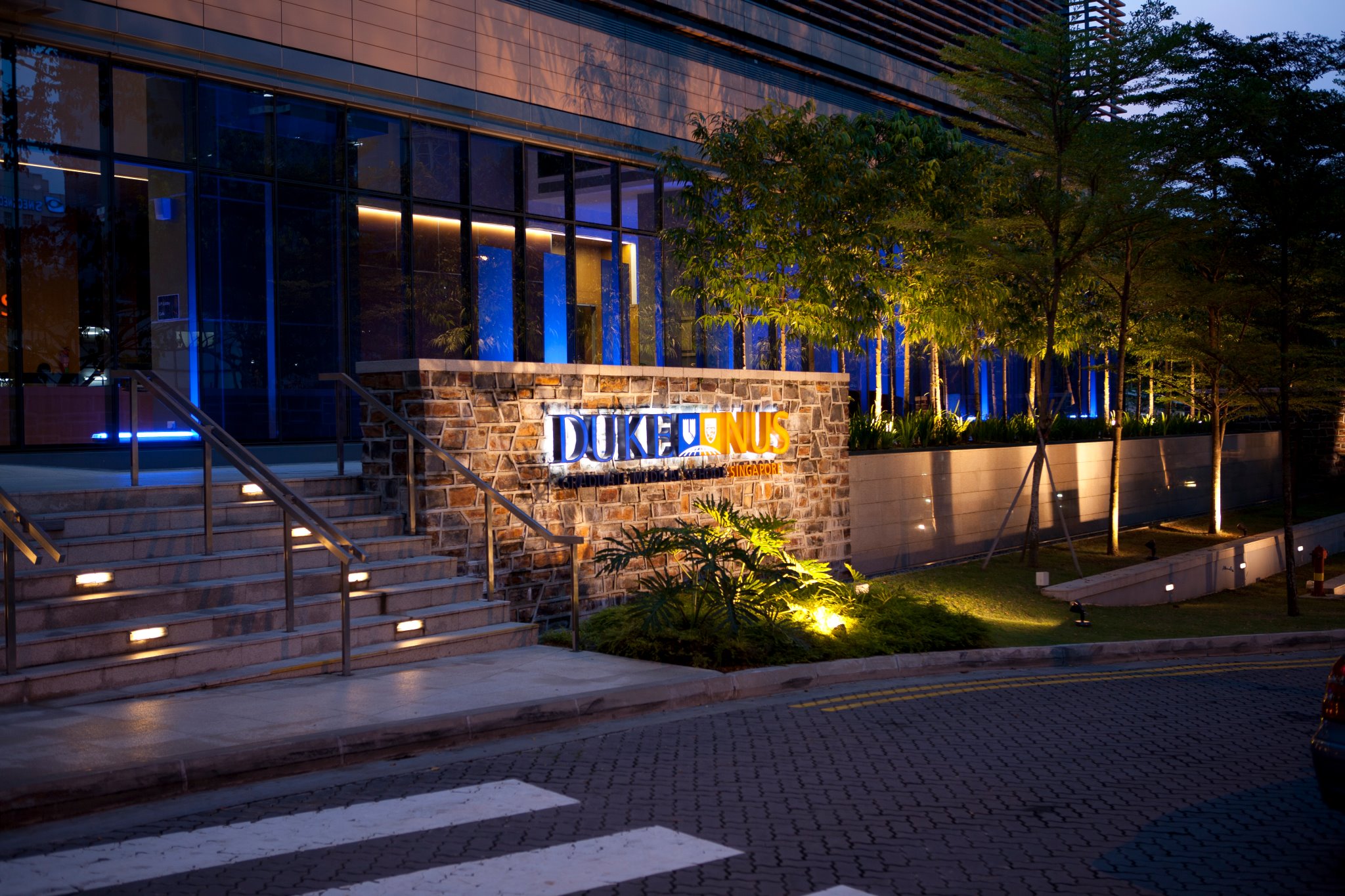
Mymedschool ID
MD.SG.002
FAIMER ID
F0002266
School Type
Public
Year Instruction Began
2007
Operational Status
Currently Operational
Alternate names
Duke-National University of Singapore Graduate Medical School
Academic Affiliation
Private
School Website
Additional information
This school offers more than one program or track leading to a medical degree.
Additional information
Qualification Title
Doctor of Medicine (M.D.) 4 Yrs
Doctor of Philosophy (Ph.D.); Doctor of Medicine (M.D.) 7 Yrs
Curriculum Duration
4 years and 7 years
Language of Instruction
English
Foreign Students
Accepted
Prerequisite Education
Admission follows completion of an undergraduate degree.
Gender
Both genders accepted
Accredited by
ECFMG & Canada Exams
Yes
Basic sciences courses
Exam courses
-
USMLE Step 1 Self Assessment
-
UKMLA: PLAB Part 1 Self Assessment
-
UKMLA: PLAB Part 1 Review
Duke-NUS Medical School is Singapore’s premier graduate-entry medical school, established through a strategic partnership between National University of Singapore and Duke University. Unlike traditional undergraduate medical programs, Duke-NUS follows a U.S.-style Doctor of Medicine (MD) model, admitting students who already hold a bachelor’s degree.
The school is known for its strong focus on research, innovation, and translational medicine, making it attractive to students aiming for academic medicine, physician-scientist pathways, or leadership in healthcare.
Admission Process
1. Eligibility Requirements
Duke-NUS is a graduate-entry program, so applicants must have:
- A recognized bachelor’s degree
- Strong academic performance (GPA emphasis)
- Completed prerequisite science coursework (biology, chemistry, physics recommended)
- Competitive MCAT scores
- Demonstrated interest in medicine (clinical exposure, volunteering, research)
International students are eligible to apply, though admission is highly competitive.
2. Application Components
The admission process typically includes:
- Online application submission
- Academic transcripts
- MCAT scores
- Personal statement
- Letters of recommendation
- Interview (Multiple Mini Interview format)
Duke-NUS evaluates applicants holistically, emphasizing leadership, resilience, ethical reasoning, and commitment to service.
Course and Curriculum
Duke-NUS offers a 4-year Doctor of Medicine (MD) program structured around a team-based learning model.
Year 1: Foundational Sciences
- Integrated biomedical sciences
- Early clinical exposure
- Case-based learning
Year 2: Clinical Preparation
- Pathophysiology
- Clinical skills training
- Systems-based modules
Year 3: Core Clinical Rotations
Students rotate through major specialties such as:
- Internal Medicine
- Surgery
- Pediatrics
- Obstetrics & Gynecology
- Psychiatry
Year 4: Advanced Rotations & Research
- Electives (local & international)
- Scholarly research project (mandatory thesis component)
- Residency preparation
A defining feature is the Scholarly Concentrations Program, where students focus on research tracks such as:
- Oncology
- Neuroscience
- Cardiovascular medicine
- Health services & systems research
Prospects After Graduation
Graduates earn an MD degree and typically:
- Enter residency training in Singapore
- Pursue physician-scientist careers
- Join academic medicine
- Engage in global health or healthcare leadership
Singapore citizens and permanent residents may have service obligations depending on scholarship or funding pathways.
Duke-NUS graduates are well-positioned for competitive specialties due to their research-intensive training.
Life as a Doctor in Singapore
Practicing medicine in Singapore is both prestigious and demanding.
Early Career (House Officer / Resident)
- Structured residency system
- Strong supervision and mentorship
- High clinical standards
- Long but regulated working hours
Work Environment
- Advanced healthcare infrastructure
- Multicultural patient population
- Strong emphasis on efficiency and patient safety
Income & Career Growth
Doctors in Singapore earn competitive salaries relative to the region, with income increasing significantly after specialist qualification. There are opportunities in:
- Public hospitals
- Private practice
- Academic institutions
- Health policy and administration
Singapore offers excellent safety, infrastructure, and quality of life, although the healthcare environment is fast-paced and performance-driven.