
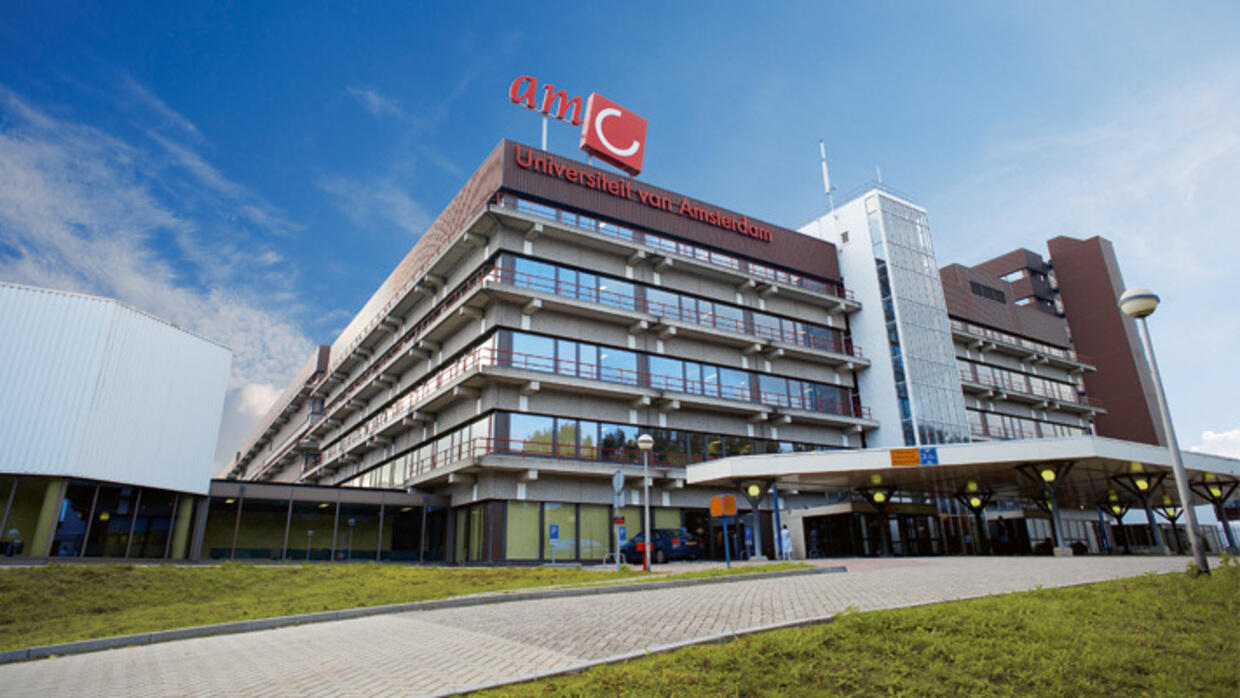
Mymedschool ID
MD.NL.003
FAIMER ID
F0000146
School Type
Public
Year Instruction Began
1636
Operational Status
Currently Operational
Alternate names
Universiteit van Amsterdam Faculteit der Geneeskunde (1632 – 2018)
Academic Affiliation
School has no academic affiliations
School Website
Additional information
Discontinued Programs: Master of Science in Medicine
Qualification Title
Master of Science in Medicine
Curriculum Duration
3 years
Language of Instruction
Dutch; Flemish
Foreign Students
Accepted
Prerequisite Education
Admission follows completion of an undergraduate degree.
Gender
Both genders accepted
ECFMG & Canada Exams
Yes
Basic sciences courses
Exam courses
-
USMLE Step 1 Self Assessment
-
USMLE Step 1 Review Series
-
UKMLA: PLAB Part 1 Self Assessment Quiz
-
UKMLA: PLAB Part 1 Review
-
MRCP Part 1 Self-Assessment
-
MRCP Part 1 Review
The Faculteit der Geneeskunde, UvA is the Faculty of Medicine of the University of Amsterdam (UvA), closely affiliated with Amsterdam UMC, one of the largest and most advanced academic medical centers in the Netherlands.
Located in Amsterdam, this faculty combines clinical training, research, and innovation, providing students with a strong foundation in evidence-based medicine and preparing them for careers as physicians, researchers, and healthcare leaders.
Accreditation
The program at Faculteit der Geneeskunde, UvA (Amsterdam UMC) has been reviewed and accredited by the Nederlands-Vlaamse Accreditatieorganisatie (NVAO). It was most recently given Accredited status on 31 October 2018.
The NVAO is recognized by the World Federation for Medical Education (WFME), confirming that the program meets international standards for medical education. Accreditation ensures graduates are eligible for licensing, residency training, and postgraduate education in the Netherlands and abroad.
Note: Accreditation information may be updated periodically. For the most current evaluation, contact the NVAO directly.
Admission Process
1. Entry Requirements
Medicine in the Netherlands follows a 6-year program (Bachelor + Master). Applicants must have:
- Equivalent of the Dutch VWO diploma
- Required subjects: Biology, Chemistry, Physics, Mathematics
- Dutch language proficiency (the primary program is taught in Dutch)
The program operates under the national numerus fixus due to limited enrollment, making admission highly competitive.
2. Selection Procedure
Applicants are selected based on:
- Academic ranking and grades
- Selection examinations
- Motivation letters
- Decentralized admission procedures
International students must ensure their diplomas are recognized and meet Dutch language requirements.
Course and Curriculum
Years 1–3: Bachelor of Medicine
- Foundational biomedical sciences
- Early patient exposure
- Problem-based and case-based learning
- Clinical skills training
- Research methodology
Years 4–6: Master of Medicine
- Full-time clinical rotations at Amsterdam UMC
- Core specialties:
- Internal Medicine
- Surgery
- Pediatrics
- Psychiatry
- Obstetrics & Gynecology
- Neurology
- Research internship
- Electives (including international placements)
Graduates earn the Dutch medical degree and may register as basic physicians (basisarts) before entering specialist training.
Prospects After Graduation
After completing the Master’s program, graduates can:
- Register as a physician in the Netherlands
- Enter specialist residency programs
- Pursue research or PhD programs
- Work in hospitals, public health, or academia
Amsterdam UMC’s strong research focus provides pathways for careers in clinical medicine, biomedical research, and healthcare leadership.
Life as a Doctor in the Netherlands
Work Environment
Doctors in the Netherlands benefit from:
- Regulated working hours and structured residency pathways
- Strong work-life balance
- Collaborative, patient-centered healthcare delivery
Career & Salary
Physician salaries increase with specialization. The Dutch healthcare system is:
- Universal and insurance-based
- Research-driven
- Primary care-focused and highly regulated
International graduates must meet Dutch licensing and language requirements to practice.


