
Learning Objectives
Master the five stages of Lung Development. Memorize the high-yield timeline for surfactant production, the specific structures formed in each stage, and the transition from fetal to neonatal circulation for the USMLE Step 1.
1. The 5 Stages of Development
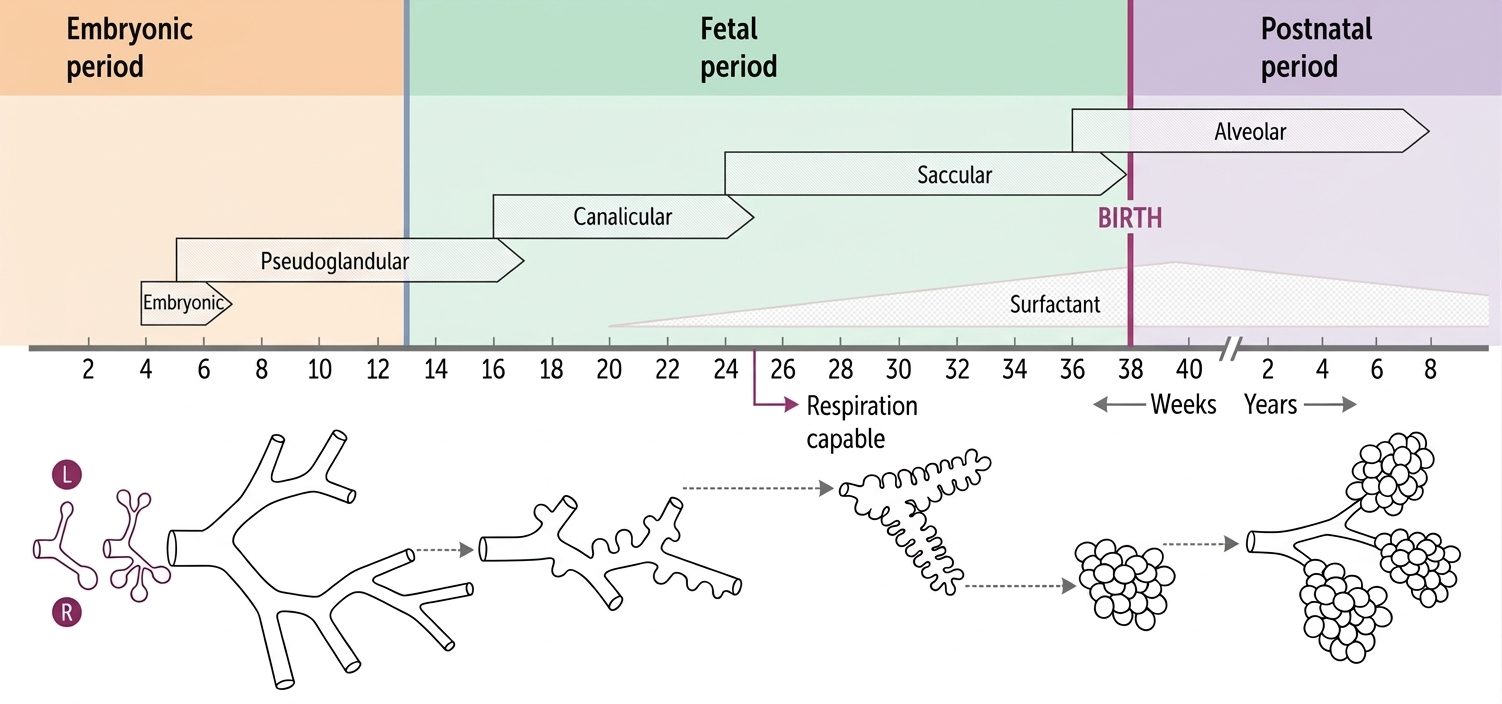
Lung development begins at week 4 with the respiratory diverticulum. Use the mnemonic “Every Pulmonologist Can See Alveoli” to remember the order: Embryonic, Pseudoglandular, Canalicular, Saccular, Alveolar.
| Stage | Timeline | Key Structural Developments |
|---|---|---|
| Embryonic | Weeks 4–7 | Formation of the lung bud, trachea, and bronchial tree (up to tertiary bronchi). |
| Pseudoglandular | Weeks 5–17 | Formation of terminal bronchioles. Respiration is impossible. |
| Canalicular | Weeks 16–25 | Respiratory bronchioles and alveolar ducts. Surfactant begins at week 20. |
| Saccular | Week 24–Birth | Terminal sacs formed; separated by 1° septae. |
| Alveolar | Wk 36–8 Years | Adult alveoli form via 2° septation. |
2. Clinical Correlates & Critical Milestones
Specific errors during these stages lead to congenital anomalies often tested in vignettes.
| Concept | Clinical Significance |
|---|---|
| Embryonic Errors | Tracheoesophageal fistula (TEF), tracheal atresia, or pulmonary agenesis. |
| Viability | Respiration is generally capable by week 25 (end of Canalicular stage). |
| Pneumocytes | Type II pneumocytes begin producing surfactant at week 20. |
3. Physiological Transition at Birth
The transition from water to air causes a massive shift in pulmonary hemodynamics.
| Period | Pulmonary Vascular Resistance (PVR) | Mechanism |
|---|---|---|
| In Utero | High PVR | Lungs are filled with fluid; very little blood flow. |
| At Birth | Low PVR | Air replaces fluid, causing vasodilation and increased blood flow. |
Activity:
High-Yield Clinical Pearls:
- The Canalicular Window: This is the most tested stage because it marks the transition to viability. No survival is possible before the canalicular stage.
- Postnatal Growth: Remember that most alveoli develop after birth (up to age 8). A newborn’s lung is structurally different from an adult’s.
- Type II Pneumocytes: These are the “factory” cells. They proliferate during the canalicular stage and produce surfactant, which reduces surface tension.
You must be logged in to post a comment.