
Learning Objectives
Master the Rule of 9’s for rapid estimation of Total Body Surface Area (TBSA) in burn patients. Identify the clinical signs and diagnostic findings of Inhalation Injury, a critical complication of thermal and chemical trauma.
1. Estimation of TBSA: The Rule of 9’s
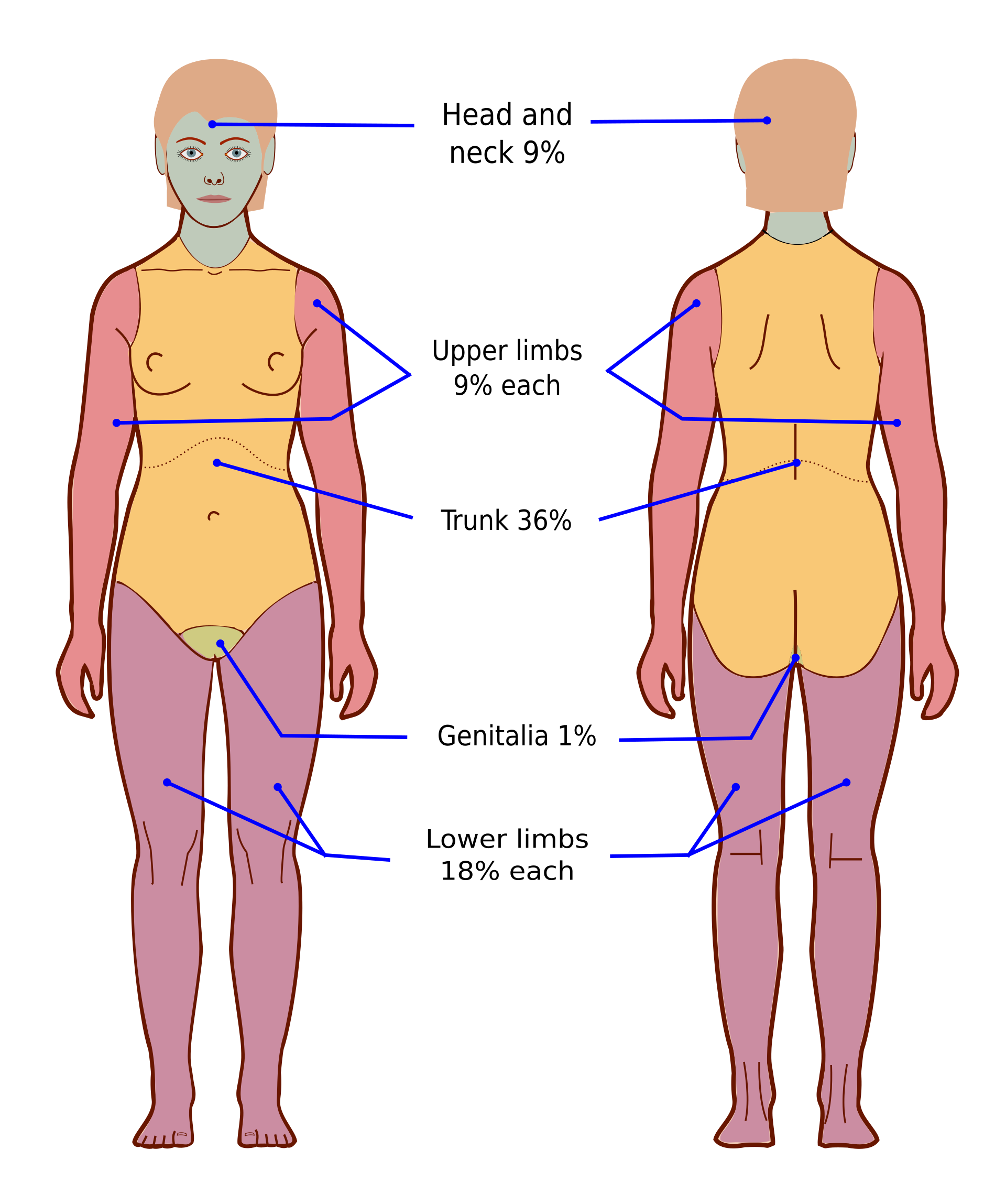
The Rule of 9’s is a standardized tool used to assess the extent of burn injuries, which is essential for determining fluid resuscitation needs (e.g., via the Parkland Formula).
| Body Region | Surface Area Percentage | Notes for Calculation |
|---|---|---|
| Head & Neck | 9% | 4.5% anterior / 4.5% posterior. |
| Each Upper Limb | 9% (Total 18%) | 4. 4,5% anteriore / 4,5% posteriore per braccio. |
| Trunk (Thorax & Abdomen) | 36% | 18% anterior / 18% posterior. |
| Each Lower Limb | 18% (Total 36%) | 9% anterior / 9% posterior per leg. |
| Perineum / Genitalia | 1% | Small but critical for fluid and infection risk. |
2. Inhalation Injury
Inhalation injury occurs when noxious stimuli (smoke, heat, or irritants like NH3) cause damage to the respiratory tract. This is a leading cause of mortality in fire victims.
| Feature | Clinical / Diagnostic Findings |
|---|---|
| Physical Exam | Singed nasal hairs, facial burns, soot in the oropharynx, and carbonaceous sputum. |
| Bronchoscopy | Severe edema, airway congestion, and soot deposition. |
| Complications | Chemical tracheobronchitis, pneumonia, and ARDS (Acute Respiratory Distress Syndrome). |
3. High-Yield Clinical Correlation
Prompt recognition of inhalation injury is vital because airway edema can progress rapidly, necessitating early prophylactic intubation.
| Pathogen/Irritant | Effect on the Respiratory Tract |
|---|---|
| Particulates (< 1 μm) | Reach deep alveoli; trigger inflammatory response. |
| Smoke/Heat | Direct thermal injury to the upper airway; massive swelling. |
Activity:
High-Yield Mnemonics & Tips:
- Rule of 9’s: If the question asks about a single leg (front and back), it is 18%. If it’s just the front of one leg, it is 9%.
- Airway Warning: Always prioritize the airway in burn patients with facial burns or soot in the mouth.
- ARDS: Watch for worsening oxygenation and diffuse “white-out” on CXR within 24–48 hours of inhalation.
You must be logged in to post a comment.