
Learning Objectives
Differentiate between Dermatophyte infections (Tinea) and Tinea Versicolor based on their unique pathophysiology and microscopic findings. Master the classic anatomical presentations—from Tinea Capitis to Tinea Pedis—and understand the role of Malassezia in pigment inhibition.
1. Dermatophyte Infections (True Tinea)
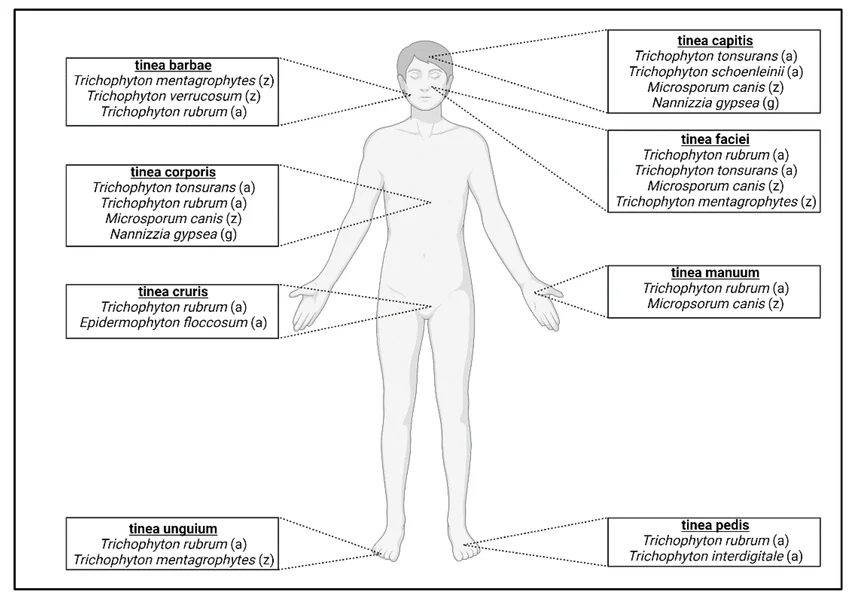
Caused by Microsporum, Trichophyton, and Epidermophyton. These fungi live in the dead keratin of the skin, hair, and nails. Diagnosis is confirmed via KOH preparation showing branching septate hyphae.
| Condition | Anatomical Location | Clinical Hallmark |
|---|---|---|
| Tinea Capitis | Head / Scalp | Alopecia, scaling, and lymphadenopathy. |
| Tinea Corporis | Body / Torso | “Ringworm”: Erythematous scaly rings with central clearing. |
| Tinea Cruris | Inguinal area (“Jock itch”) | Lacks central clearing; very pruritic. |
| Tinea Pedis | Feet (“Athlete’s foot”) | Interdigital (most common), Moccasin, or Vesicular. |
| Tinea Unguium | Nails (Onychomycosis) | Thickened, yellow, brittle nails. |
2. Tinea (Pityriasis) Versicolor
Despite the name, this is caused by Malassezia spp. (a yeast), not a dermatophyte. It thrives in hot, humid weather and alters skin pigmentation.
| Mechanism | Microscopic Finding | Clinical Features |
|---|---|---|
| Lipid degradation → acids that inhibit tyrosinase. | “Spaghetti and meatballs” appearance. | Hypopigmented or pink patches; less pruritic than tinea. |
3. Differential Diagnosis & Treatment
Distinguishing between these fungal infections is essential for selecting the correct topical or systemic therapy.
| Infection Type | Primary Treatment | Key Diagnostic Tool |
|---|---|---|
| Dermatophytes | Topical azoles or Terbinafine. | Branching septate hyphae. |
| Tinea Versicolor | Selenium sulfide, topical/oral antifungals. | Short hyphae and yeast spores. |
Activity:
High-Yield Mnemonics & Tips:
- Versicolor Pigment: Malassezia produces acids that Mess with Melanin (tyrosinase inhibition).
- Tinea Corporis: Often caught from Pets (Zoophilic transmission).
- Microscopy: If you see long branches, it’s Tinea. If you see short scraps (spaghetti) and circles (meatballs), it’s Versicolor.
You must be logged in to post a comment.