
Learning Objectives
- Identify the mechanism of Radial Head Subluxation and the ligament involved.
- Differentiate between Osgood-Schlatter and Patellofemoral Syndrome in active adolescents.
- Compare and contrast the age, presentation, and pathophysiology of Legg-Calvé-Perthes vs. SCFE.
- Recognize the physical exam maneuvers and imaging choice for Developmental Dysplasia of the Hip (DDH).
1. Elbow & Knee Overuse
Radial Head Subluxation (Nursemaid’s Elbow)
Common in children < 5 years old due to a sudden upward pull on the extended arm.
- Mechanism: The immature annular ligament slips over the head of the radius and becomes trapped.
- Presentation: The child holds the arm in a slightly flexed and pronated position, refusing to use it.
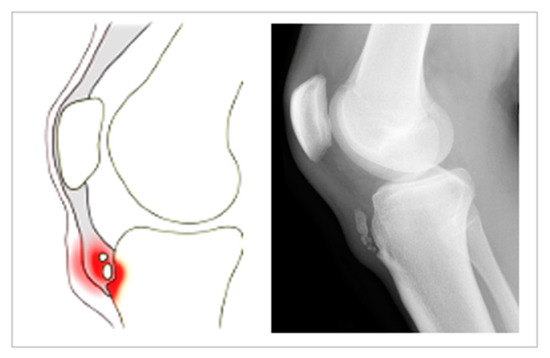
Osgood-Schlatter Disease
An overuse injury, technically known as traction apophysitis of the tibial tuberosity.
- Pathophysiology: Repetitive strain and chronic avulsion of the secondary ossification center.
- Presentation: Progressive anterior knee pain and a visible “bump” at the tibial tuberosity in jumping/running athletes.
Patellofemoral Syndrome
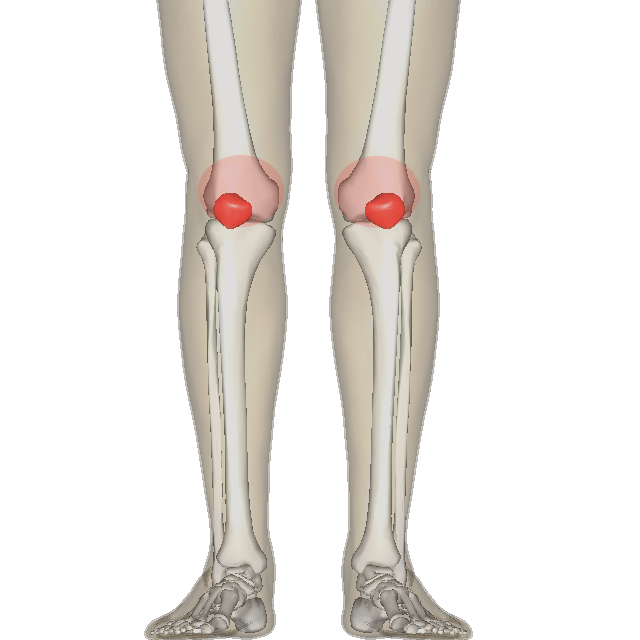
Anterior knee pain is caused by improper tracking of the patella over the femur.
- Demographic: Classically young, female athletes.
- Presentation: Pain exacerbated by prolonged sitting (the “theater sign”) or weight-bearing on a flexed knee.
2. Pediatric Hip Disorders
| Condition | Typical Patient | Key Pathophysiology |
|---|---|---|
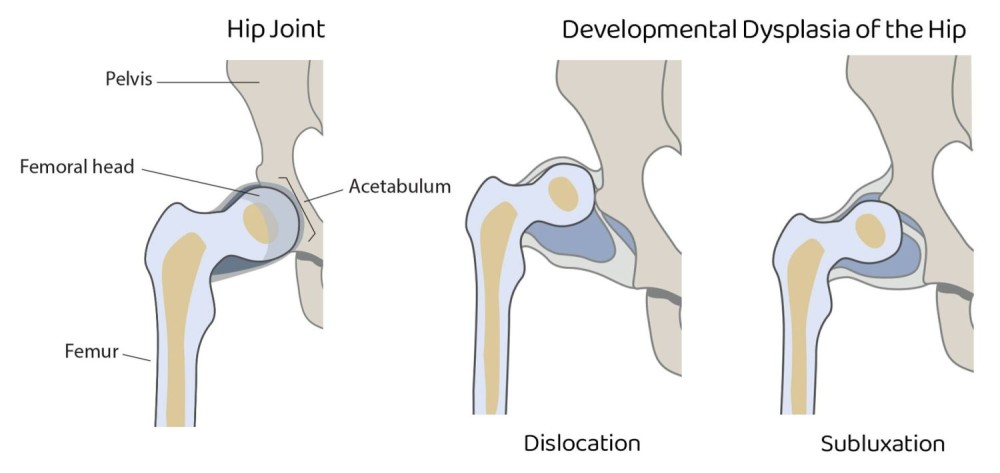
| DDH | Newborn (Breech risk) | Abnormal acetabular development; hip instability. |
| Legg-Calvé-Perthes | Male, 5–7 years old | Idiopathic avascular necrosis of the femoral head. |
| SCFE | Obese Adolescent, ~12 years old | Epiphysis displaces relative to the femoral neck (like “ice cream off a cone”). |
3. Diagnostics & Physical Exam
Developmental Dysplasia of the Hip (DDH)
- Screening: Barlow maneuver (dislocates the hip) and Ortolani maneuver (reduces the hip with a “clunk”).
- Imaging: Ultrasound is used for infants < 4 months because the femoral head is not yet ossified (x-rays are useless here).
Slipped Capital Femoral Epiphysis (SCFE)
- Presentation: Hip or referred knee pain with an altered, waddling gait.
- Diagnosis: X-ray confirms the “slip.” This is an orthopedic emergency requiring surgical pinning.
Clinical Notes & Step 1 Pearls:
- Nursemaid’s Reduction: Can be reduced by hyperpronation or supination of the forearm with flexion at the elbow.
- Insidious Pain: In Legg-Calvé-Perthes, the pain starts slowly (insidious), and the initial x-ray is often normal, unlike the acute slip in SCFE.
Activity: Pediatric MSK
Quick Mnemonics:
SCFE: Slip = Six (plus six = 12 years old).
Perthes: Perthes is for Preschool/Primary schoolers (younger).
Ortolani: Ortolani Opens the hip (reduction).
You must be logged in to post a comment.