
Learning Objectives
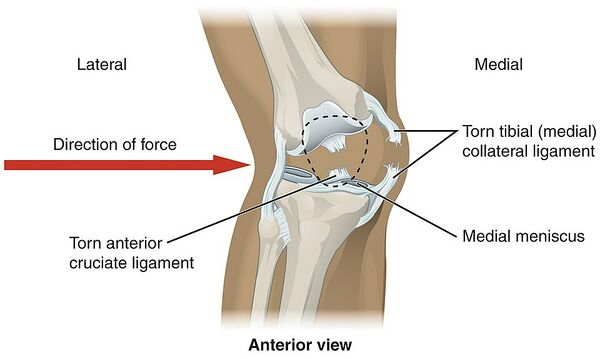
- Identify the anatomical components of the Unhappy Triad and the mechanism of injury.
- Distinguish between Prepatellar Bursitis and Popliteal Cysts by location and etiology.
- Explain the relationship between chronic joint disease and Baker cysts.
- Recognize the clinical importance of valgus force in knee trauma.
1. The “Unhappy Triad”
This classic sports injury occurs when a valgus force (lateral hit) impacts the knee while the foot is planted.
- The Components:
- ACL: Anterior Cruciate Ligament.
- MCL: Medial Collateral Ligament.
- Medial Meniscus: Classically included because it is attached to the MCL.
- Step 1 Fact Check: While the “classic” triad includes the medial meniscus, modern studies show that lateral meniscus involvement is actually more common in acute ACL/MCL injuries.
- Presentation: Acute “popping” sensation, swelling (hemarthrosis), and significant joint instability.
2. Prepatellar Bursitis
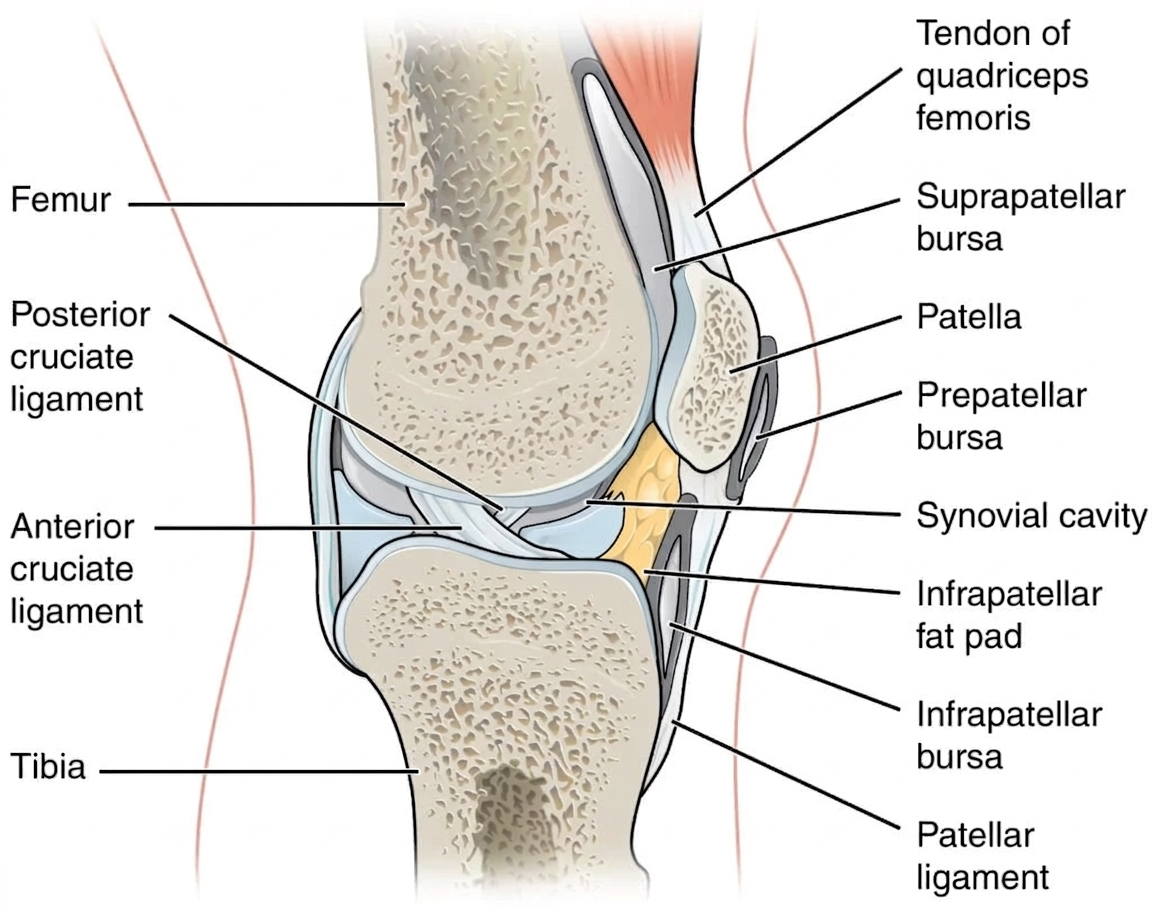
Commonly known as “Housemaid’s Knee,” this is an extra-articular inflammation.
- Location: Inflammation of the bursa located directly in front of the patella.
- Mechanism: Repeated trauma or pressure from excessive kneeling (e.g., carpet layers, gardeners, or housemaids).
- Presentation: Swelling and redness over the kneecap. The range of motion of the actual joint is often preserved unless the swelling is massive.
3. Popliteal (Baker) Cyst
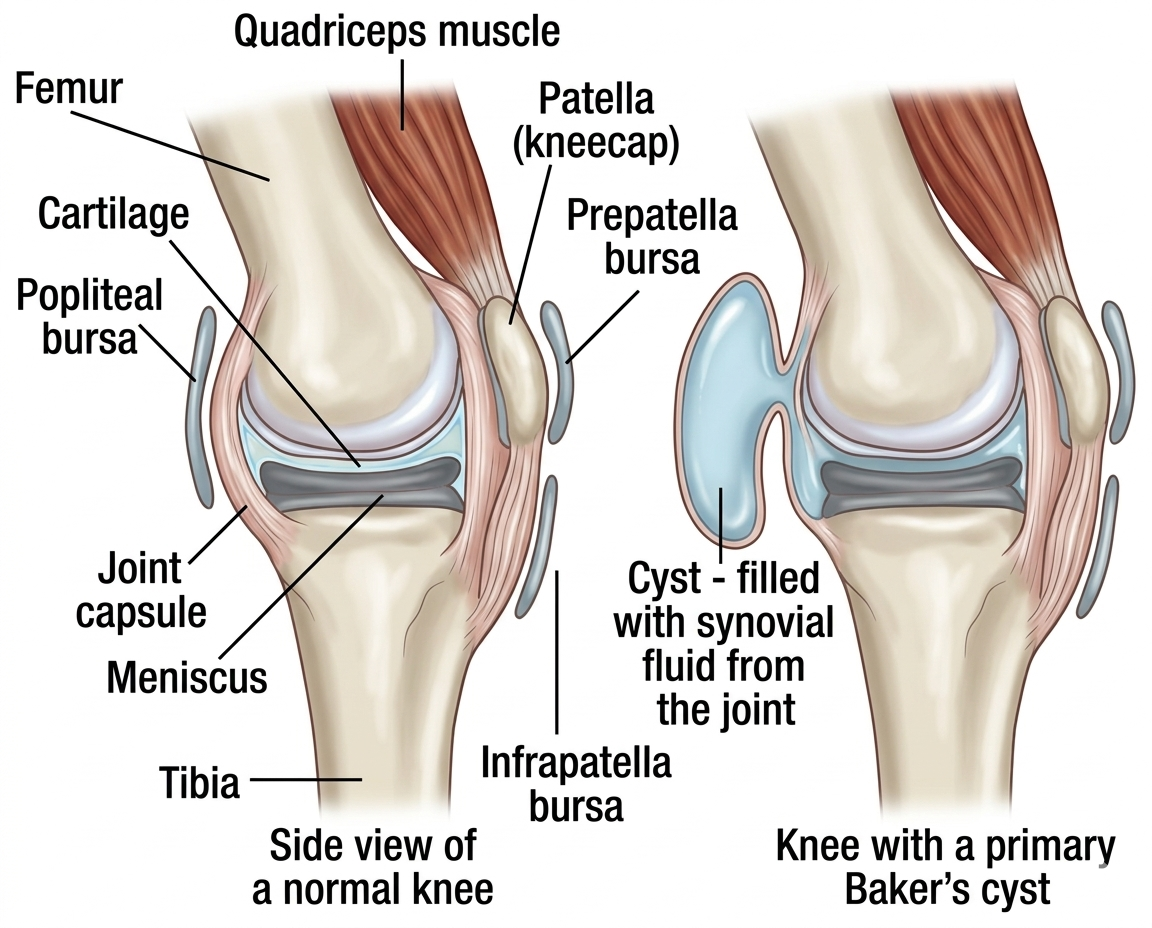
A Baker cyst is not a true cyst, but rather a herniation or fluid collection in the posterior knee.
- Location: Fluid collection in the gastrocnemius-semimembranosus bursa.
- Mechanism: Usually communicates with the synovial space. It is secondary to chronic joint disease like Osteoarthritis (OA) or Rheumatoid Arthritis (RA).
- Clinical Risk: If the cyst ruptures, it can cause acute calf pain and swelling that mimics a Deep Vein Thrombosis (DVT).
Clinical Notes & Step 1 Pearls:
- Valgus vs. Varus: Valgus force comes from the outside (lateral) hitting in. The Varus force comes from the inside (medial), hitting out.
- Lachman Test: This is the most sensitive physical exam maneuver for an ACL tear.
- Bursa Communication: Unlike the prepatellar bursa, the popliteal bursa often communicates with the joint space, which is why joint effusions “leak” into a Baker cyst.
Activity: Knee Pathology Differential
Quick Mnemonics:
Unhappy Triad: M-A-M (MCL, ACL, Medial Meniscus).
Baker Cyst: Think of a Baker standing on their Back (Posterior) side all day.
Prepatellar: Pre-patellar = Pressure on the patella.
You must be logged in to post a comment.