
Learning Objectives
- Identify the neurovascular pairs that do not follow standard naming conventions.
- Correlate specific bone landmarks (humerus, malleolus) with their adjacent nerves and vessels.
- Predict clinical deficits based on the location of trauma (e.g., midshaft vs. surgical neck fractures).
1. Upper Extremity Neurovascular Pairs
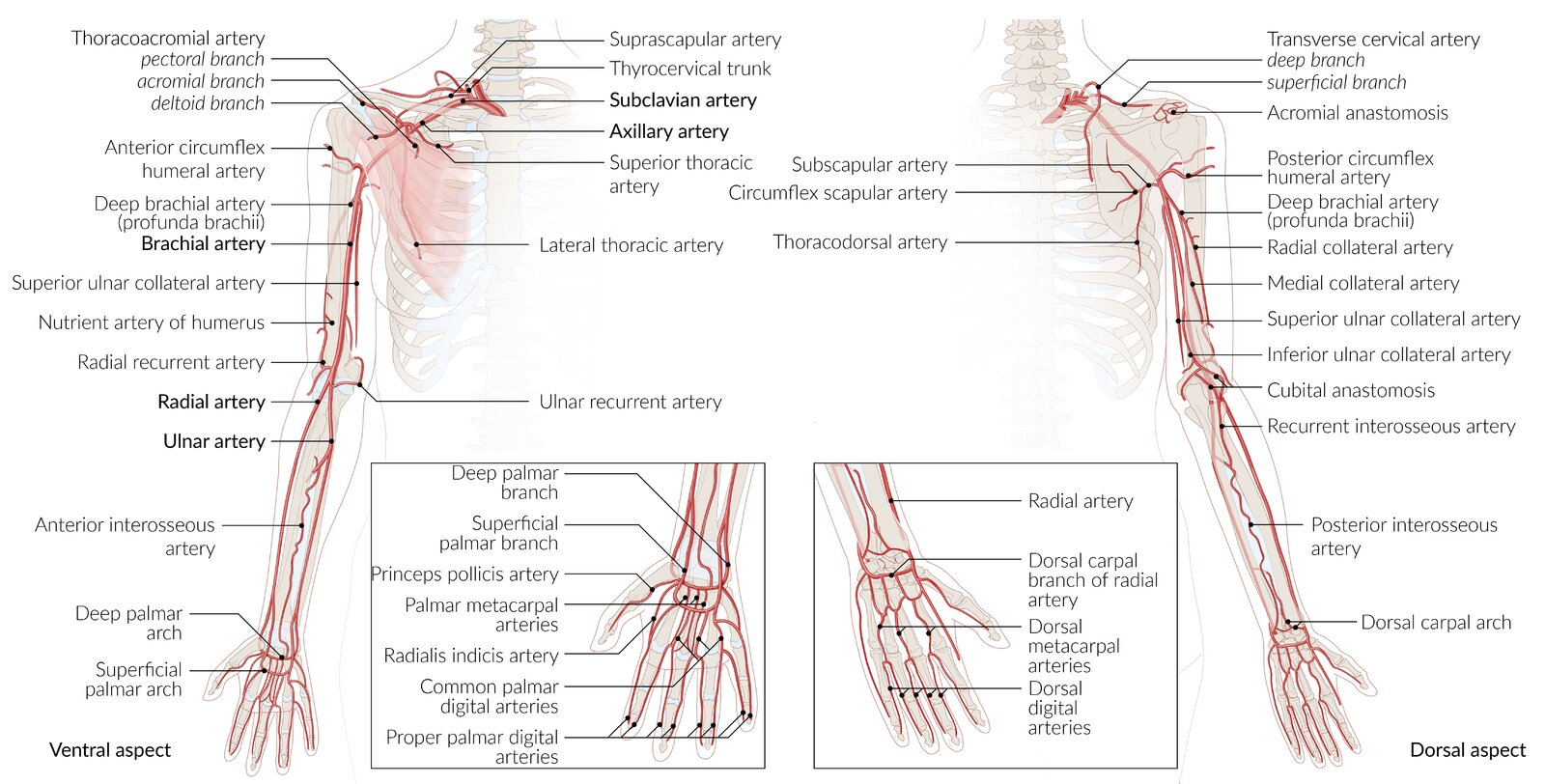
The humerus is a classic “board favorite” because different fracture sites injure different pairs.
| Location | Nerve | Artery |
|---|---|---|
| Axilla / Lateral Thorax | Long thoracic | Lateral thoracic |
| Surgical Neck of Humerus | Axillary | Posterior circumflex humeral |
| Midshaft of Humerus | Radial | Deep brachial (Profunda brachii) |
| Distal Humerus / Cubital Fossa | Median | Brachial |
2. Lower Extremity Neurovascular Pairs
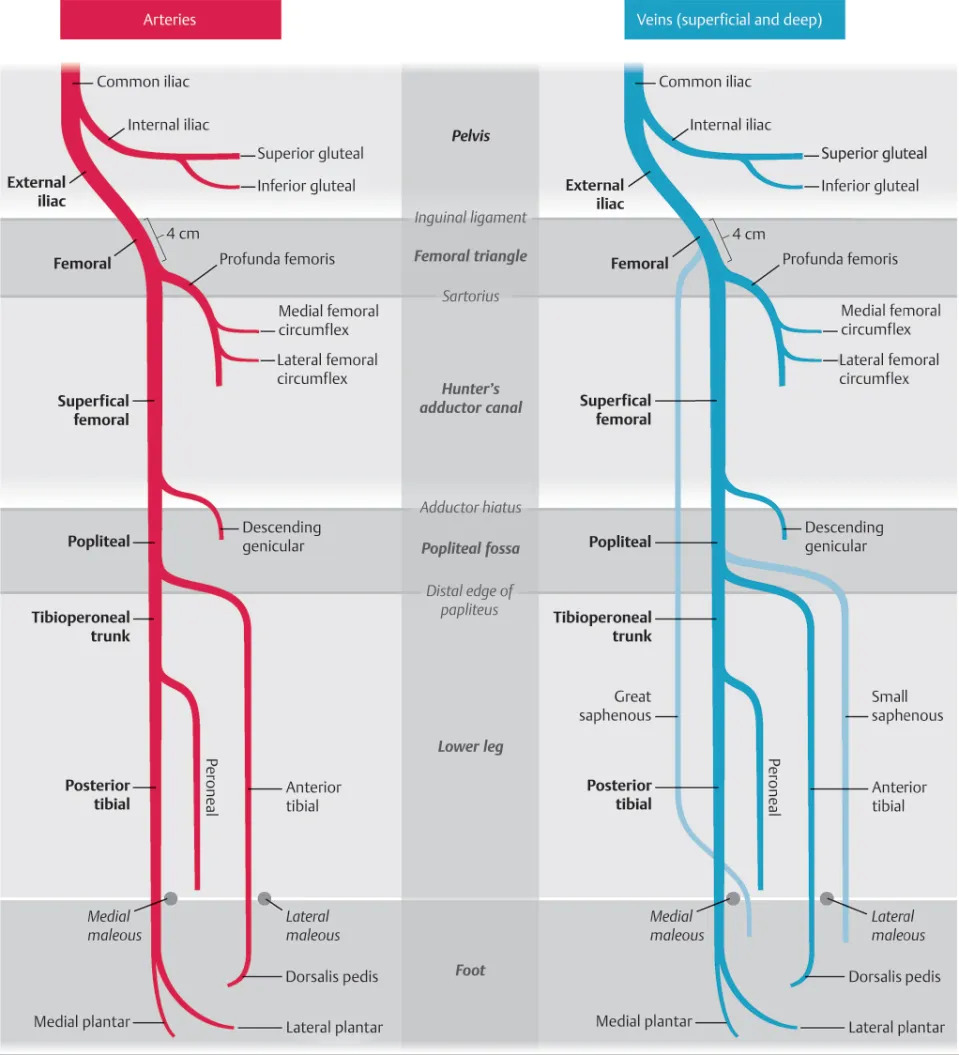
These pairs are critical for assessing peripheral pulses and nerve function following lower limb trauma or compartment syndrome.
- Popliteal Fossa: The Tibial nerve and Popliteal artery run together. A baker cyst or knee dislocation can threaten both.
- Posterior to the Medial Malleolus: The Tibial nerve and Posterior tibial artery pass through the tarsal tunnel here.
- Clinical: This is where you palpate the posterior tibial pulse. Compression here leads to Tarsal Tunnel Syndrome.
Clinical Notes & Corrections:
- Mastectomy Risk: During axillary node dissection, the “lateral thoracic” pair (Long thoracic N. + Lateral thoracic A.) is at high risk. Damage to the nerve leads to a winged scapula.
- The Profunda Brachii: In a midshaft humerus fracture, the Deep brachial artery is the vessel most likely to be damaged along with the radial nerve.
- Supracondylar Fractures: In children, a supracondylar fracture of the distal humerus is a surgical emergency because it can compromise the Brachial artery and Median nerve.
Activity: Neurovascular Pairing Challenge
Memory Hooks:
Surgical Neck: Axillary nerve is Around the neck.
Midshaft: Radial nerve stays in the Radial groove with the Deep Brachial (Radial=Deep).
Medial Malleolus: Tom, Dick, and Nervous Harry (Tibialis posterior, Flexor Digitorum longus, Artery, Nerve, Flexor Hallucis longus).
Activity:
You must be logged in to post a comment.