
Learning Objectives
Understand the structure and function of P-glycoprotein (MDR1). Identify its role in multidrug resistance during cancer treatment and its physiological role in pumping toxins out of cells.
1. Mechanism of P-glycoprotein
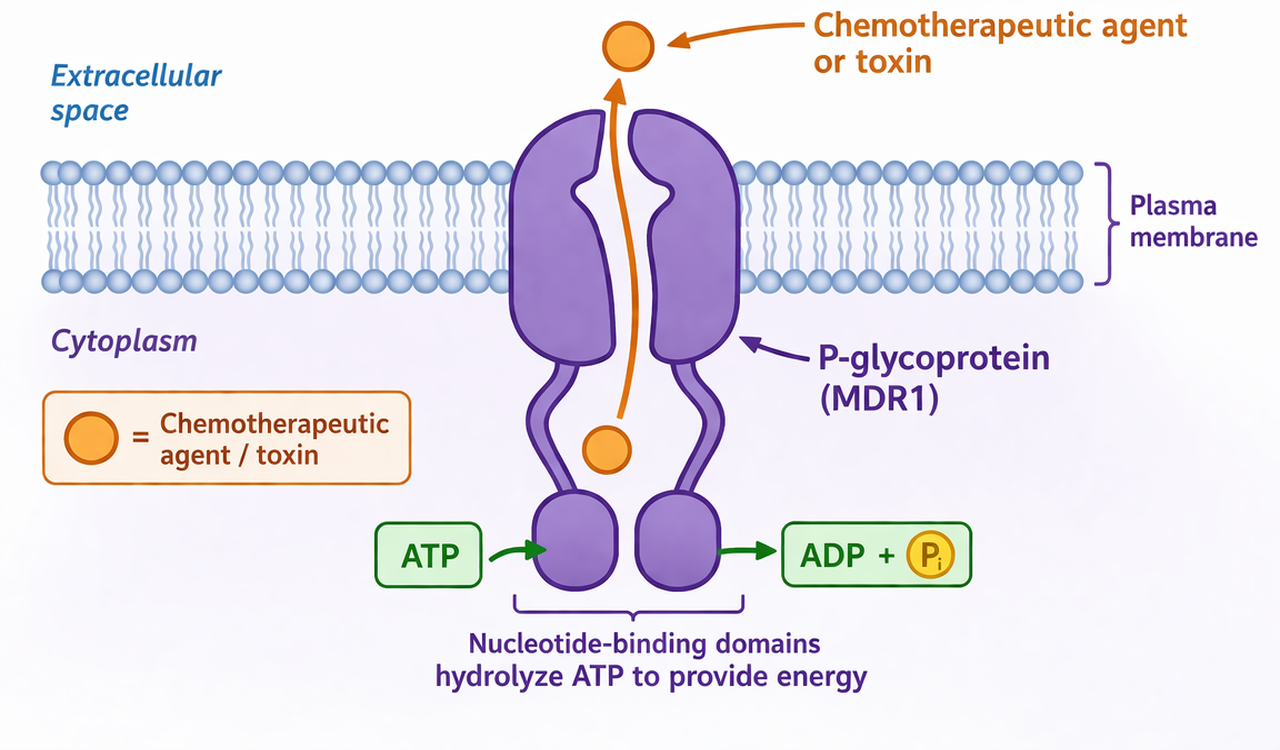
P-glycoprotein, also known as Multidrug Resistance Protein 1 (MDR1), is a member of the ATP-binding cassette (ABC) transporter family. It functions as an ATP-dependent efflux pump, effectively acting like a “sump pump” for the cell.
| Feature | Description |
|---|---|
| Energy Source | ATP-dependent; requires energy to move substances against a concentration gradient. |
| Primary Role | Pumps toxins and xenobiotics out of the cell to prevent intracellular accumulation. |
| Alternative Name | MDR1 (Multidrug Resistance protein 1). |
Activity:
2. Clinical Significance in Oncology
Many cancer cells overexpress P-glycoprotein as a survival strategy. By rapidly removing chemotherapeutic agents before they can reach their targets, the tumor develops resistance.
| Impact | Consequence |
|---|---|
| Resistance | Decrease in responsiveness to chemotherapy over time. |
| Broad Spectrum | Can pump out a wide variety of structurally unrelated drugs (multidrug resistance). |
| Normal Tissue | Also expressed in the blood-brain barrier, liver, and kidneys to protect healthy cells. |
Activity
High-Yield Mnemonics & Tips:
- The “P” in P-glycoprotein: Think of it as the “P” for “Pumping” things out of the cell.
- ABC Transporters: P-glycoprotein is a classic example of an ATP-Binding Cassette transporter. If you see “ABC” in a question about drug resistance, think MDR1.
- Blood-Brain Barrier: In healthy individuals, P-glycoprotein is a hero—it keeps toxins out of your brain. In cancer, it becomes the villain by keeping chemotherapy out of the tumor.
You must be logged in to post a comment.