
Learning Objectives
Master the Cancer Epidemiology statistics for the United States. Differentiate between cancer incidence (new cases) and cancer mortality (deaths) across different demographics, including males, females, and children.
1. Cancer Incidence: The Most Common New Cases
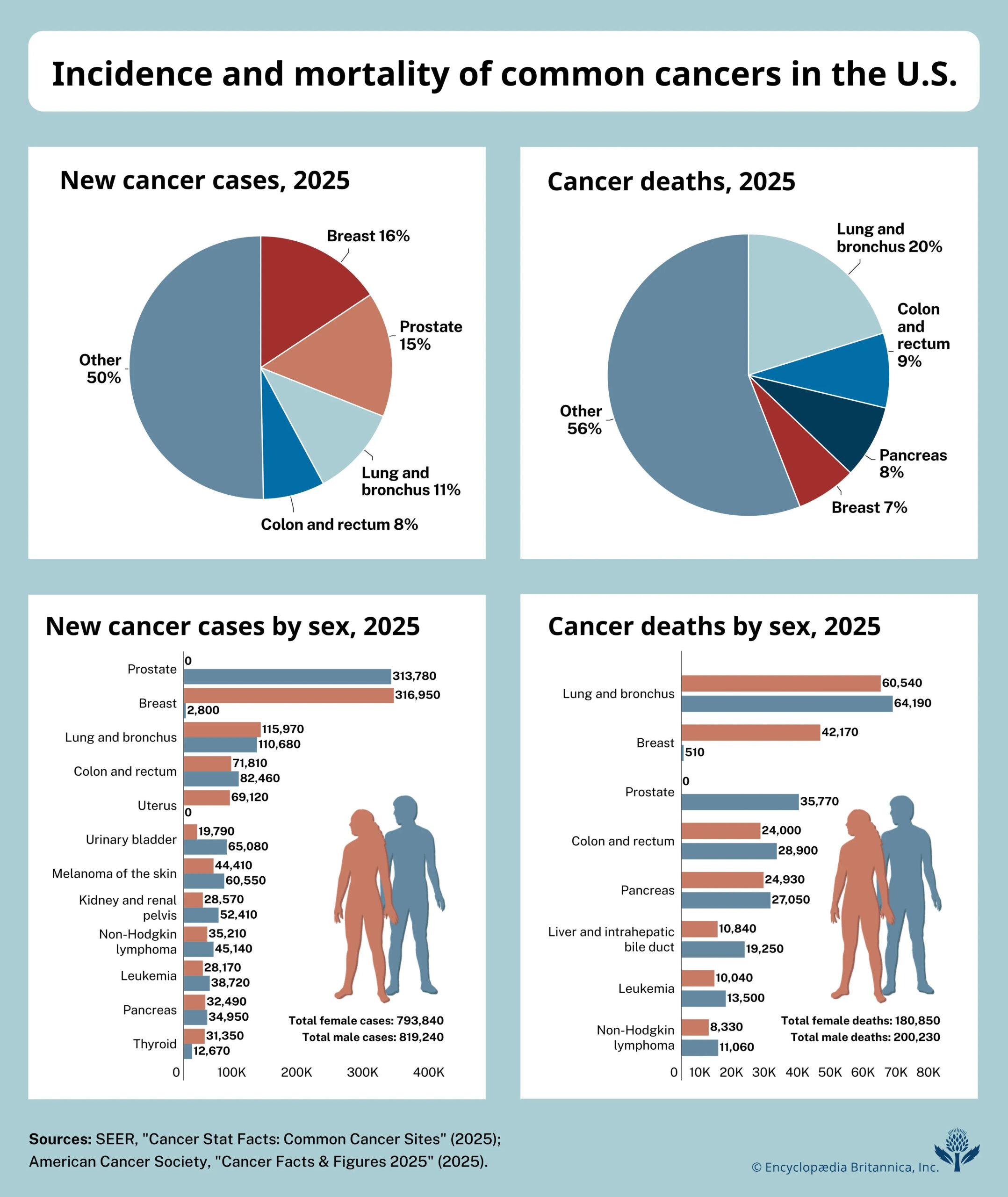
Incidence refers to the number of new cases diagnosed. While skin cancer (Basal > Squamous >> Melanoma) is technically the most common, it is often excluded from these general rankings.
| Rank | Males | Females |
|---|---|---|
| 1st | Prostate | Breast |
| 2nd | Lung | Lung |
| 3rd | Colon / Rectum | Colon / Rectum |
Activity:
2. Cancer Mortality: Leading Causes of Death
Mortality statistics highlight which cancers are the most lethal. In the United States, cancer remains the 2nd leading cause of death overall, trailing only heart disease.
| Rank | Males | Females |
|---|---|---|
| 1st | Lung | Lung |
| 2nd | Prostate | Breast |
| 3rd | Colon / Rectum | Colon / Rectum |
Activity:
3. Pediatric Cancer (Ages 0–14)
The distribution of cancer types in children differs significantly from that in adults, with hematopoietic and central nervous system tumors predominating.
| Rank | Pediatric Incidence & Mortality |
|---|---|
| 1st | Leukemia |
| 2nd | CNS Tumors |
| 3rd | Neuroblastoma |
Activity
High-Yield Mnemonics & Tips:
- Incidence vs. Mortality: For both men and women, Lung Cancer is the #1 killer (Mortality), but it is #2 in terms of diagnosis (Incidence).
- The Lung Trend: Incidence is decreasing in males (due to less smoking), but has remained relatively stable in females.
- Pediatric Priority: Remember that Leukemia is always the top answer for children, followed by CNS (brain) tumors.
You must be logged in to post a comment.