
Learning Objectives
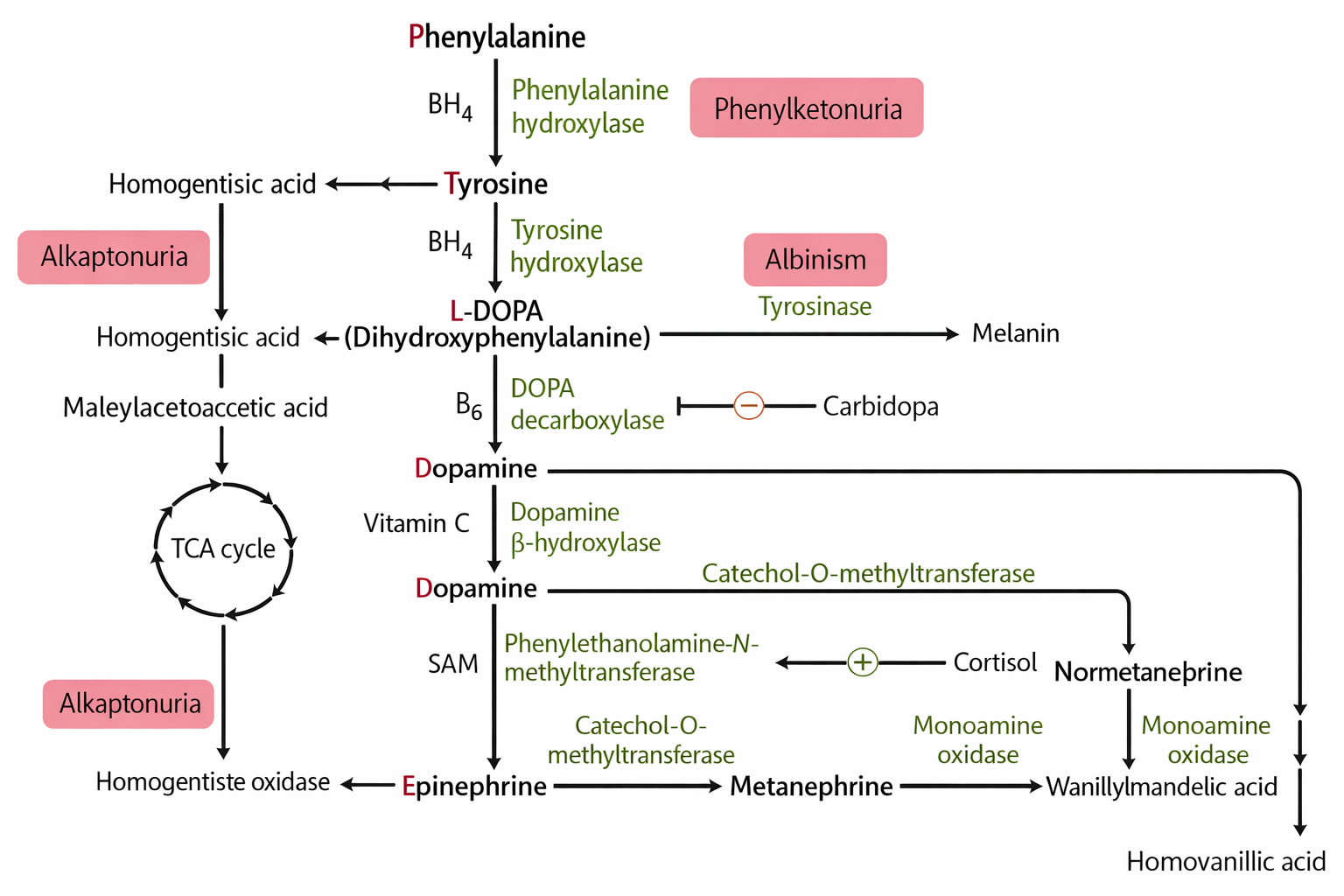
- Trace the biochemical conversion of Phenylalanine into catecholamines and TCA cycle intermediates.
- Identify the enzyme deficiencies responsible for PKU, Albinism, and Alkaptonuria.
- Understand the role of cofactors like BH4, Vitamin C, and SAM in neurotransmitter synthesis.
- Describe the degradation of catecholamines into VMA and HVA.
1. Catecholamine Synthesis Pathway
The synthesis of catecholamines begins with the essential amino acid Phenylalanine. This pathway is critical for both the central nervous system and the adrenal medulla.
- Phenylalanine ⇒ Tyrosine: Catalyzed by Phenylalanine Hydroxylase (B4).
- Tyrosine ⇒ L-DOPA: Catalyzed by Tyrosine Hydroxylase (requires B4). This is the rate-limiting step.
- L-DOPA ⇒ Dopamine: Catalyzed by DOPA Decarboxylase (requires Vitamin B6 ).
- Dopamine ⇒ Norepinephrine: Catalyzed by Dopamine β -hydroxylase (requires Vitamin C).
- Norepinephrine ⇒ Epinephrine: Catalyzed by PNMT (requires SAM). This step is stimulated by Cortisol.

2. Tyrosine Catabolism and Pigmentation
Tyrosine is not only a precursor for neurotransmitters but also for skin pigment and energy metabolism via the TCA cycle.
- Melanin Synthesis: Tyrosine is converted to Melanin by Tyrosinase. A deficiency here results in Albinism.
- TCA Cycle Entry: Tyrosine is broken down into **Homogentisic acid**, which is converted to maleylacetoacetic acid by Homogentisate Oxidase. This eventually yields Fumarate (TCA cycle) and acetoacetate (ketogenic).
Activity
Memory Hook: “Pure True Love Does Not Exist”
Phenylalanine → Tyrosine → L-DOPA → Dopamine → Norepinephrine → Epinephrine.
3. Catecholamine Degradation
Catecholamines are metabolized by two primary enzymes: **COMT** (Catechol-O-methyltransferase) and **MAO** (Monoamine oxidase).
| Catecholamine | Intermediate | Final Breakdown Product |
|---|---|---|
| Dopamine | — | Homovanillic acid (HVA) |
| Norepinephrine | Normetanephrine | Vanillylmandelic acid (VMA) |
| Epinephrine | Metanephrine | Vanillylmandelic acid (VMA) |
Activity
Clinical Notes & Corrections:
- Alkaptonuria: Deficiency of Homogentisate Oxidase. Findings include bluish-black connective tissue (ochronosis) and urine that turns black on standing.
- Carbidopa: This drug inhibits DOPA Decarboxylase peripherally. It is given with L-DOPA in Parkinson’s disease to increase L-DOPA availability to the brain and decrease peripheral side effects.
- Pheochromocytoma: A tumor of the adrenal medulla that overproduces catecholamines. Diagnosis is made by measuring VMA and Metanephrines in the urine.
You must be logged in to post a comment.