
Learning Objectives
- Explain the two-step conversion of Glucose to Fructose via the Polyol Pathway.
- Identify the tissues at risk for osmotic damage due to low Sorbitol Dehydrogenase activity.
- Describe the mechanism of diabetic complications (cataracts, neuropathy, retinopathy).
- Recognize the role of Aldose Reductase in both galactose and glucose metabolism.
1. The Polyol Pathway Mechanism
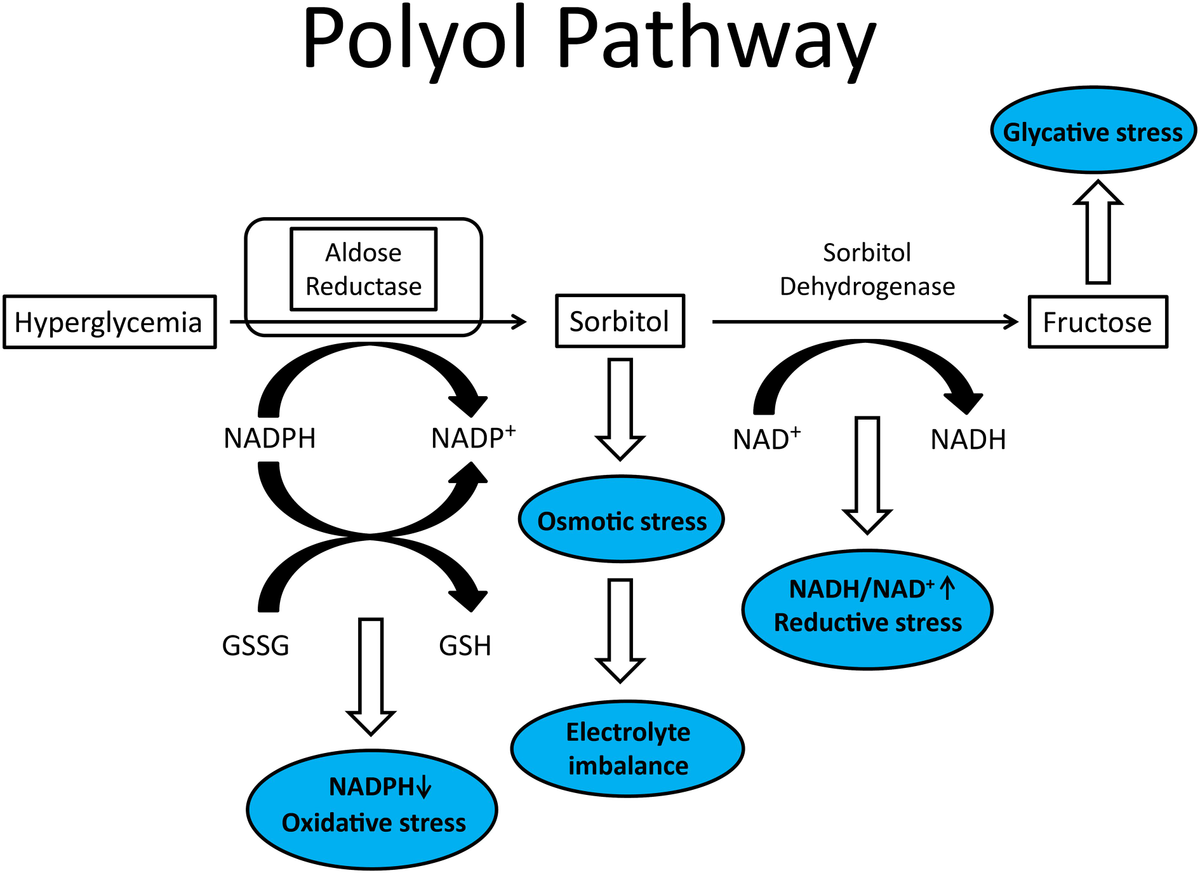
The Polyol Pathway is an alternative route for glucose metabolism. While it is normally a minor pathway, it becomes highly active during states of hyperglycemia (diabetes).
- Step 1: Glucose is reduced to Sorbitol by Aldose Reductase (using NADPH).
- Step 2: Sorbitol is oxidized to Fructose by Sorbitol Dehydrogenase (using NAD+).
Note: High levels of galactose are similarly converted by Aldose Reductase into Galactitol, which is also osmotically active.
2. Tissue Distribution and Osmotic Damage
The clinical danger arises in tissues that can produce sorbitol but cannot convert it further into fructose. Sorbitol acts as an osmotic solute, drawing water into cells and causing swelling and damage.
| Tissue Capability | Tissues | Clinical Outcome |
|---|---|---|
| Both Enzymes (Safe) | Liver, Ovaries, Seminal Vesicles. | Sorbitol is efficiently converted to fructose and “lost” or used. |
| Primary/Only Aldose Reductase (At Risk) | Lens, Retina, Kidneys, Schwann cells. | Sorbitol accumulation → Water influx → Cell damage. |
Activity
3. Clinical Correlations in Diabetes
Chronic hyperglycemia leads to excessive sorbitol “trapping” in specific tissues, explaining classic diabetic complications:
- Lens: Sorbitol accumulation causes water influx, leading to Cataracts.
- Schwann Cells: Osmotic stress damages myelin-producing cells, causing Peripheral Neuropathy.
- Retina and Kidney: Leads to Retinopathy and Nephropathy.
Memory Hook: “LuRKS”
The tissues that sorbitol LuRKS in (because they lack dehydrogenase): Lens, Retina, Kidneys, Schwann cells.
Activity
You must be logged in to post a comment.