
Learning Objectives
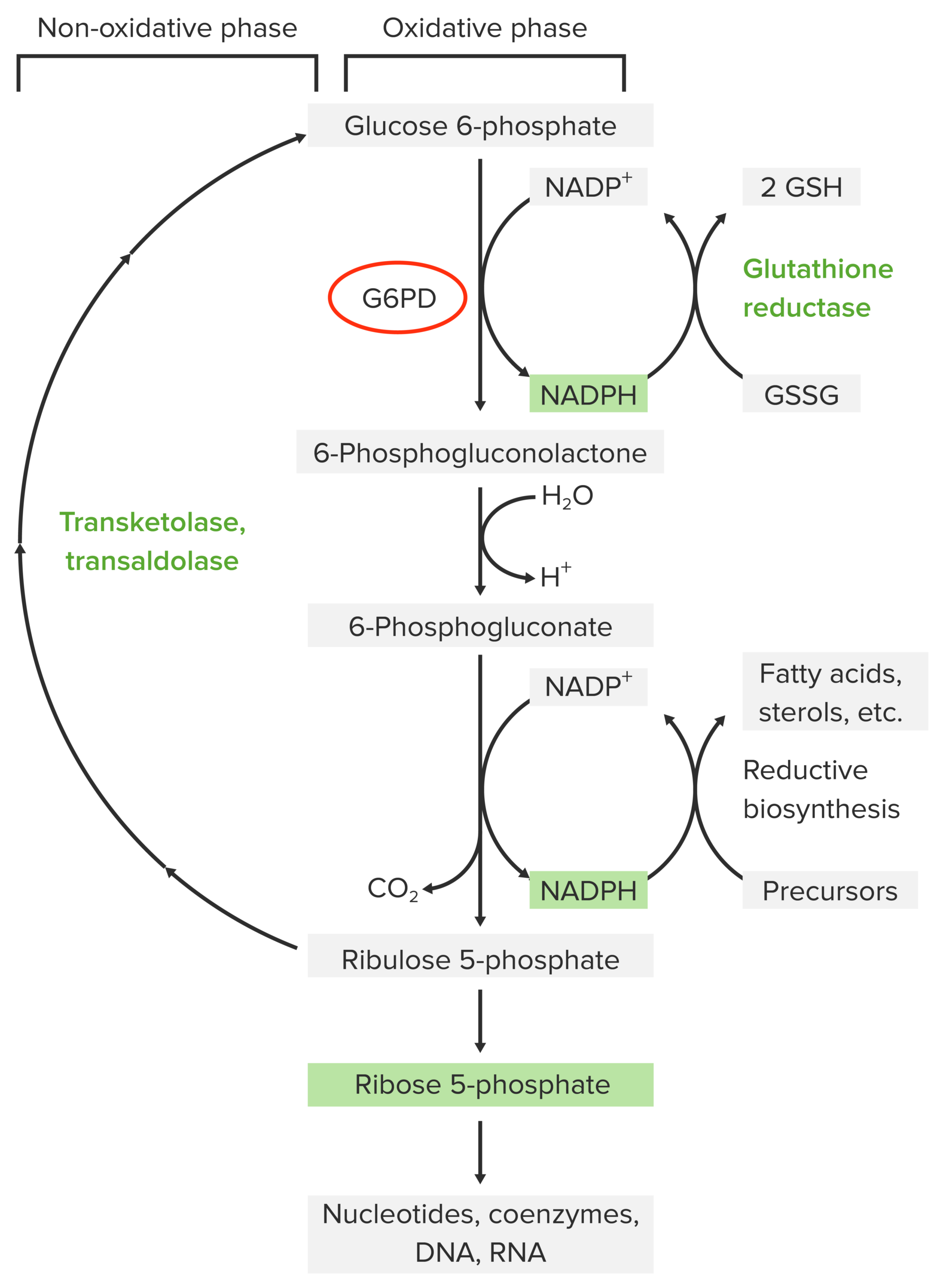
- Explain the role of NADPH in maintaining the pool of reduced glutathione.
- Identify the oxidative triggers that precipitate hemolytic crises in G6PD-deficient patients.
- Recognize the characteristic morphological findings on a peripheral blood smear.
- Understand the genetic inheritance and geographic prevalence of this deficiency.
1. The Glutathione Redox Cycle
NADPH is the essential “currency” required to keep glutathione in its reduced form (GSH). Reduced glutathione acts as a cellular shield, detoxifying free radicals and hydrogen peroxide (
- G6PD Enzyme: Produces NADPH while converting Glucose-6-P to 6-phosphogluconolactone.
- Glutathione Reductase: Uses NADPH to convert oxidized glutathione (GSSG) back to reduced glutathione (GSH).
- Glutathione Peroxidase: Uses GSH to neutralize
).
2. Oxidative Stress and Triggers
In G6PD deficiency, the RBCs cannot produce enough NADPH to combat sudden oxidative stress. This leads to the denaturation of hemoglobin and subsequent hemolysis.
- Infection: The most common cause. Inflammatory cells produce free radicals that diffuse into RBCs.
- Drugs: Sulfonamides, Nitrofurantoin, Primaquine, and Chloroquine.
- Dietary: Fava beans.
Epidemiology:
G6PD deficiency is an X-linked recessive disorder. It is the most common human enzyme deficiency and offers some protection against malaria, which is why it is prevalent in sub-Saharan Africa and Southeast Asia.
3. Pathology: Heinz Bodies and Bite Cells
When hemoglobin denatures due to oxidative stress, it forms insoluble precipitates that are visible on special stains.
- Heinz Bodies: Round inclusions of denatured globin within the RBC.
- Bite Cells: RBCs that have had the Heinz bodies “bitten out” by splenic macrophages.
Activity
Memory Hook: “Bite into some Heinz ketchup.”
Activity
You must be logged in to post a comment.