
Learning Objectives
- Identify the genetic basis and collagen type involved in OI.
- Master the BITE mnemonic for clinical manifestations.
- Distinguish OI from child abuse in a clinical setting.
- Understand the role of Bisphosphonates in treatment.
1. Pathophysiology
Osteogenesis Imperfecta (Brittle Bone Disease) is a genetic disorder of connective tissue. The most common form is Autosomal Dominant.
- Genetic Defect: Mutations usually occur in the COL1A1 and COL1A2 genes.
- Mechanism: Leads to decreased (
) production of otherwise normal Type I Collagen. The defect specifically impacts triple helix formation during synthesis.
Activity
2. Clinical Manifestations: The BITE Mnemonic
Because Type I collagen is found in bone, skin, teeth, and eyes, the symptoms are widespread.
| Mnemonic | Clinical Finding | Mechanism |
|---|---|---|
| Bones | Multiple Fractures | Minimal trauma (e.g., during birth) leads to fractures and deformities. |
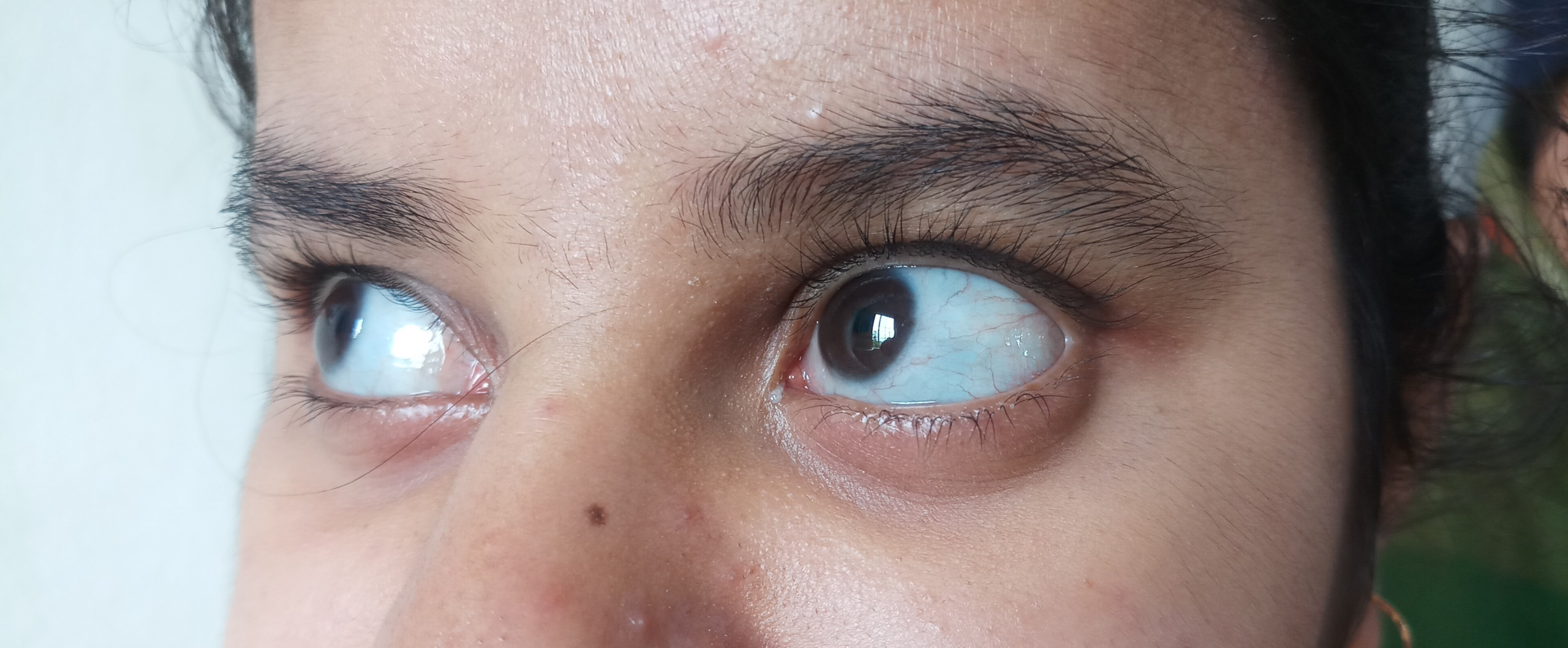
| I (Eye) | Blue Sclerae | Thin, translucent collagen allows the underlying choroidal veins to show through. |
| Teeth | Dental Imperfections | Dentinogenesis imperfecta: opalescent teeth that wear easily due to a lack of dentin. |
| Ear | Hearing Loss | Related to abnormalities of the ossicles (the tiny bones of the middle ear). |
3. Clinical High-Yields & Treatment
- Diagnostic Dilemma: Because of the frequent fractures, OI may be confused with child abuse. A thorough physical exam looking for blue sclerae and dental issues is crucial.
- Pharmacology: Treatment often involves Bisphosphonates (e.g., Alendronate) to increase bone mineral density and decrease the risk of fractures.
Activity
You must be logged in to post a comment.