
Learning Objectives
- Describe the phases of the cell cycle and their relative durations.
- Explain the roles of Cyclins, CDKs, and Tumor Suppressors in cell cycle control.
- Master the p53/p21/Rb pathway and its clinical significance.
- Differentiate between Permanent, Stable, and Labile cell types.
1. Phases of the
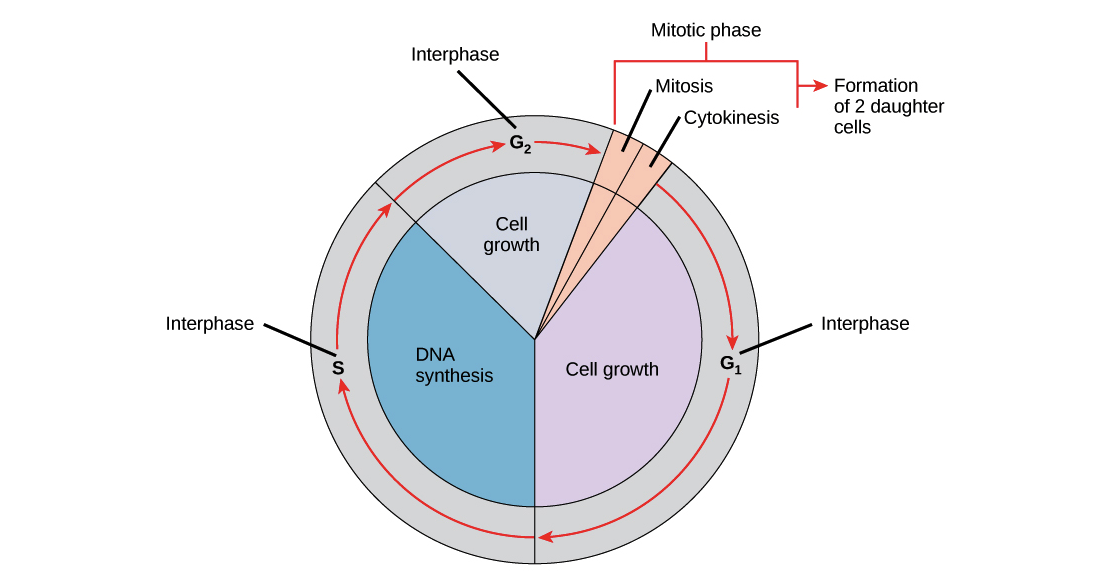
The cell cycle consists of Interphase (G1, S, G2) and Mitosis (M).
- G1 (Gap 1): Variable duration; cell grows and prepares for DNA synthesis.
- S (Synthesis): DNA replication occurs.
- G2 (Gap 2): Preparation for mitosis.
- M (Mitosis): The shortest phase. Includes.
- G0: A quiescent state where the cell is not actively dividing.
Activity
2. Regulation & Checkpoints
Transitions are strictly controlled to prevent errors in DNA replication or division. These processes are regulated by Cyclins and Cyclin-Dependent Kinases (CDKs).
- CDKs: Constitutively expressed but inactive when not bound to cyclin.
- Cyclins: Phase-specific regulatory proteins that activate CDKs when stimulated by growth factors.
- Cyclin-CDK Complex: Phosphorylates target proteins (like Rb) to coordinate cell cycle progression.
Activity
3. Tumor Suppressors & The G1-S Brake
The transition from G1 to S phase is a major regulatory hurdle often mediated by growth factors (e.g., insulin, PDGF, EPO, EGF) binding tyrosine kinase receptors.
The Regulatory Pathway:
p53 activation → p21 induction → CDK inhibition → Rb hypophosphorylation (Activation) → G1-S progression inhibition.
p53 activation → p21 induction → CDK inhibition → Rb hypophosphorylation (Activation) → G1-S progression inhibition.
Clinical High-Yield: Mutations in tumor suppressor genes can result in unrestrained cell division, as seen in Li-Fraumeni syndrome.

Activity
4. Cell Types and Proliferative Capacity
Cells vary in their ability to regenerate and their position within the cell cycle.
| Type | Description | Examples |
|---|---|---|
| Permanent | Remain in G0; regenerate from stem cells. | Neurons, skeletal/cardiac muscle, RBCs. |
| Stable (Quiescent) | Enter G1 from G0 when stimulated. | Hepatocytes, lymphocytes, PCT, periosteal cells. |
| Labile | Never go to G0; divide rapidly. Most affected by chemo. | Bone marrow, gut epithelium, skin, hair follicles. |
Activity
You must be logged in to post a comment.