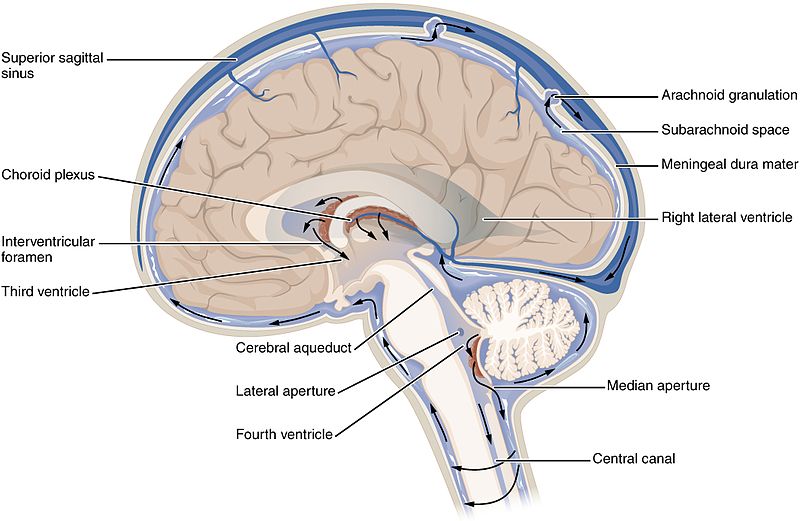
The meninges are a set of three protective membranes that surround and protect the brain and spinal cord. They provide a barrier and cushioning for these vital structures. Let’s explore the detailed anatomy of the meninges:
Dura Mater:
The dura mater is the outermost and toughest layer of the meninges. It consists of two layers:
-
- Endosteal Layer: The endosteal layer is firmly attached to the inner surface of the skull and is continuous throughout the cranial cavity.
- Meningeal Layer: The meningeal layer is the inner layer of the dura mater. It forms the outer covering of the brain and spinal cord and extends into the cranial and spinal canals.
Arachnoid Mater:
The arachnoid mater is the middle layer of the meninges and is located beneath the dura mater. It is named for its spiderweb-like appearance. The space between the dura mater and the arachnoid mater is known as the subdural space.
- Subarachnoid Space: The subarachnoid space is the region between the arachnoid mater and the pia mater. It is filled with cerebrospinal fluid (CSF), which circulates through the brain and spinal cord, providing nutrients and acting as a cushion.
Pia Mater:
The pia mater is the innermost layer of the meninges. It is a thin and delicate membrane that closely adheres to the surface of the brain and spinal cord, following their contours.

Clinical Relevance:
- Meningitis: Meningitis is an inflammation of the meninges, typically caused by a bacterial or viral infection. It can lead to symptoms such as fever, headache, stiff neck, and neurological abnormalities. Prompt diagnosis and treatment are crucial to prevent complications.
- Subdural Hematoma: A subdural hematoma is a collection of blood between the dura mater and the arachnoid mater. It usually occurs as a result of head trauma and can cause symptoms such as headache, confusion, and neurological deficits.
- Subarachnoid Hemorrhage: A subarachnoid hemorrhage is bleeding into the subarachnoid space, often caused by the rupture of a cerebral aneurysm. It presents with a sudden and severe headache, neck stiffness, and neurological deficits.
- Meningioma: Meningiomas are tumors that originate from the meninges. They are usually benign and slow-growing, but their location and size can cause compression of the surrounding structures, leading to neurological symptoms.